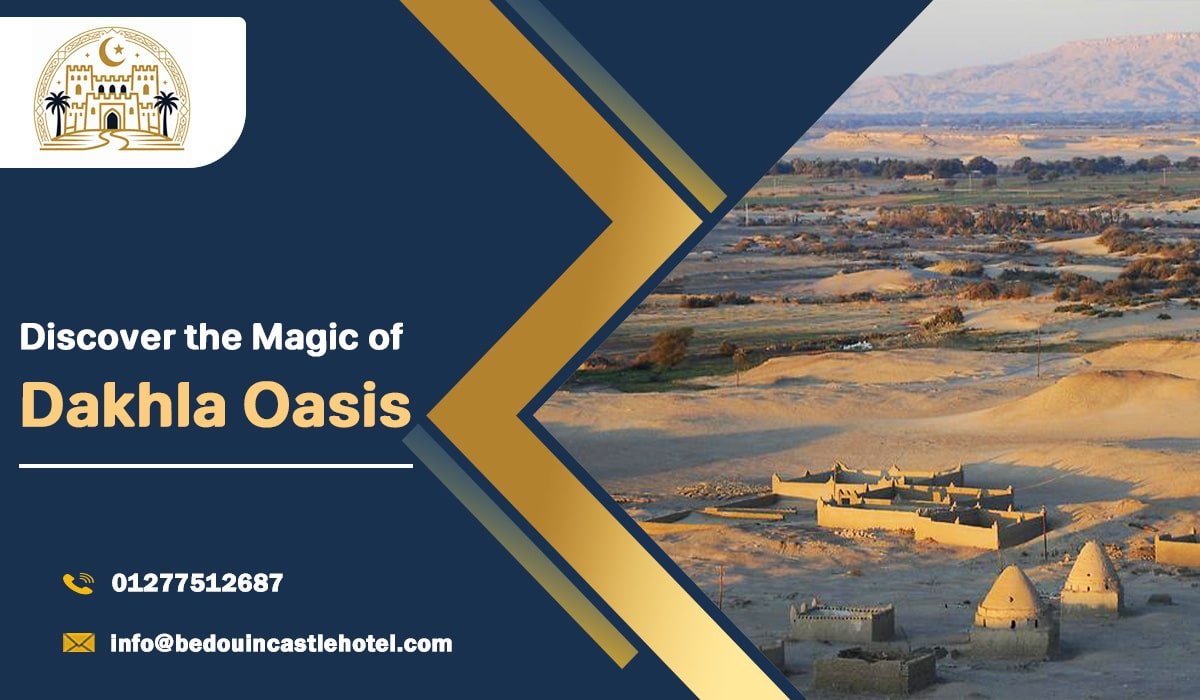
nestled deep within Egypt’s Western Desert. This pristine sanctuary is a hidden treasure trove of ancient ruins, dynamic Bedouin traditions and breathtaking natural landscapes. Unearth historic settlements, rejuvenate in therapeutic hot springs and embrace the profound tranquility of this extraordinary getaway.
Serving as a magnificent gateway to Egypt’s ecological wonders, Magic of Dakhla Oasis provides an unparalleled travel experience. This comprehensive guide aims to arm every explorer with essential facts and insights about the region. Carefully curated by a dedicated group of expert tour operators, professional guides and seasoned travel consultants, this overview unveils all the enchanting secrets of Dakhla. BEDOUIN CASTLE
Often celebrated as the ultimate crown jewel of the Western Desert, Dakhla stands out as one of the most spellbinding destinations in Egypt. It safeguards monumental relics, dramatic vistas and exquisite artifacts that perfectly capture the authentic, enduring spirit of ancient Bedouin civilizations.
Magic of Dakhla Oasis: Geography and Environmental Allure
Positioned within the New Valley Governorate, the Magic of Dakhla Oasis lies approximately 350 km (220 miles) west of the life-giving Nile River. Geographically, it stretches 80 km (50 miles) from east to west and spans 25 km (16 miles) from north to south. Tucked into a massive geographic depression, it is perfectly situated between the neighboring Farafra and Kharga oases.
Covering a sprawling area of 2,000 km², the oasis is famously dotted with numerous thermal springs. It is home to roughly 16 distinct villages, with the settlement of Mut serving as the primary administrative hub. Interestingly, locals and travelers alike often refer to the oasis as “The Labyrinth” due to its intricate, mesmerizing network of narrow pathways and hidden alleys.
A Journey Through Millennia: The Heritage of Dakhla
The historical roots of Dakhla stretch deep into antiquity, specifically back to the 6th Dynasty around 2550 BC. During this era, the oasis functioned as a pivotal crossroads on a major caravan trade route, seamlessly connecting Dakhla to Kharga, Farafra, the Nile Valley to the east and Libyan territories to the west.
Standing apart from many other desolate stretches of the Western Desert, Dakhla boasted rich agricultural lands. It was heavily cultivated and blessed with abundant thermal waters, such as the renowned “Bir Talata” and “Bir El Gabal,” which provided restorative warmth and a deeply calming atmosphere.
Although geographically isolated from standard papyrus production centers, Dakhla’s administrative significance is undeniable. Archaeologists discovered roughly five hundred clay tablets inscribed with hieratic script using a stylus at the governor’s palace in Ayn Asil (Balat). These crucial records include account inventories, name registries and nearly fifty distinct letters.
Mut: Beating Heart of the Oasis
As the largest and most prominent village, Mut serves as the capital of the oasis. Its title is directly inherited from the revered ancient Egyptian deity, Mut, the goddess of cosmic balance and the divine wife of Amun of Thebes.
Just southeast of the main town lies Mut El-Kharab, the remnants of a heavily weathered Roman settlement. However, the absolute highlight of the area is the Bir Talata spa, situated a mere 2 km from the town’s center. These waters are densely packed with iron and sulfur, offering renowned natural remedies used to cure a variety of physical ailments.
Magic of Dakhla Oasis: The Ancient Tombs of Al-Muzwaqa
Venture north of Mut to find the Al-Muzwaqa necropolis, a sprawling burial ground featuring approximately 300 rock-hewn tombs. The most prominent among these are the 1st and 2nd-century tombs of Petosiris and Petubastis. These crypts masterfully integrate classic ancient Egyptian funerary elements, displaying vivid wall frescoes and illustrations that depict burial processions, sacred offerings and deities observing the departed as they enter the afterlife.
Al-Qasr: An Islamic Architectural Marvel
Situated about 20 km north of Mut is Al-Qasr, a village overflowing with spectacular historical architecture. At its core towers the 21-meter high minaret of the Sheik Nasr El-Din mosque, a masterpiece dating back to the 11th and 12th centuries during the Ayyubid period.
Wandering through the village’s narrow corridors reveals enchanting, ancient Islamic dwellings. Their heavy acacia wood doors are intricately carved, traditionally displaying the engraved names of the homes’ original builders or owners.
Deir El-Hagar: The Stone Sanctuary
Located just north of Mut and adjacent to the necropolis is Deir El-Hagar, famously translating to the “Stone Monastery.” Constructed during the 1st century and enduring through Emperor Nero’s reign, this temple was dedicated to the Holy Theban Triad: Amun Re, Mut and Khonsu.
The complex saw significant expansion and restoration during the Roman era. Today, it is surrounded by formidable mud-brick perimeter walls (16m long and 7m wide), featuring a quaint hypostyle hall supported by four pillars, a two-column portico and a sacred inner sanctuary at the very end.
Bashindi: A Fusion of Eras
Roughly 40 km east of Mut lies Bashindi, a captivating village that seamlessly blends Roman, Pharaonic and Islamic history. It houses a striking 11th and 12th-century Islamic mausoleum ingeniously built with a massive mud-brick dome positioned directly over a Roman-era burial site. Tombs within this necropolis, such as that of Kitines, display flawless Pharaonic painting styles. Furthermore, the village itself is a joy to explore, featuring vividly ornamented and colorfully decorated mud-brick houses that are highly popular among tourists.
Balat and the Echoes of the Old Kingdom
Northeast of Bashindi is Balat, an area globally recognized for its profound architectural and historical gravity, dating back to the Old Kingdom (2289 BC–2152 BC). Balat is celebrated for hosting two of the most significant archaeological zones in the Western Desert: the Qila El Dabba Necropolis and Ayn Asil, the ancient capital of the oasis.
Remarkable treasures, including terracotta pottery, copper artifacts and intricate copper jewelry, were unearthed from the mastaba tomb and mortuary chamber of Khentika, the oasis governor during King Pepi I’s reign. These magnificent pieces are now proudly displayed at the Kharga Archeological Museum.
Exceptional Stays: Where to Rest in Dakhla
Magic of Dakhla Oasis offers exceptional accommodation options tailored to every type of traveler. Families will adore the Shanda Lodge Desert Resort, which provides premium amenities, diverse restaurants, kids’ clubs and multiple swimming pools. Conversely, the Al Tarfa Desert Sanctuary Lodge & Spa caters to those seeking an upscale eco-lodge retreat. It highlights the desert’s raw beauty while offering indulgent spa therapies, stunning views and exclusive private pools.
For the budget-conscious explorer, the Mebarez Hotel stands out as an affordable yet highly comfortable choice, complete with optimal accommodations, a pool, a spa and dining facilities at great prices. Additionally, local three-star Bedouin hotel camps offer an astonishingly immersive experience, allowing guests to relax and embrace the traditional nomadic lifestyle through unforgettable camel rides and thrilling desert safaris.
Embark on Your Western Desert Adventure Today
Embark on Your Western Desert Adventure Today
Egypt’s Western Desert is an endless ocean of sand brimming with transformative magic that will redefine how you view the world. Dive into the historical glory and breathtaking majesty of this incredible country by booking one of our premium Egypt Western Desert tours and packages today! Contact us