The pyramids. The Sphinx. Luxor. The Valley of the Kings. Maybe a Nile cruise if time allows. The country’s tourism industry has spent decades building an image around monumental archaeology and for good reason. Few places on Earth can compete with Egypt when it comes to ancient wonders.
But there is another Egypt that exists far beyond the Nile Valley. An Egypt of endless horizons, volcanic hills, hidden springs, date palm groves and roads that seem to disappear into infinity. It begins where the green fields of the Nile end and the Sahara starts to take over. It is an Egypt defined not by stone temples but by silence.
At the center of this lesser-known world lies Baharia Oasis, often called Bahariya Oasis, one of the most fascinating destinations in Egypt’s Western Desert.
Located roughly 370 kilometers southwest of Cairo, Baharia serves as the main gateway to some of the country’s most extraordinary natural landscapes. Travelers pass through it on their way to the White Desert, the Black Desert, Crystal Mountain and remote corners of the Sahara that feel completely disconnected from modern life.
Yet reducing Baharia to a stopping point would be a mistake. The oasis itself tells a story that stretches back thousands of years. It is a place where ancient trade routes crossed the desert, where Roman influence still lingers in archaeological sites and where communities continue to build lives in one of the most challenging environments imaginable.
Most visitors come for the desert. Many leave realizing that the oasis was the real discovery.
What Exactly Is Baharia Oasis?
Baharia Egypt
To understand Baharia, it helps to understand what an oasis actually is. The word often creates romantic images of palm trees surrounded by endless dunes, but the reality is more complex and far more interesting.
An oasis exists because water exists. In a region where rainfall is rare and temperatures can become extreme, underground water sources make life possible. These hidden reserves feed springs and wells, allowing vegetation, agriculture and human settlements to survive in environments that would otherwise be uninhabitable.
Baharia Oasis is one of several major oases scattered across Egypt’s Western Desert. Unlike the densely populated Nile Valley, these communities developed around isolated pockets of water separated by vast stretches of desert.
For centuries, they functioned as islands in a sea of sand. Travelers, merchants, armies and explorers relied on them for survival. Caravans moving between different regions of North Africa and Egypt often depended on oasis settlements for food, water and rest.
Today, Baharia remains an important center for desert tourism, agriculture and local culture. Its population lives among palm groves, farmland and desert landscapes that seem almost impossible to reconcile with one another. One moment you’re standing among green fields. The next you’re looking across an endless expanse of Sahara.
Journey From Cairo
- Part of Baharia’s appeal comes from the journey itself.
- Leaving Cairo is like watching two different worlds exchange places.
- The city begins with familiar scenes: crowded streets, apartment buildings, traffic and constant movement. Then, gradually, the urban landscape starts to dissolve.
- The buildings become less frequent.
- The fields grow sparse.
- The road stretches farther between settlements.
- Eventually, the desert takes over.
- For travelers accustomed to densely populated regions, the scale of the Western Desert can feel overwhelming. Distances become difficult to judge. The horizon seems impossibly far away.
- Hours pass with little interruption except asphalt, sand and sky.
- Yet this apparent emptiness contains a strange beauty.
- There are few distractions.
- No towering skyscrapers.
- No constant advertisements.
- No endless stream of notifications demanding attention.
- The desert forces people to look outward.
- Sometimes inward.
- By the time travelers arrive in Baharia, the psychological transition has already begun.
- The pace feels different.
- The priorities feel different.
- Even time seems to move differently.
First Impressions of Baharia
- Many first-time visitors are surprised by how alive Baharia feels.
- Popular imagination often portrays desert settlements as isolated outposts barely surviving against the odds.
- The reality is far more dynamic.
- Markets operate daily.
- Schools function normally.
- Families cultivate crops.
- Children play in the streets.
- Shops, cafés and restaurants create a rhythm of everyday life that continues regardless of tourism.
- Palm trees dominate much of the landscape.
- Date cultivation remains one of the area’s most important agricultural activities. Groves spread across sections of the oasis, creating green corridors that contrast dramatically with the surrounding desert.
- The visual effect is striking.
- Beyond the cultivated areas lie barren hills and open desert.
- Within the oasis, life flourishes.
- It feels like a geographical contradiction that’s exactly what makes it fascinating.
A Landscape Built Around Water
- Water defines everything in Baharia.
- Without it, the oasis would not exist.
- For thousands of years, underground aquifers have supported human life in the region. Springs and wells allowed settlements to emerge, agriculture to develop and communities to persist despite challenging environmental conditions.
- Historically, controlling water meant controlling survival.
- Farmers carefully managed irrigation systems.
- Communities organized around available resources.
- Knowledge about water sources became incredibly valuable.
- Even today, visitors quickly realize how precious water remains.
- In major cities, access to water often feels automatic.
- In the desert, its importance becomes impossible to ignore.
- Every field, every palm grove and every garden exists because water continues to flow beneath the surface.
- The oasis serves as a reminder that civilization often depends on resources people rarely think about until they become scarce.
Date Palm Economy
- One of Baharia’s defining characteristics is its relationship with date palms.
- Dates have been cultivated in oasis environments for centuries, providing food, income and economic stability.
- Walking through the oasis, visitors encounter palm groves almost everywhere.
- The trees create shade.
- They help regulate local temperatures.
- They contribute to agricultural productivity.
- They produce one of the region’s most important crops.
- Dates remain central to both local culture and commerce.
- Different varieties grow throughout the oasis.
- Harvest seasons bring additional activity.
- Markets showcase locally produced products.
- For many residents, date cultivation represents not only an economic activity but also a connection to generations of tradition.
- In a rapidly changing world, these agricultural practices help preserve aspects of local identity.
People of Baharia
- Travel guides often focus heavily on landscapes while neglecting the people who actually live there.
- That’s a mistake.
- Places become meaningful because of the people who shape them.
- Baharia’s residents have spent generations adapting to desert life.
- Their relationship with the environment differs significantly from that of visitors.
- What tourists perceive as extreme conditions often represent normal daily realities.
- Conversations with local residents frequently reveal perspectives that challenge common assumptions about the desert.
- Rather than viewing the environment as hostile, many see it as familiar and manageable.
- Knowledge passed down through families helps communities navigate challenges that outsiders might find intimidating.
- Hospitality also plays an important role.
- Visitors often encounter a welcoming attitude that reflects longstanding traditions associated with desert cultures.
- In environments where survival historically depended on cooperation, hospitality developed practical as well as cultural significance.
Why Most Travelers Come: The White Desert
- Let’s be honest.
- Most international travelers discover Baharia because of the White Desert.
- It’s easy to understand why.
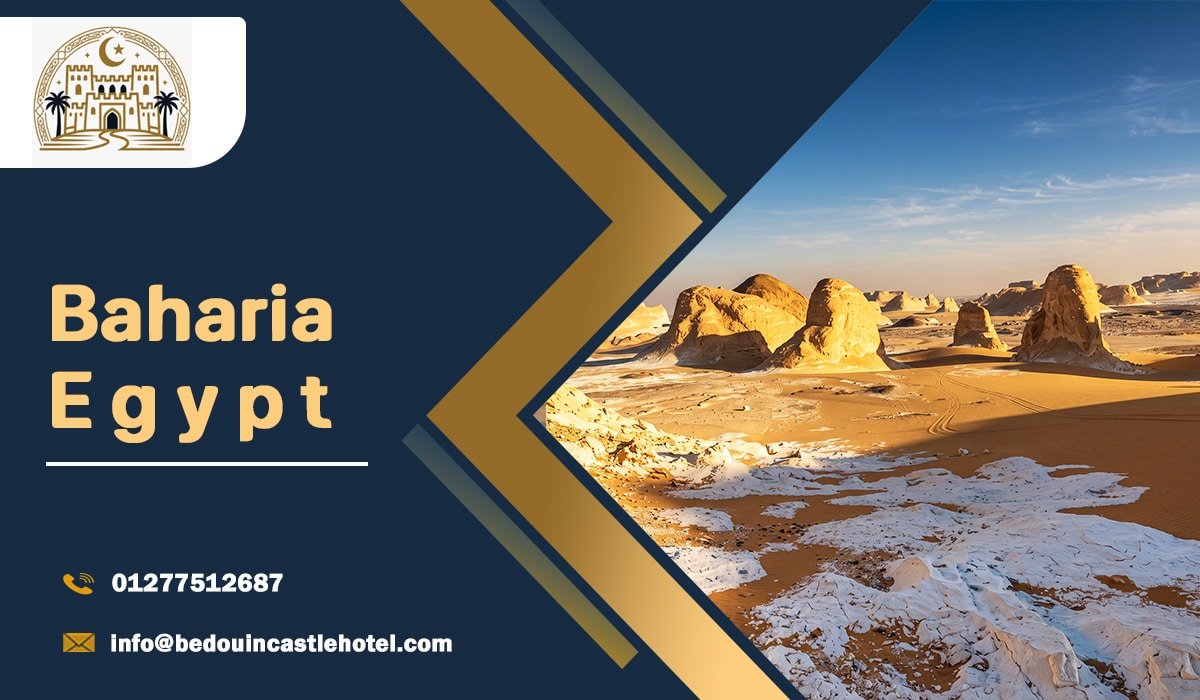
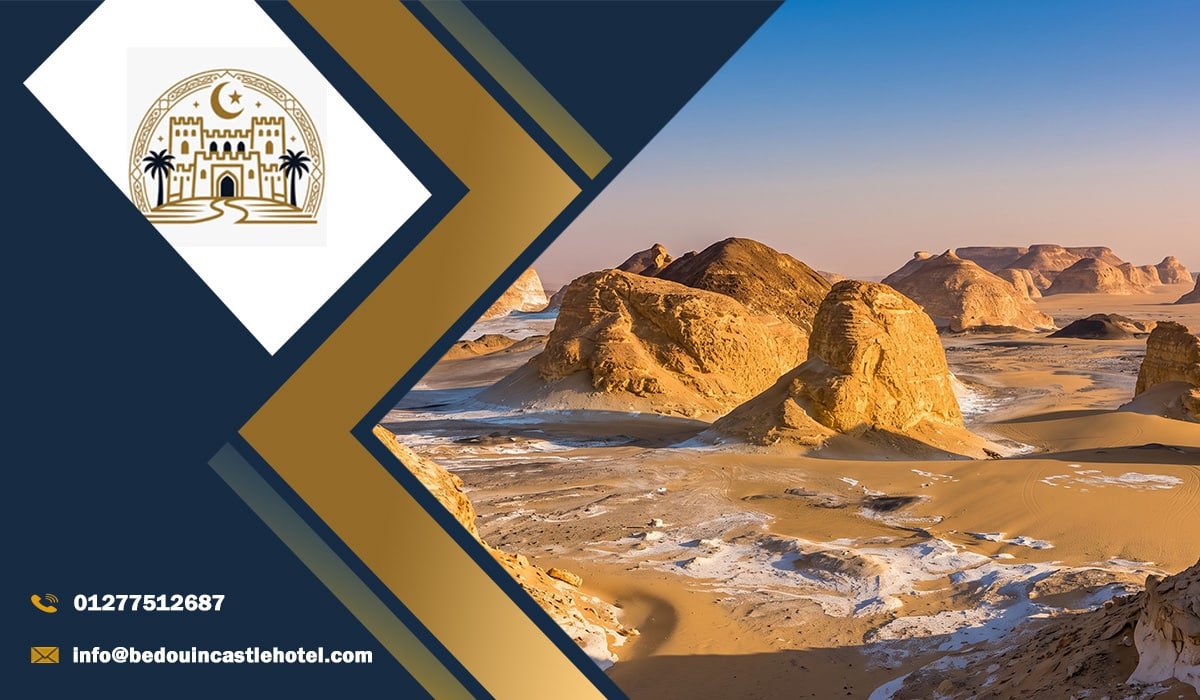
- The White Desert National Park contains some of the most surreal landscapes on Earth.
- Wind and erosion have sculpted massive chalk formations into shapes that resemble mushrooms, animals, towers and abstract sculptures.
- The landscape looks less like part of Egypt and more like a film set from a science-fiction movie.
- Photographs rarely capture the full experience.
- The scale feels larger in person.
- The silence feels deeper.
- The colors change constantly depending on sunlight and weather conditions.
- At sunrise and sunset, the formations glow with shades of gold, pink and orange.
- At night, they appear almost ghostly beneath the stars.
- Many travelers describe the White Desert as one of the most visually unique places they have ever visited.
- Baharia serves as the primary gateway to this remarkable environment.
- Without the oasis, accessing the White Desert would be significantly more difficult.
Black Desert: A Different Kind of Beauty
- The White Desert often receives most of the attention, but the Black Desert deserves recognition as well.
- Located near Baharia, this landscape presents an entirely different visual experience.
- Instead of white chalk formations, visitors encounter dark volcanic hills covered in black basalt fragments.
- The terrain appears almost lunar.
- Sharp contrasts define the environment.
- Dark hills rise above lighter desert surfaces.
- The atmosphere feels rugged and dramatic.
- Many travelers appreciate how quickly the scenery changes within relatively short distances.
- One day you’re exploring brilliant white formations.
- The next you’re standing among black volcanic landscapes.
- These geological contrasts contribute significantly to the appeal of the Western Desert.
- The region refuses to fit simplistic expectations.
Crystal Mountain and Geological Wonders
- Another attraction frequently included in desert excursions is Crystal Mountain.
- Despite its name, it is not actually a mountain.
- Instead, it is a ridge containing quartz crystal deposits exposed by natural geological processes.
- Sunlight reflecting off crystal surfaces creates striking visual effects.
- The location offers insight into the geological forces that shaped the Western Desert over millions of years.
- Visitors often stop briefly to photograph the formations and learn about the area’s natural history.
- While less famous than the White Desert, Crystal Mountain contributes to the broader experience of exploring one of Egypt’s most geologically diverse regions.
Desert Camping: Why It Changes People
- Few experiences define Baharia tourism more than desert camping.
- On paper, spending a night in the Sahara might sound simple.
- In reality, it often becomes the highlight of an entire trip.
- Modern life rarely provides genuine darkness.
- Cities produce light pollution.
- Technology creates constant distractions.
- Noise follows people almost everywhere.
- The desert removes much of that.
- As night falls, the stars emerge with astonishing clarity.
- Conversations slow down.
- Silence becomes noticeable.
- For some travelers, the experience feels almost uncomfortable at first.
- The absence of stimulation can be surprising.
- Then something changes.
- People begin paying attention differently.
- They notice the wind.
- The sky.
- The temperature.
- The sounds—or lack of sounds—around them.
- Desert camping creates opportunities for reflection that many travelers didn’t realize they needed.
Baharia’s Ancient History
- While natural attractions dominate modern tourism, Baharia possesses a rich historical legacy.
- Ancient Egyptians knew the oasis well.
- Its strategic location made it valuable for trade, agriculture and administration.
- Evidence of human activity stretches back thousands of years.
- Temples, tombs and archaeological remains reveal connections between the oasis and broader Egyptian civilization.
- The region’s importance fluctuated across different historical periods, but it never disappeared entirely from the map.
- Empires rose and fell.
- Trade routes shifted.
- Yet the oasis endured.
- Its survival reflects the enduring importance of water in desert environments.
Valley of Golden Mummies
- One of Baharia’s most significant archaeological discoveries occurred in the 1990s.
- Archaeologists uncovered what became known as the Valley of the Golden Mummies.
- The site contained numerous burials dating to the Greco-Roman period.
- Some mummies featured elaborate decorations and gold coverings.
- The discovery attracted international attention and highlighted the oasis’s historical importance.
- It also challenged assumptions about life in remote desert communities during ancient times.
- Rather than existing on the margins of civilization, Baharia often participated actively in regional networks of trade, culture and politics.
- The archaeological evidence continues to provide valuable insights into Egypt’s complex history.
Food and Desert Hospitality
- Food in Baharia reflects both local traditions and environmental realities.
- Ingredients often emphasize practicality, freshness and regional availability.
- Meals tend to be straightforward rather than elaborate.
- Yet simplicity can be deceptive.
- Some of the most memorable dining experiences occur not in luxury restaurants but around campfires in the desert.
- Sharing food creates opportunities for conversation.
- Stories emerge.
- Cultural exchanges occur naturally.
- Visitors learn about local customs while locals learn about distant places.
- These interactions often become lasting memories.
- The food matters.
- The people matter more.
A Night Under the Sahara Sky
Ask travelers what they remember most about Baharia and the surrounding desert.
- Many will mention the sky.
- Not a specific attraction.
- Not a particular photograph.
- The sky.
- Far from major urban centers, the Western Desert offers exceptional stargazing conditions.
- The Milky Way often becomes visible.
- Constellations appear brighter.
- The sheer number of stars can be overwhelming.
- For people accustomed to city life, the experience feels almost unreal.
- The sky reminds visitors how much modern environments obscure.
- It also reinforces a recurring theme of desert travel: perspective.
- The Sahara has a way of making personal concerns seem smaller.
- Not irrelevant.
- Just smaller.
Is Baharia Worth Visiting?
- For some travelers, absolutely.
- For others, perhaps not.
- The answer depends on expectations.
- Those seeking luxury resorts and nonstop entertainment may struggle to connect with the destination.
- Baharia rewards curiosity more than comfort.
- It appeals to travelers interested in landscapes, culture, history and reflection.
- Adventure matters.
- Patience matters.
- Openness matters.
- Visitors willing to embrace those qualities often find the experience deeply rewarding.
- The oasis offers something increasingly rare in contemporary tourism: authenticity.
- Not perfection.
- There is a difference.
Best Time to Visit
- Seasonal timing significantly affects the experience.
- Winter generally offers the most comfortable conditions.
- Temperatures remain moderate.
- Outdoor exploration becomes easier.
- Desert camping feels more enjoyable.
- Spring also attracts many visitors.
- Summer presents challenges.
- Extreme heat can make outdoor activities difficult.
- Travel remains possible, but preparation becomes more important.
- Autumn provides another attractive option as temperatures begin to decrease.
- Ultimately, the best time depends on personal preferences and tolerance for desert conditions.
Future of Baharia
- Tourism continues to grow throughout Egypt’s Western Desert.
- This creates opportunities and challenges.
- Increased visitation supports local economies.
- It creates jobs.
- It encourages investment.
- Yet growth also raises concerns about environmental sustainability.
- The White Desert and surrounding regions remain fragile ecosystems.
- Preserving their character requires thoughtful management.
- The challenge involves balancing accessibility with conservation.
- Too little tourism limits economic opportunities.
- Too much tourism risks damaging the very landscapes people come to see.
- Baharia’s future may depend on finding that balance.
Final Thoughts
- Baharia Oasis isn’t the Egypt most people imagine when planning a trip.
- There are no famous pyramids dominating the horizon.
- No massive temple complexes attracting millions of visitors.
- No cruise ships moving slowly along a historic river.
- Instead, there are palm groves growing in desert soil.
- Volcanic hills rising from barren landscapes.
- Ancient springs supporting modern communities.
- Roads leading into one of the largest deserts on Earth.
- Most travelers arrive because they want to see the White Desert.
- And the White Desert deserves its reputation.
- It is extraordinary.
- But Baharia offers something equally valuable.
- It provides context.
- It reveals how people live in environments that seem impossible.
- It demonstrates the relationship between water, survival and civilization.
- It reminds visitors that Egypt’s story extends far beyond its most famous monuments.
- The oasis serves as a bridge between worlds.
- Between city and desert.
- Between ancient history and modern life.
- Between the familiar and the unknown.
For travelers willing to venture beyond Egypt’s traditional tourist circuit, Baharia represents an opportunity to discover a side of the country that remains overlooked by many visitors.
In an age when authentic discoveries feel increasingly rare, that may be its greatest attraction. The Sahara begins here. But so does a deeper understanding of Egypt itself.