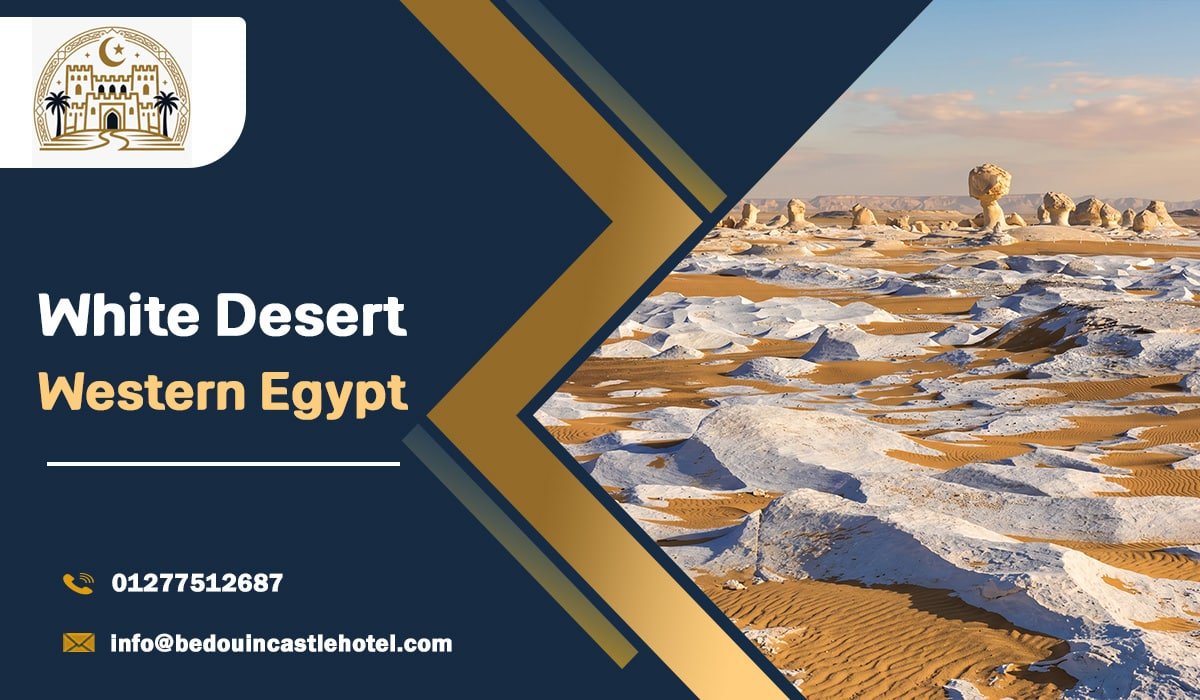
Four hours after leaving the noise of Cairo behind, the scenery begins to change in ways that feel almost cinematic. The crowded streets disappear. Billboards become rare. Villages thin out. The horizon expands until it seems to swallow everything. Then, somewhere deep in Egypt’s Western Desert, the landscape starts to look impossible.
White rock formations rise from the sand like giant mushrooms, melting icebergs and sculptures abandoned by an ancient civilization. Shadows stretch across chalk-colored plains. At sunset, the terrain glows pink and gold. At night, the stars appear so bright that the sky looks closer than the ground beneath your feet.
This is the White Desert, one of Egypt’s most extraordinary natural wonders and one of the strangest landscapes in North Africa. While millions of travelers arrive in Egypt every year to visit the pyramids, cruise the Nile or explore ancient temples, only a small percentage venture into the remote reaches of the Western Desert. Those who do often discover a side of Egypt that feels entirely disconnected from the country’s famous historical image.
The White Desert is not filled with monuments built by pharaohs. There are no temples carved into cliffs and no bustling tourist markets. Instead, its appeal comes from something much older than human civilization: geology, time and the relentless forces of nature.
For adventurous travelers, photographers, campers and anyone fascinated by landscapes that seem to belong on another planet, the White Desert offers an experience unlike any other destination in Egypt.
What Is the White Desert?
The White Desert, known locally as Sahara el Beyda, is a protected national park located in Egypt’s Western Desert. Covering hundreds of square kilometers, it is famous for its striking white chalk and limestone formations that have been shaped by wind erosion over millions of years.
Unlike traditional desert landscapes characterized by endless dunes, the White Desert resembles a vast open-air sculpture gallery. Massive rock formations rise unexpectedly from the sand, each with a unique shape created by centuries of exposure to wind, temperature changes and natural weathering.
Some formations resemble giant mushrooms. Others look like animals, towers, icebergs or abstract works of art. Depending on the angle of sunlight and the imagination of the observer, the same rock can appear completely different from one moment to the next.
The area’s distinctive appearance is the result of its geological history. Millions of years ago, much of this region lay beneath an ancient sea. Marine sediments accumulated over time, eventually forming thick layers of limestone and chalk. As the sea retreated and climatic conditions changed, the landscape was gradually exposed to erosion. Wind became the dominant sculptor, slowly carving the soft rock into the surreal shapes visible today.
The result is a landscape that appears almost extraterrestrial. Visitors often compare it to the surface of the moon, a frozen Arctic wilderness or the rocky terrain of Mars. Yet despite these comparisons, the White Desert remains completely unique.
Where Is the White Desert Located?
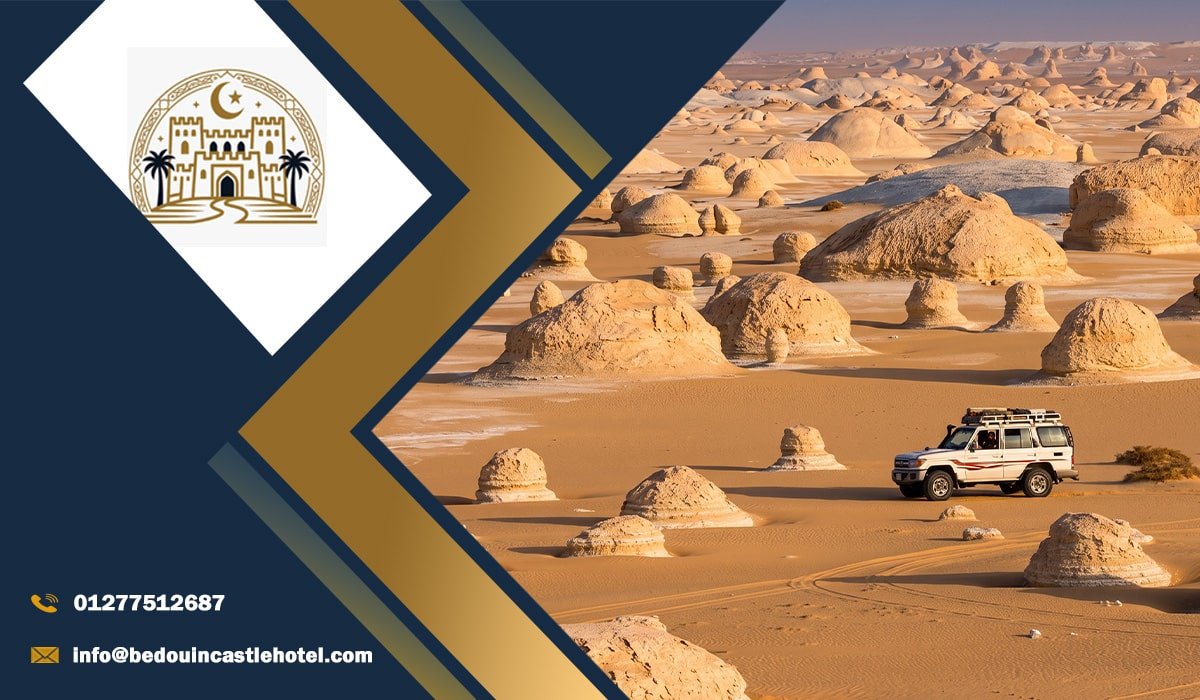
The White Desert lies in Egypt’s Western Desert, a vast section of the Sahara that occupies much of the country’s landmass. The protected area is situated near the Farafra Oasis, one of the least populated and most remote oases in Egypt.
From Cairo, the journey typically takes several hours by road. Most visitors travel through Bahariya Oasis before continuing deeper into the desert. Along the way, the scenery changes dramatically. Urban development gradually gives way to open desert, rocky plateaus and isolated stretches of wilderness.
One of the reasons the White Desert feels so special is its remoteness. Unlike many famous tourist attractions, it is not surrounded by hotels, restaurants or modern infrastructure. The isolation contributes significantly to its atmosphere.
The moment travelers leave the last populated areas behind, they enter a landscape where nature dominates completely. Cell phone signals may disappear. Artificial lights become scarce. The silence grows noticeable.
For many visitors, this sense of separation from modern life becomes one of the most memorable aspects of the experience.
Long Road Into the Sahara
Part of the magic of visiting the White Desert comes from the journey itself.
Unlike destinations that reveal themselves immediately, the White Desert requires effort to reach. Travelers must cross large sections of Egypt’s Western Desert, passing through landscapes that become increasingly remote with every kilometer.
The drive offers a fascinating glimpse into a side of Egypt that many international visitors never see. While the country’s ancient monuments often dominate travel itineraries, the deserts tell a different story, one about geography, isolation, survival and the immense scale of the Sahara.
As the road stretches westward, signs of civilization become less frequent. Vast open spaces begin to dominate the horizon. Occasionally, a truck appears in the distance. Sometimes there is nothing visible except sand, rock and sky.
The changing scenery creates anticipation. Travelers know they are heading toward something unusual, but the White Desert remains hidden until the final stages of the journey.
Then suddenly, the landscape transforms.
White formations emerge from the desert floor. The terrain becomes brighter. Familiar colors disappear. The environment starts to resemble a dream rather than a place on Earth.
Few destinations offer such a dramatic transition from ordinary reality to something that feels genuinely surreal.
Why the White Desert Looks Like Another Planet
The comparison to an alien world is not simply a travel marketing cliché. The White Desert genuinely possesses visual qualities that challenge expectations.
Most people imagine deserts as environments dominated by yellow or orange sand dunes. The White Desert breaks that stereotype entirely.
The bright chalk formations create a color palette more commonly associated with snowy landscapes than with the Sahara. During the middle of the day, sunlight reflects intensely off the white surfaces, making the terrain appear almost luminous.
At sunrise and sunset, the scenery changes again. Soft pink orange and golden tones spread across the formations. Long shadows emphasize unusual shapes and textures. The landscape seems to shift personality every hour.
Nighttime brings another transformation.
Without urban light pollution, the sky becomes one of the region’s greatest attractions. Thousands of stars emerge overhead. The Milky Way often becomes clearly visible. Under moonlight, the white formations glow against the darkness, creating an atmosphere that feels simultaneously peaceful and otherworldly.
Photographers frequently describe the White Desert as one of the most visually rewarding destinations in Egypt because it offers dramatically different scenes throughout the day.
Famous Rock Formations
One of the most exciting aspects of exploring the White Desert is discovering the countless formations scattered throughout the landscape.
Each formation has its own character, shape and story.
Some of the most famous resemble giant mushrooms balanced on narrow stems. Others look like birds, camels or towers rising from the desert floor. Guides often point out formations that have earned nicknames through decades of tourism and local storytelling.
Perhaps the most iconic is the so-called Chicken and Mushroom formation, a natural sculpture that appears exactly as its name suggests when viewed from the correct angle.
The fascinating thing about these formations is that they continue to evolve. Wind erosion never stops. Although the changes are too slow for visitors to notice during a single trip, the landscape is constantly being reshaped.
Every generation sees a slightly different version of the White Desert.
The formations also encourage imagination. Travelers often spend hours identifying shapes hidden within the rocks. One person sees an animal. Another sees a ship. Someone else sees a mythical creature.
The desert becomes an interactive gallery where interpretation is part of the experience.
Camping in White Desert
While day trips are possible, many experienced travelers believe that spending a night in the White Desert is essential.
Camping transforms a sightseeing excursion into a full immersion experience.
As the sun begins to set, temperatures become more comfortable. The intense brightness of the afternoon fades, replaced by warm colors that spread across the landscape. Photographers prepare their cameras. Travelers climb nearby formations to watch the changing light.
Then darkness arrives.
The silence becomes remarkable.
In modern cities, people become accustomed to constant background noise: traffic, conversations, electronics and machinery. In the White Desert, those sounds disappear.
Many visitors describe the silence as almost physical.
Campfires become gathering points. Travelers share stories, drink tea and enjoy traditional meals prepared by local guides. Above them, the stars dominate the sky.
For those accustomed to urban environments, the experience can feel transformative.
There is a growing recognition that modern life rarely allows people to disconnect completely. The White Desert offers that opportunity. With few distractions and no crowded attractions, visitors are encouraged to simply observe their surroundings.
Many leave with memories not of a specific activity but of a feeling, a sense of calm, isolation and connection to nature.
Sunrise Over a Landscape of Stone
If sunset is dramatic, sunrise in the White Desert can feel almost spiritual.
The first light appears gradually along the horizon. Shadows begin to retreat. The white formations shift from gray to gold to brilliant white.
Temperatures remain cool. The desert is quiet except for occasional birds and the movement of wind across the landscape.
Photographers often wake before dawn to capture the changing colors. Even casual travelers find themselves reaching for cameras.
Yet no photograph fully captures the atmosphere.
Part of the experience comes from witnessing how slowly the landscape awakens. Unlike urban environments where mornings begin with alarms and activity, the White Desert emerges from darkness at its own pace.
Watching sunrise here provides a reminder of how landscapes existed long before human schedules and technologies.
Black Desert: White Desert’s Unexpected Neighbor
One of the surprises for many visitors is discovering that the White Desert is not the only unusual landscape in the region.
Nearby lies the Black Desert, a dramatically different environment characterized by dark volcanic hills and black rocks scattered across the terrain.
The contrast between the two deserts is striking.
Where the White Desert appears bright and ethereal, the Black Desert feels rugged and mysterious. Dark volcanic material covers many of the hills, creating a landscape that seems almost opposite in character.
Many tours include visits to both areas, allowing travelers to witness two completely different geological worlds within a relatively short distance.
The transition between black and white landscapes highlights the extraordinary diversity hidden within Egypt’s deserts.
Far from being empty wastelands, these regions contain a wide range of geological features, ecosystems and visual experiences.
Crystal Mountain and Other Natural Wonders
Another popular stop in the region is Crystal Mountain, a ridge containing visible quartz crystal deposits.
Although smaller and less famous than the White Desert itself, Crystal Mountain offers another example of the area’s geological richness.
Sunlight reflecting off the crystals creates sparkling effects that stand out dramatically against the surrounding desert environment.
The broader region contains numerous natural attractions that reward exploration. Rocky plateaus, isolated valleys, ancient seabeds and remote oases contribute to the sense that the Western Desert is far more diverse than most travelers initially expect.
Each stop adds another layer to the story of how this landscape formed and evolved over millions of years.
Life in an Apparently Empty Desert
At first glance, the White Desert appears lifeless.
The terrain seems too harsh, too dry and too exposed to support significant wildlife. Yet appearances can be deceptive.
Various species have adapted to survive in the region’s challenging conditions. Desert foxes, small mammals, reptiles and birds inhabit the broader ecosystem. Many remain hidden during the hottest hours of the day, emerging when temperatures become more manageable.
Their survival strategies demonstrate nature’s remarkable adaptability.
Plant life also exists in specific areas, particularly near oases and locations where moisture becomes available. These pockets of life support broader ecological networks that might not be immediately obvious to visitors.
The desert is not empty.
It simply operates according to rhythms that differ dramatically from those found in more temperate environments.
Understanding this hidden life adds depth to the travel experience and challenges common misconceptions about deserts as barren landscapes.
Human Story of Western Desert
The history of the Western Desert extends far beyond tourism.
For centuries, people have crossed, inhabited and adapted to these harsh environments. Oasis communities developed sophisticated methods of survival, agriculture and resource management.
Local guides possess extensive knowledge of desert navigation, weather patterns and terrain. Their expertise reflects generations of experience passed down through families and communities.
Traveling with local guides often provides insights unavailable through guidebooks alone. Stories about life in remote regions, traditional practices and changing environmental conditions help visitors understand the human dimension of the desert.
The Western Desert is not merely a geological attraction.
It is also a cultural landscape shaped by human resilience and adaptation.
Photography in White Desert
The White Desert has become increasingly popular among photographers and for good reason.
Few locations offer such dramatic combinations of light, texture and unusual formations.
Every hour creates different photographic opportunities. Morning light emphasizes soft textures. Midday highlights the stark contrast between white rock and blue sky. Sunset introduces warm tones and long shadows.
Night photography presents another dimension entirely.
The absence of significant light pollution makes the region ideal for astrophotography. Capturing the Milky Way above the white formations produces images that seem almost unreal.
Professional photographers often return multiple times because changing weather, seasonal conditions and lighting ensure that no two visits are identical.
Even travelers using smartphones can capture extraordinary images due to the inherently photogenic nature of the landscape.
Best Time to Visit
Timing can significantly influence the White Desert experience.
The cooler months between autumn and spring generally provide the most comfortable conditions. Daytime temperatures remain manageable, while evenings can become pleasantly cool.
Winter is particularly popular because it allows visitors to explore comfortably and enjoy overnight camping without extreme heat.
Summer brings much higher temperatures, which can make outdoor activities more challenging. Although visits remain possible, many travelers prefer cooler seasons.
Weather conditions also affect photography, hiking and general comfort.
Planning carefully helps ensure a more enjoyable experience while maximizing opportunities to explore the desert fully.
Responsible Travel in the White Desert
As interest in adventure travel grows, protecting fragile environments becomes increasingly important.
The White Desert may appear durable due to its vast scale, but its ecosystem and geological formations require careful management.
Visitors can contribute positively by respecting environmental guidelines, avoiding litter, staying within designated areas and following instructions provided by guides.
Responsible tourism also involves supporting local communities that depend on sustainable travel for economic opportunities.
Choosing experienced local operators helps ensure that tourism benefits residents while minimizing environmental impact.
Preserving the White Desert is essential not only for future visitors but also for maintaining one of Egypt’s most remarkable natural landscapes.
Why the White Desert Matters
In an era dominated by screens, notifications and constant connectivity, places like the White Desert have become increasingly valuable.
They offer something difficult to find elsewhere: genuine isolation.
The White Desert reminds travelers that some of the world’s most extraordinary experiences do not involve technology, luxury or entertainment. Sometimes the most memorable moments come from standing beneath a sky full of stars, watching sunlight illuminate ancient rock formations or listening to the silence of a landscape shaped by millions of years of natural history.
Its significance extends beyond tourism.
The White Desert challenges assumptions about Egypt. It demonstrates that the country is not defined solely by pyramids, temples and archaeological treasures. It is also home to extraordinary natural environments that deserve equal recognition.
For travelers willing to venture beyond conventional itineraries, the White Desert offers a different perspective on Egypt, one rooted in geology, wilderness and the immense beauty of the Sahara.
White Desert of Western Egypt is one of those rare destinations that exceeds expectations.
Photographs capture its strange beauty, but they cannot fully convey the feeling of standing among towering white formations beneath an endless desert sky. They cannot reproduce the silence, the scale or the sense of wonder that emerges when familiar landscapes disappear and something entirely unexpected takes their place.
From its sculpted limestone formations and remote camping experiences to its neighboring black volcanic hills and crystal-covered ridges, the region offers an adventure unlike anything found elsewhere in Egypt.
For travelers seeking a destination that combines natural beauty, geological fascination and genuine escape from modern life, the White Desert remains one of the Sahara’s greatest hidden treasures.
Long after visitors leave, memories of glowing rock formations, endless horizons and star-filled nights continue to linger, proof that some landscapes are so extraordinary they feel less like places and more like dreams. Contact us via whatsapp 01277512687.