Most travelers come to Egypt chasing the familiar icons of history. They arrive with images of the Great Pyramid of Giza, the Sphinx, ancient temples lining the Nile and tombs hidden beneath centuries of sand. Egypt’s archaeological treasures deserve every bit of their reputation, but focusing only on the country’s ancient monuments means missing one of its most extraordinary experiences.
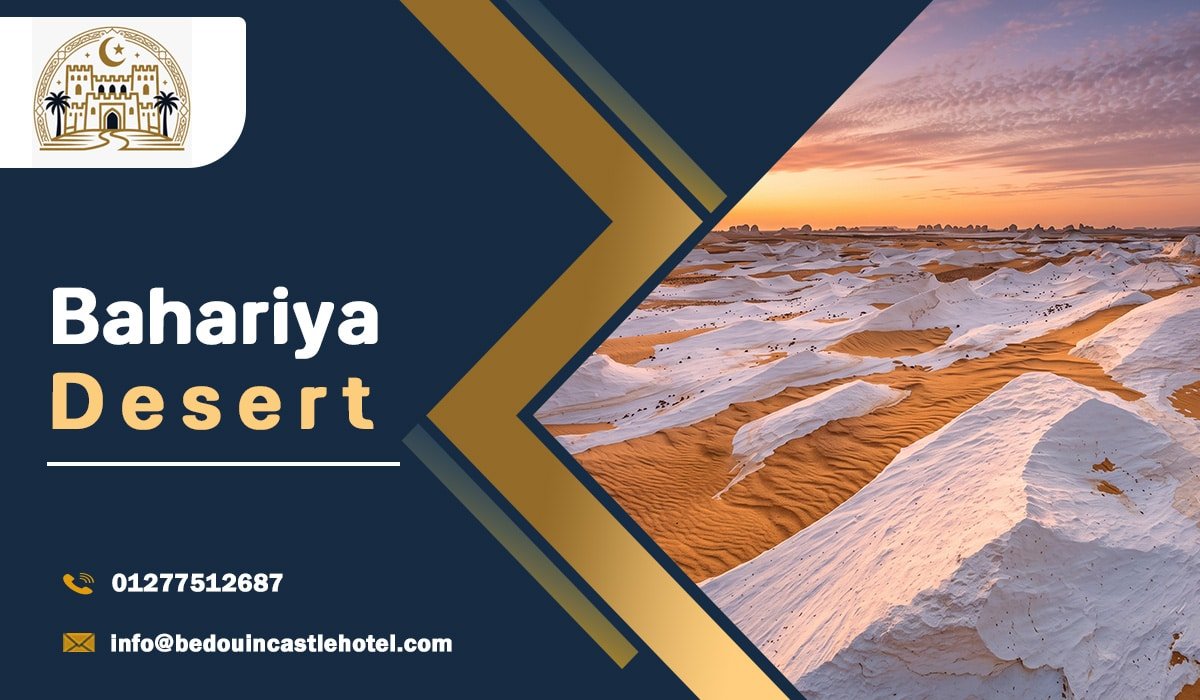
Several hours southwest of Cairo lies Bahariya Desert, a landscape that feels as though it belongs to another world entirely. Here, volcanic hills rise from the earth like blackened remnants of an ancient catastrophe. Crystal-covered mountains sparkle under the desert sun. Palm-filled oases emerge unexpectedly from barren terrain. And beyond it all lies the legendary White Desert, where surreal chalk formations transform the Sahara into what looks like an alien sculpture garden.
Bahariya Desert is not simply a destination. It is an experience that challenges expectations about Egypt, deserts and travel itself. Unlike the crowded tourist corridors connecting Cairo, Luxor and Aswan, Bahariya offers something increasingly rare in modern tourism: space. Vast amounts of it. Space to explore, to think, to disconnect and to witness landscapes that remain largely untouched by mass tourism.
For adventurous travelers, photographers, campers and anyone searching for a side of Egypt that exists beyond guidebook stereotypes, Bahariya Desert represents one of North Africa’s greatest hidden gems. The journey begins where Egypt’s familiar story ends.
Leaving Cairo Behind
Cairo is a city that overwhelms the senses. With more than twenty million residents spread across the greater metropolitan area, Egypt’s capital operates at a relentless pace. Traffic flows in every direction. Street vendors compete for attention. Cafés overflow with conversations. Construction projects reshape neighborhoods. Life unfolds simultaneously across thousands of streets. For many visitors, Cairo’s chaos is part of its charm. But eventually, the city begins to thin.
The drive toward Bahariya Oasis takes travelers away from Egypt’s urban heart and deep into the Western Desert. At first, the changes seem gradual. Apartment buildings become less frequent. Commercial districts disappear. Traffic fades. Then, almost unexpectedly, the city is gone. What replaces it is openness. The highway stretches across an immense landscape where the horizon appears endless. The sky seems larger. The air feels different. The noise of urban life is replaced by long periods of silence interrupted only by the sound of the vehicle moving through the desert. This transition is more than geographical.
It is psychological. Modern life conditions people to constant stimulation. Notifications, advertisements, conversations and information streams demand attention every waking moment. The desert offers the opposite.
As the distance from Cairo increases, daily concerns begin to feel smaller. The mind adjusts to a slower rhythm. Travelers become more aware of the landscape outside their windows. The journey itself becomes part of the adventure. Hours pass while the Western Desert gradually reveals itself. Rocky formations appear in the distance. Isolated hills emerge from seemingly empty plains. The environment feels increasingly remote. By the time travelers approach Bahariya Oasis, they have already entered a different world.
What Exactly Is Bahariya Desert?
What Exactly Is Bahariya Desert?
The term “Bahariya Desert” often refers to the desert region surrounding Bahariya Oasis, one of Egypt’s most important and historically significant oases. Located approximately 230 miles southwest of Cairo, Bahariya serves as a gateway to some of the country’s most spectacular natural attractions.
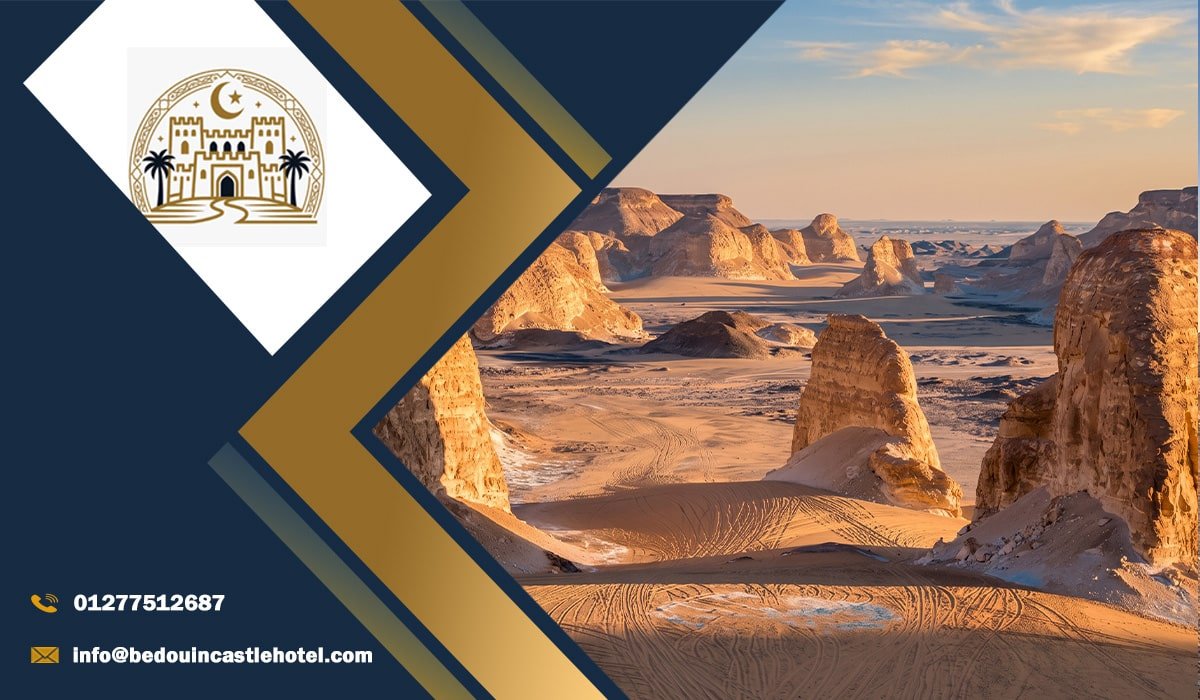
Unlike the endless sand seas often associated with the Sahara, Bahariya’s landscape is remarkably diverse. The region contains volcanic hills, limestone formations, fossil-rich terrain, palm groves, natural springs and archaeological sites spanning thousands of years. Its geographical position has made it an important stopping point throughout history.
Ancient trade routes crossed the area, connecting communities separated by vast stretches of desert. Travelers, merchants and explorers relied on the oasis for water, food and shelter during journeys through one of the world’s harshest environments. Today, Bahariya remains a vital settlement, but it has also become a launching point for desert expeditions exploring the surrounding wilderness. What makes the region particularly fascinating is the way natural history and human history intersect. Every landscape tells multiple stories.
There are geological stories written across millions of years. There are archaeological stories left behind by ancient civilizations. There are contemporary stories told by the communities that continue to live and work in this remarkable environment.
The Desert That Used to Be an Ocean
One of the most surprising facts about Bahariya Desert is that it was once underwater. Millions of years ago, much of Egypt’s Western Desert lay beneath ancient seas. Marine organisms lived, died and accumulated on the seafloor. Their remains contributed to layers of limestone, chalk and sediment that would eventually become some of the region’s most distinctive geological features.
Evidence of this ancient marine environment still exists today. Fossils can be found throughout the area. Ancient seabeds have become desert plains. Geological formations reveal clues about environmental conditions that existed long before humans appeared. This history helps explain why Bahariya’s landscapes often feel so unusual. The desert was not simply shaped by sand and wind.
It was shaped by oceans, climate shifts, tectonic processes, erosion and millions of years of environmental transformation. Every hill and rock formation represents a chapter in a story that began long before civilization. Standing in Bahariya Desert can feel like standing inside a geological time machine. The landscape invites visitors to think on scales far larger than human history.
Bahariya Oasis: Life in the Middle of the Sahara
- The first-time visitor’s reaction to Bahariya Oasis is often surprise.
- After hours of driving through barren desert terrain, the sudden appearance of greenery feels almost impossible.
- Palm trees stretch across the landscape. Agricultural fields emerge between rocky formations. Water supports life in an environment that otherwise appears inhospitable.
- The oasis serves as a reminder of one of nature’s most remarkable abilities: creating islands of life in seemingly impossible conditions.
- For centuries, local communities have depended on underground water sources to sustain agriculture and daily life.
- Date palms dominate the landscape, producing one of the region’s most important crops. Olive trees, fruit orchards and vegetable farms contribute to the local economy.
- The contrast between oasis and desert is dramatic.
- One moment travelers are surrounded by rocky wasteland.
- The next, they find themselves among green fields and palm groves.
- This contrast creates much of Bahariya’s unique character.
- It is a place where life and wilderness coexist in close proximity.
Meeting the People of Bahariya
- While the landscapes attract visitors, the people of Bahariya often leave equally strong impressions.
- The oasis has maintained a distinct identity shaped by centuries of adaptation to desert life.
- Hospitality plays an important role in local culture. Travelers frequently encounter warm welcomes, shared meals and conversations that provide insight into everyday life in the oasis.
- Many local families have lived in the region for generations.
- Their connection to the land extends beyond geography. It encompasses traditions, stories, agricultural practices and knowledge passed down through generations.
- For visitors accustomed to large tourist destinations, Bahariya offers a more personal experience.
- Interactions often feel less transactional and more genuine.
- Local guides share not only information about attractions but also perspectives on the region’s history, culture and future.
- These conversations add depth to desert exploration.
- The landscape becomes more than scenery.
- It becomes part of a living community.
The Black Desert: Egypt’s Volcanic Wonderland
- One of the most famous attractions near Bahariya Oasis is the Black Desert.
- At first glance, the landscape seems almost impossible.
- Instead of golden dunes, travelers encounter dark volcanic hills rising dramatically from the desert floor.
- The terrain appears burned.
- Black stones cover the slopes. Volcanic minerals create an environment unlike anything most visitors expect to find in Egypt.
- Scientists believe the Black Desert’s appearance results from volcanic activity that occurred millions of years ago. Over time, weathering processes distributed dark volcanic materials across the surrounding landscape.
- The result is visually stunning.
- The black hills contrast sharply with the lighter desert floor. During sunrise and sunset, shadows emphasize the dramatic contours of the terrain.
- Photographers are especially drawn to the area.
- Light behaves differently across dark volcanic surfaces. The changing position of the sun creates constantly evolving patterns of shadow and contrast.
- Climbing one of the hills rewards visitors with panoramic views extending across vast sections of the Western Desert.
- From these elevated vantage points, the scale of the landscape becomes apparent.
- Civilization feels distant.
- The desert appears endless.
- The silence becomes one of the experience’s defining features.
Why Empty Places Feel So Powerful
- Modern society rarely provides opportunities to experience true emptiness.
- Cities are crowded.
- Digital devices ensure constant connectivity.
- Even remote destinations often attract large numbers of visitors.
- Bahariya Desert remains different.
- There are moments when travelers can stand alone and see no signs of human activity in any direction.
- This experience affects people in unexpected ways.
- Initially, some visitors find the emptiness unsettling.
- The absence of familiar distractions feels unusual.
- But after spending time in the desert, many discover something else.
- The emptiness becomes liberating.
- Without constant stimulation, attention naturally shifts toward the environment.
- Small details become noticeable.
- The shape of distant hills.
- The movement of clouds.
- The texture of volcanic rocks.
- The sound of wind crossing open terrain.
- The desert encourages observation.
- It rewards patience.
- It reminds travelers how rarely they encounter true silence.
Crystal Mountain: Nature’s Unexpected Masterpiece
- Among Bahariya’s most unusual attractions is Crystal Mountain.
- Despite its name, it is not a mountain in the traditional sense.
- Instead, it is a geological formation containing large quantities of quartz crystals embedded within the rock.
- When sunlight strikes the crystals, the effect can be mesmerizing.
- The surface glitters and reflects light in ways that seem almost artificial.
- Travelers often compare it to a giant natural gemstone emerging from the desert.
- Crystal Mountain became increasingly famous after explorers and geologists began documenting its unique appearance.
- Today, it serves as a popular stop on desert excursions between Bahariya Oasis and the White Desert.
- The attraction highlights one of the region’s greatest strengths: unpredictability.
- Just when visitors think they understand the landscape, the desert reveals something entirely different.
- Volcanic hills give way to crystal formations.
- Rocky plains transition into chalk sculptures.
- Every stage of the journey introduces new surprises.
White Desert: The Main Event
- If Bahariya Oasis is the gateway, the White Desert is the destination that travelers remember forever.
- Officially protected as a national park, the White Desert represents one of the most extraordinary natural landscapes on Earth.
- The first glimpse often leaves visitors speechless.
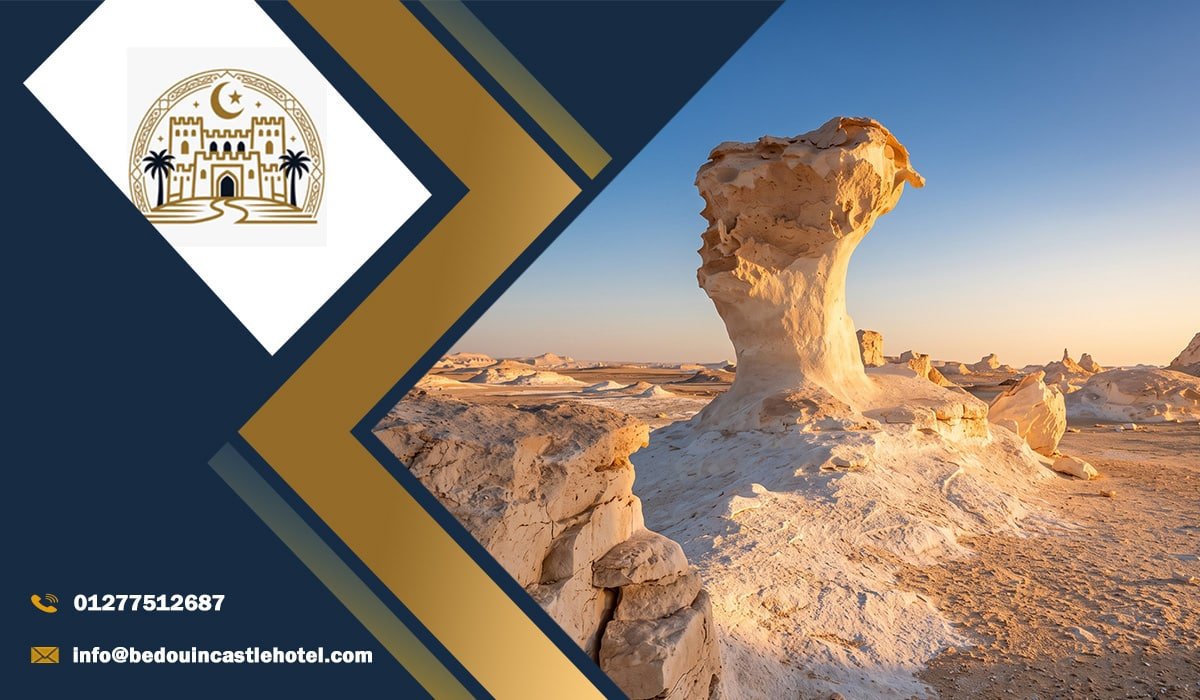
- Massive white formations rise from the desert floor in shapes that seem impossible to explain.
- Some resemble giant mushrooms.
- Others look like animals.
- Some appear as abstract sculptures created by an artist with unlimited time and imagination.
- The formations consist primarily of chalk and limestone shaped by millions of years of wind erosion.
- Sand carried by desert winds gradually carved the rock into increasingly bizarre forms.
- Nature became the sculptor.
- Time became the tool.
- The results are astonishing.
- Walking through the White Desert feels like exploring another planet.
- Every direction reveals new formations.
- Every hour changes the lighting conditions.
- Every perspective offers a different interpretation of the landscape.
- Unlike many famous attractions, the White Desert remains relatively uncrowded.
- Visitors can wander among the formations without the distractions of large tour groups or commercial development.
- The experience feels intimate despite the immense scale of the environment.
Why the White Desert Feels Like Science Fiction
- Travel writers often compare the White Desert to Mars, the Moon or science-fiction movie sets.
- These comparisons exist for a reason.
- The landscape challenges familiar visual references.
- Most people have never encountered anything quite like it.
- The white chalk formations create an environment that seems detached from ordinary reality.
- Combined with the vast desert surroundings, the effect becomes even stronger.
- At certain times of day, shadows stretch across the formations, enhancing their otherworldly appearance.
- Sunrise and sunset are especially dramatic.
- Warm light transforms the white surfaces into shades of gold orange, pink and purple.
- The landscape appears different every few minutes.
- Photographers chase these changing conditions because each moment offers unique opportunities.
- Yet even the best images struggle to capture the atmosphere.
- Being there in person remains incomparable.
- The scale, silence and sense of isolation are difficult to translate into photographs.
Camping in the White Desert
- For many travelers, spending the night in the White Desert becomes the highlight of their Egyptian adventure.
- Camping allows visitors to experience the landscape beyond daylight hours.
- As evening approaches, temperatures begin to drop.
- The intense sunlight softens.
- The formations take on warmer colors.
- Shadows lengthen across the desert floor.
- Sunset arrives slowly, transforming the entire environment.
- The spectacle feels theatrical.
- Nature appears to stage a performance using light, color and stone.
- Then darkness falls.
- The experience enters a new phase.
Around the Campfire
- Desert camping creates opportunities for human connection that are increasingly rare in modern travel.
- Without televisions, shopping districts or constant internet access, people naturally gather around campfires.
- Meals are prepared outdoors.
- Tea is served.
- Stories are exchanged.
- Travelers discuss their journeys, backgrounds and impressions of the desert.
- Guides share local knowledge and personal experiences.
- The atmosphere feels relaxed and authentic.
- Conversations unfold without urgency.
- Nobody is rushing toward the next attraction.
- Nobody is checking schedules every few minutes.
- The desert encourages a slower pace.
- That pace often becomes one of the most memorable aspects of the trip.
One of Egypt’s Greatest Stargazing Destinations
- The night sky above the White Desert is extraordinary.
- Light pollution, one of the defining characteristics of modern civilization, is virtually absent.
- As a result, stars appear in astonishing numbers.
- Constellations become easy to identify.
- The Milky Way stretches visibly across the sky.
- Shooting stars often streak overhead.
- For travelers accustomed to urban environments, the experience can be emotional.
- Many people have never seen the night sky in such detail.
- Hours pass while visitors lie on blankets staring upward.
- The scale of the universe becomes impossible to ignore.
- Human concerns seem smaller.
- Perspective shifts.
- The desert has a way of doing that.
Hot Springs in the Middle of Nowhere
- Another surprising aspect of Bahariya Oasis is its abundance of natural hot springs.
- The idea seems contradictory.
- A scorching desert environment somehow produces warm, mineral-rich water emerging from underground sources.
- Yet this phenomenon has supported life in the region for centuries.
- Travelers often visit hot springs after long days exploring the desert.
- The experience provides a welcome contrast to dusty roads and rugged terrain.
- Relaxing in warm water while surrounded by desert landscapes feels almost surreal.
- Many springs also hold cultural significance for local communities.
- Stories, traditions and historical practices remain connected to these natural resources.
- For visitors, the springs offer another reminder that Bahariya is far more diverse than the word “desert” might suggest.
The Valley of the Golden Mummies
- Bahariya’s significance extends beyond natural beauty.
- The region is also home to one of Egypt’s most important archaeological discoveries.
- The Valley of the Golden Mummies gained international attention after archaeologists uncovered hundreds of mummies dating to the Greco-Roman period.
- Many featured elaborate decorations and gilded elements, providing valuable insights into ancient Egyptian society.
- The discovery transformed scholarly understanding of the region.
- It demonstrated that Bahariya was not merely a remote oasis but an important center of activity during multiple historical periods.
- Visitors interested in archaeology find the combination particularly appealing.
- Few destinations offer both extraordinary natural landscapes and significant historical sites within the same region.
- Bahariya succeeds in doing both.
Challenges of Visiting Bahariya Desert
- Like any remote destination, Bahariya Desert presents certain challenges.
- The journey requires time.
- Road travel can be lengthy.
- Temperatures may become extreme depending on the season.
- Luxury amenities are limited compared to Egypt’s major tourist centers.
- Some travelers may find the simplicity refreshing.
- Others may prefer more conventional tourism infrastructure.
- Understanding these realities helps set appropriate expectations.
- Bahariya is not designed around convenience.
- Its appeal comes from authenticity, adventure and natural beauty.
- Visitors willing to embrace those qualities usually find the rewards substantial.
Responsible Tourism in the Desert
- As interest in Bahariya and the White Desert continues growing, responsible tourism becomes increasingly important.
- Desert ecosystems can be fragile.
- Damage caused by irresponsible behavior may remain visible for years.
- Travelers can help preserve the region through simple actions.
- Avoid leaving waste behind.
- Respect natural formations.
- Support local businesses and guides.
- Follow established environmental guidelines.
- These practices ensure that future visitors can experience the same sense of wonder.
- The goal should not merely be to visit remarkable places.
- It should be to leave them unchanged.
When Is the Best Time to Visit?
- The most comfortable months for exploring Bahariya Desert generally fall between October and April.
- During this period, temperatures remain relatively moderate, making outdoor activities more enjoyable.
- Winter often provides ideal conditions for camping, hiking and photography.
- Summer brings significantly higher temperatures.
- While travel remains possible, the heat can become challenging, particularly during midday hours.
- Many experienced visitors prefer cooler seasons because they allow more flexibility and comfort.
- Weather considerations also influence photography opportunities.
- Clear skies, pleasant temperatures and dramatic seasonal lighting enhance the overall experience.
Why Bahariya Remains Underrated
- Despite its remarkable attractions, Bahariya Oasis receives far fewer visitors than Egypt’s famous archaeological sites.
- Part of this is understandable.
- The pyramids possess global recognition.
- The White Desert does not.
- Yet this relative obscurity contributes to Bahariya’s appeal.
- The region still feels like a discovery.
- Visitors often arrive with limited expectations and leave profoundly impressed.
- The absence of mass tourism preserves the authenticity of the experience.
- Landscapes remain largely untouched.
- Communities retain their character.
- The adventure feels genuine rather than manufactured.
- In an era when many destinations struggle with overtourism, Bahariya offers a refreshing alternative.
Final Thoughts: Egypt Beyond the Postcards
- Bahariya Desert challenges nearly every stereotype travelers may have about Egypt.
- Yes, the country contains extraordinary monuments and ancient wonders.
- But it also contains volcanic landscapes, crystal-covered hills, lush oases, natural hot springs, archaeological treasures and one of the most surreal deserts on Earth.
- The journey from Cairo to Bahariya represents more than a change in location.
- It represents a shift in perspective.
- The farther travelers move into the Western Desert, the farther they move from familiar assumptions.
- What they discover is a side of Egypt that feels wild, unexpected and profoundly beautiful.
- The Black Desert reveals nature’s volcanic power.
- Crystal Mountain showcases geological creativity.
- The White Desert demonstrates what millions of years of wind and time can accomplish.
- The oasis itself reminds visitors that life can flourish even in the harshest environments.
- Long after the trip ends, memories of Bahariya tend to remain vivid.
- The silence.
- The stars.
- The endless horizons.
- The sensation of standing among landscapes that seem to belong to another planet.
- For travelers willing to venture beyond Egypt’s most famous attractions, Bahariya Desert offers something increasingly valuable: the opportunity to feel genuine wonder.
- In today’s world, that may be the greatest adventure of all.
Contact us via whatsapp 01277512687.