
The White Desert is one of Egypt’s most extraordinary landscapes: a protected chalk wilderness of wind-carved formations, open horizons and silent camps reached through Bahariya Oasis. This guide explains how to plan the journey from Cairo, what the Black Desert and Crystal Mountain add to the route, how one-, two-, three- and four-day itineraries differ, what to pack, and how to choose a responsible local safari.
Reviewed for local trip-planning context by the Bedouin Castle Hotel & Safari team in Bahariya Oasis. Routes, access rules and permit requirements can change, so confirm the final program with a licensed operator before departure.
Start by comparing the White Desert safari tours, see the Bahariya Oasis hotel if you want to rest before or after the desert, or contact the local team for a route matched to your dates and group.
Planning a White Desert trip? Tell our Bahariya team your dates, group size and preferred trip length. We will help you compare a day trip, an overnight camp and a slower multi-day route.
White Desert Egypt: quick facts
| Where is it? | In Egypt’s Western Desert, within the Farafra Depression. Most short visitor routes are organized through Bahariya Oasis. |
|---|---|
| Protected status | The White Desert was declared a protected area in 2002. Egypt’s Environmental Affairs Agency lists it as a 3,133.5 km² landscape protected area. |
| Typical gateway | Bahariya Oasis, around 370 km southwest of Cairo according to Egypt’s official tourism portal. |
| Recommended first trip | Two days and one night for most first-time visitors because it includes sunset, camping, stars and sunrise. |
| Best general season | October to April for milder daytime conditions. Winter nights can be cold, so warm layers are essential. |
| Transport in the desert | A suitable 4×4 with an experienced, licensed local guide. Do not treat remote desert tracks as a self-drive sightseeing road. |
| Main route highlights | Bahariya Oasis, the Black Desert, Crystal Mountain, Aqabat Valley, springs and the chalk formations of the White Desert. |
| Longer expedition option | Remote routes such as Al-Gara Cave require more time and are subject to current access, permits and conditions. |
The Egyptian Environmental Affairs Agency describes the White Desert as a rare karst landscape and an open-air museum for desert environments, geography, fossils and wildlife. Its bright chalk floor and columns were shaped by natural erosion. That protected status matters: the rocks are not souvenirs, vehicles should follow permitted routes, and camps must leave the landscape as they found it.
Why the White Desert is worth visiting
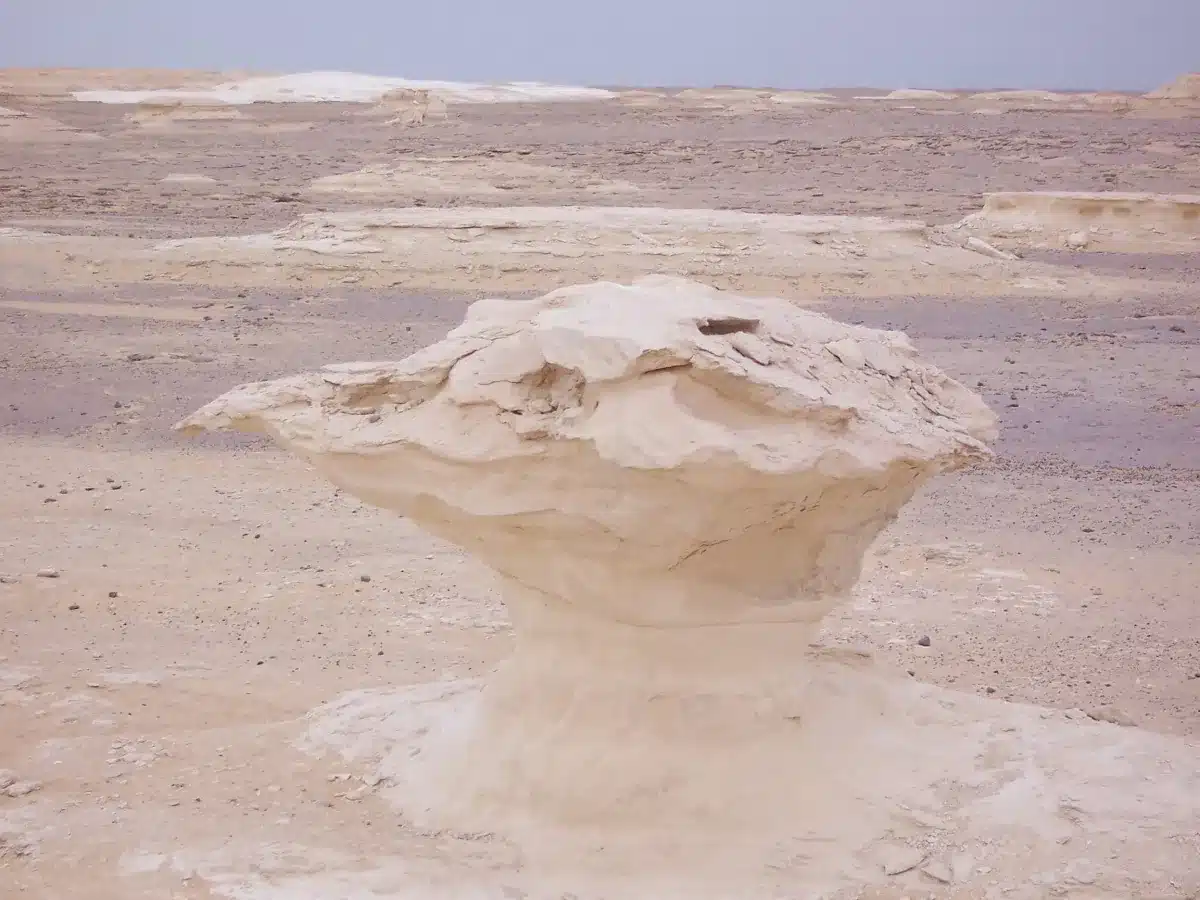
Many Egypt itineraries move between busy monuments, city traffic and the Nile. The White Desert changes the rhythm completely. The main experience is not a single landmark with an entrance gate; it is the transition through a sequence of landscapes. Dark hills rise from ochre ground in the Black Desert. Crystal Mountain catches the sun. Sand opens into the cliffs and dunes of Aqabat. Then the ground becomes pale and the chalk formations begin to resemble mushrooms, towers, animals and ships.
The most memorable moments are often simple: watching the color of the chalk change before sunset, hearing the wind fall away after dark, sharing dinner near camp, and waking before sunrise when long shadows reveal the texture of the formations. A quick photo stop can show what the rocks look like. An overnight trip explains why people remember the White Desert as an atmosphere rather than an attraction.
A landscape with real geological value
The formations are not sculptures installed for visitors. They are part of a chalk and limestone landscape shaped over a very long period by wind, sand and weathering. Some formations are narrow at the base and wider above because different layers erode at different rates. Their familiar nicknames help visitors describe them, but the protected area is larger and more varied than a collection of “mushroom rocks.”
This is also why visitors should resist climbing delicate formations or removing pieces of crystal and chalk. What feels like a small action becomes serious when repeated by thousands of travelers. Good guides choose durable stopping points and explain where walking is appropriate.
A route that combines several deserts in one journey
“White Desert tour” is usually shorthand for a broader safari circuit. From Bahariya, a typical route may include the Black Desert, a spring or rest stop, Crystal Mountain and Aqabat Valley before reaching the best-known chalk landscapes. Exact sequences change with the trip length, road and track conditions, permits, weather and the operator’s plan. A responsible itinerary does not promise every remote site on every date.
How to visit the White Desert from Cairo
For most travelers, the journey has two distinct parts. First comes the road transfer from Cairo or Giza to Bahariya Oasis. Egypt’s official tourism portal describes Bahariya as the closest Western Desert oasis to Cairo and estimates the road journey at about five hours, depending on the vehicle, traffic and stops. The second part begins in Bahariya, where the desert team prepares the 4×4, food, water and camping equipment before continuing away from the paved road.
Step 1: Cairo or Giza to Bahariya Oasis
A private transfer is the simplest option for travelers who want door-to-door timing. Public transport can reduce the road-transfer cost, but it adds coordination and is less convenient when luggage, arrival times or an early safari departure are involved. Always agree in advance where the driver will collect you, what luggage space is available and whether the transfer is private or shared.
Do not plan the first desert departure immediately after an uncertain international arrival. Flight delays, immigration, baggage and Cairo traffic can make a tight connection stressful. Spending a night in Cairo or arriving in Bahariya the day before gives the safari a calmer start.
Step 2: Meet the local desert team in Bahariya
Bahariya is more than a fuel stop. It is where vehicles, local knowledge and supplies come together. Depending on the program, travelers may eat, change vehicles, leave unnecessary luggage at the hotel, visit oasis sights or rest before entering the desert. If you have dietary requirements, medication that must stay cool, limited mobility or children in the group, this is the time to check the practical plan again.
Step 3: Continue by 4×4 into the desert route
The desert section should be operated with a suitable vehicle and a guide who understands the terrain and current rules. Egypt’s official tourism guidance specifically recommends arranging excursions through a hotel or licensed travel operator and choosing experienced, licensed guides with 4×4 vehicles. It also advises additional support for longer camping journeys. This is not bureaucracy for its own sake: routes, sand, visibility, temperature and communications all require local judgment.
If you want a simple overview before choosing dates, browse the Bedouin Castle tours and safari collection, then ask which itinerary is operating for your travel period.
What you see on a White Desert safari
Bahariya Oasis
Bahariya’s palms, farms, villages and springs create the first contrast with Cairo and the open desert. The oasis is associated with important Graeco-Roman discoveries, including the Valley of the Golden Mummies, and offers viewpoints such as Gebel al-Ingleez. A short safari may use Bahariya mainly as a gateway; a slower program can include local sights or an extra hotel night.
Travelers often underestimate the value of that extra night. It creates time to recover from the road, reorganize luggage, charge devices and speak with the local team before the remote section. See the hotel in Bahariya Oasis if you want to stay before or after camping.
The Black Desert
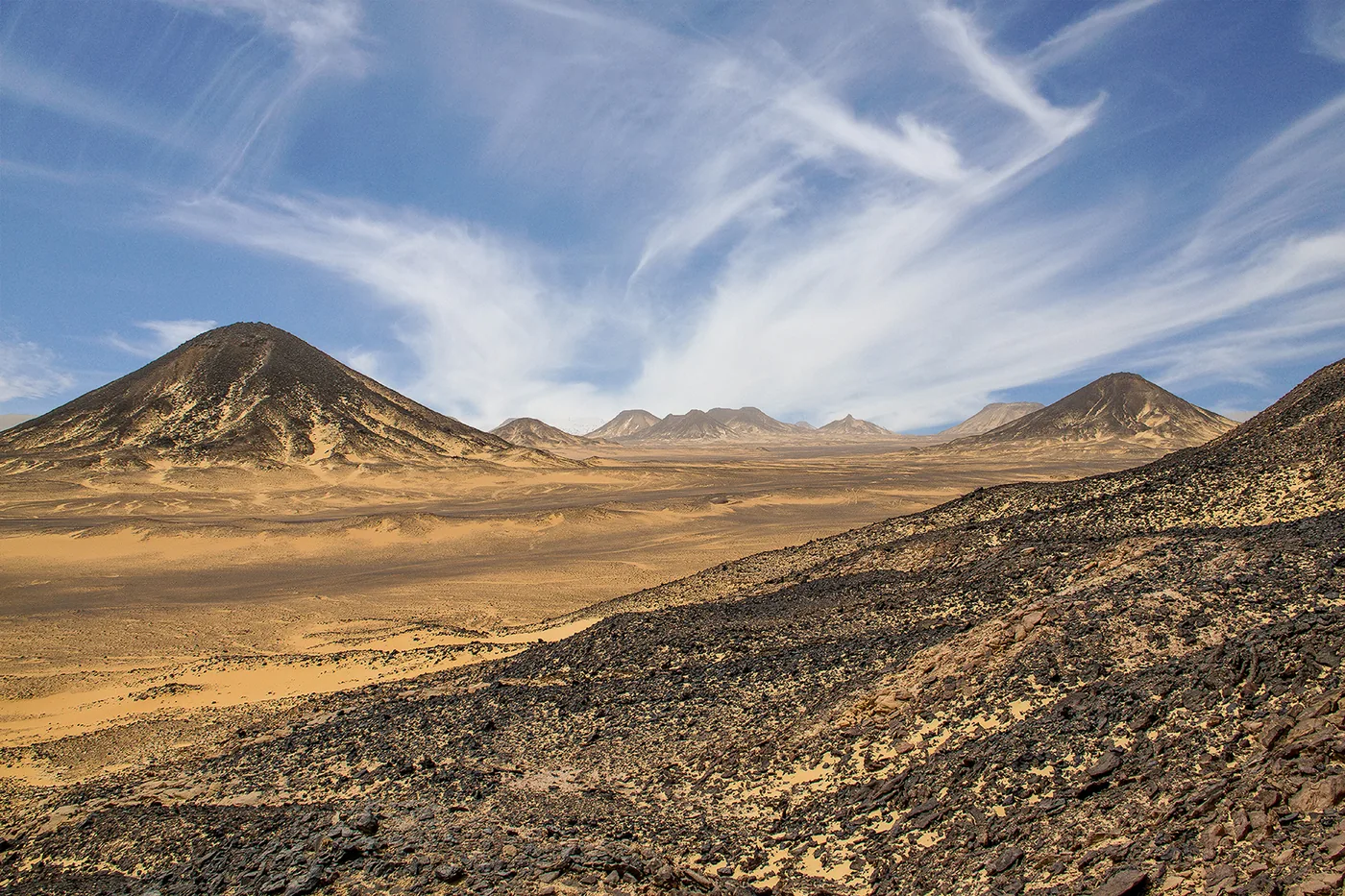
The Black Desert is known for widely spaced, volcano-shaped hills covered with dark material. “Volcanic-looking” is a useful visual description, but it should not be turned into a simplified claim that every hill is a volcano. The appeal is the contrast: black-topped ridges, rust-colored ground and broad views that feel completely different from the pale formations farther south.
Some itineraries include a short climb to a viewpoint. Footing can be loose, so closed shoes are preferable to sandals. The objective is the panorama, not a difficult hike. If heat, knees or balance are concerns, ask whether the view can be enjoyed from a lower stop.
Natural springs and rest stops
Springs around Bahariya are part of oasis life and often become practical breaks between drives. The exact spring used varies by route and conditions. Treat bathing as optional rather than guaranteed: ask about changing facilities, water temperature and privacy if these details matter to you. Carry quick-drying clothing and avoid soaps or products that can affect a natural water source.
Crystal Mountain
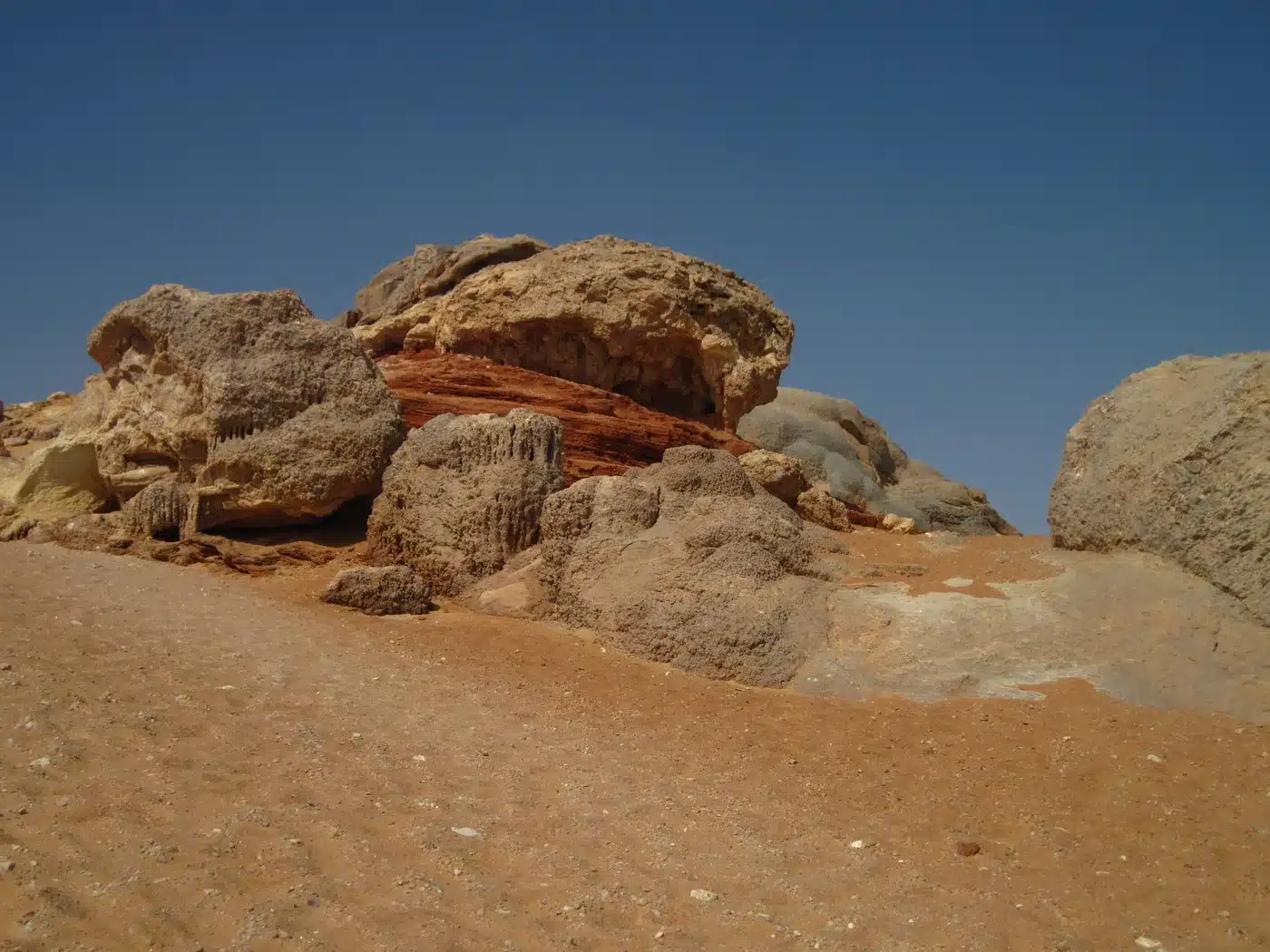
Crystal Mountain is a compact geological stop known for an arch and mineral crystals that sparkle in direct light. Egypt’s official tourism portal describes it as an underground cave formation pushed to the surface. It is not a high mountain and it is not the North American ski resort that appears in unrelated search results. Most visitors spend a short time walking and photographing the formation while traveling between Bahariya and the White Desert.
Do not remove crystals. A fragment in a pocket has little personal value compared with the damage caused when repeated visitors do the same. Photographs, not pieces of the protected landscape, are the right souvenirs.
Aqabat Valley
Aqabat Valley provides some of the route’s greatest sense of scale: soft sand, sweeping dunes and pale cliffs. The official tourism description notes that this landscape was once an ancient riverbed and that seashell traces can sometimes be seen. Depending on the permitted route and conditions, the stop may focus on a viewpoint, a walk, sand driving or lunch in a sheltered place.
The old and new White Desert
Operators and local guides may use “old” and “new” White Desert to distinguish areas with different formations and routes. The names are useful locally but can confuse travelers expecting separate ticketed parks. In practical terms, the wider protected landscape contains chalk cliffs, flatter white ground, isolated formations and dense groups of shapes. A longer itinerary has more freedom to show that variation.
The iconic mushroom and chicken-like formations are popular, but the quiet spaces between recognizable shapes are equally important. Ask the guide not only for famous photo stops but also for time to walk where permitted and observe the geology without rushing.
Al-Gara Cave on longer expeditions
Al-Gara, also written El Jara, is a remote cave destination associated with longer Western Desert expeditions. It should not be advertised as a quick detour from every White Desert camp. Travel time, access, permits, supplies and the condition of remote tracks make it a specialist itinerary. If this cave is your priority, choose a program designed around it and confirm the current operating route before paying.
Bedouin Castle lists a dedicated 4-day Al-Gara Cave and Western Desert safari. Treat the published program as a planning framework; the operating team should confirm what is currently accessible for your dates.
White Desert itineraries: one day, overnight, three days or longer?
| Trip length | Best for | Main advantage | Main compromise |
|---|---|---|---|
| 1 day from Bahariya | Travelers with very limited time or those who do not want to camp | Shows the landscape contrast and key route stops | No true desert night; the day can feel drive-heavy |
| 2 days / 1 night | Most first-time visitors, couples, families and small groups | Includes sunset, camp, stars and sunrise without a long expedition | Less time for remote or slow-paced exploration |
| 3 days / 2 nights | Photographers and travelers who dislike rushing | More flexible light, walks, viewpoints and a second night | Higher cost and an additional night in basic conditions |
| 4+ days | Experienced campers and travelers seeking remote routes | Can support specialist destinations and deeper desert time | Needs more logistics, supplies, permits and flexibility |
Can you see the White Desert in one day?
A day trip from Bahariya can be worthwhile when camping is impossible. It can introduce the Black Desert, Crystal Mountain and selected White Desert scenery, but the final route depends on timing and access. It should not be sold as an effortless day trip from central Cairo: the road journey to and from Bahariya is substantial. If you begin in Bahariya, consider the White Desert and Black Desert day trip.
Why two days and one night is the best first choice
The overnight itinerary captures the natural sequence of the landscape. You reach the desert with time for afternoon light, camp after sunset, experience the night sky and wake for sunrise. It also avoids the commitment of a long expedition. For many travelers, the 2-day White Desert camping tour offers the strongest balance of time, comfort and experience.
What three days changes
A second night is not simply “more of the same.” It gives the guide more room to adjust around wind, light and the group’s pace. Photographers can work at more than one sunset or sunrise. Families can stop without feeling that every break costs an attraction. Travelers can walk, rest and absorb the landscape instead of treating it as a checklist. Compare the 3-day White Desert tour if depth matters more than speed.
When a camel journey makes sense
Camel trekking is a separate style of travel, not an upgrade automatically suited to everyone. It is slower, more physical and built around the journey itself. Riders should discuss daily hours, support vehicles, sleeping arrangements and prior experience. Bedouin Castle also offers a multi-day camel trek in the White Desert for travelers specifically seeking that pace.
Best time to visit the White Desert
October through April is the most practical general season because daytime conditions are usually milder than in summer. December, January and February can bring very cold nights even when the afternoon feels pleasant. March and April may be warmer but can also bring wind or dust. Weather never follows a marketing calendar exactly, so check a current forecast and ask the local operator about conditions shortly before departure.
October and November
These months often provide a comfortable balance: warm daylight, cooler evenings and fewer worries about extreme summer heat. They are popular, so reserve early around holidays. A light layer is not enough for every night; bring a proper warm jacket.
December to February
Winter produces excellent walking and photography conditions during the day, but campers can underestimate how cold an exposed desert night feels. Wind removes heat quickly. Ask what bedding is supplied and bring thermal or fleece layers, a warm hat and socks. Travelers who sleep cold may prefer a hotel night before and after the camp.
March and April
Spring can be attractive for longer daylight and warmer evenings, but wind and dust need consideration. Keep plans flexible, protect cameras and contact lenses, and follow the guide if a route or camp position must change.
May to September
Summer heat changes the risk and comfort profile. A trip may still operate in some periods, but it requires careful timing, water planning, heat awareness and honest assessment of the group. Families with small children, older travelers and anyone with a condition affected by heat should be especially cautious. Do not choose summer only because a low price appears online.
What camping in the White Desert is really like
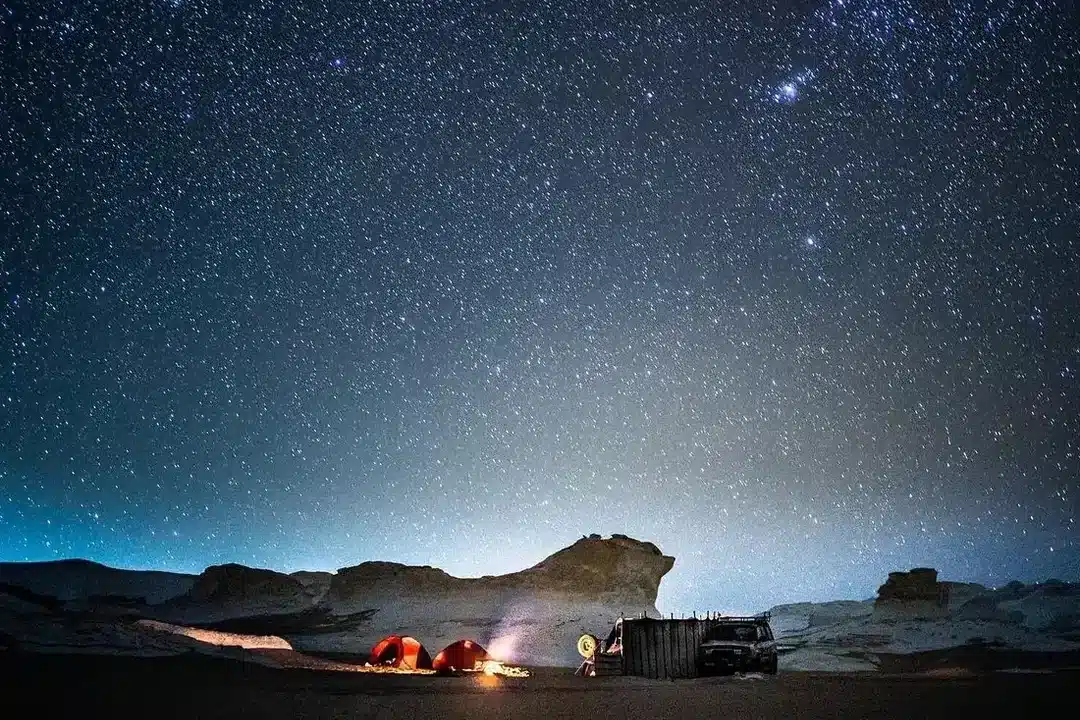
Desert camping can be beautiful without being luxurious. The most important questions are practical: what type of shelter is used, what bedding is provided, how meals are prepared, how the toilet arrangement works, and how the team manages waste. Ask for plain answers before booking. “Bedouin camp” can mean anything from a simple mobile camp to a more furnished setup; never assume.
Sleeping
Depending on the operator and weather, guests may sleep in tents or in a sheltered setup close to the camp. A mattress, sleeping bag and blankets may be supplied, but thickness and warmth vary. If you have back problems, need a private tent or require extra insulation, say so before the vehicle is packed. A small travel pillow and sleeping-bag liner can make a large difference without occupying much luggage space.
Food and water
Typical camps prepare a hot evening meal, tea and breakfast with ingredients transported from the oasis. Confirm what meals and drinking water are included. Tell the team about allergies, vegetarian needs or strong dislikes in advance; remote camps cannot easily replace ingredients after departure. Carry your own refillable bottle so drinking throughout the day is easy.
Toilets and washing
Remote desert camps usually do not have permanent bathrooms. A responsible team chooses a private toilet area, explains the method and packs out or manages waste appropriately. Wet wipes, hand sanitizer and a small personal towel are useful, but wipes must return with you rather than remain in the sand. If a portable toilet is essential, ask whether one can be arranged.
Connectivity and electricity
Mobile coverage is unreliable away from towns and roads. Treat disconnection as part of the experience, but make sure the operator has an appropriate communication and emergency plan. Bring a charged power bank and put your phone in airplane mode when there is no signal. Cameras and cold nights drain batteries faster than expected.
Wildlife and camp conduct
Do not feed wildlife or leave food scraps behind. Keep a respectful distance from animals that approach camp and let the guide manage food storage. Quiet behavior also improves the experience for other camps and reduces disturbance in a protected landscape.
What to pack for a White Desert safari
Pack for sun, wind, dust and a large temperature change between afternoon and night. A small soft bag is easier to fit in a 4×4 than a hard suitcase. Leave nonessential luggage at your Bahariya accommodation when possible.
Clothing
- Light, breathable daytime clothing that covers shoulders and skin from strong sun.
- A fleece or warm mid-layer and an insulated jacket for winter nights.
- Long trousers for camp and walking; avoid relying only on shorts.
- A scarf or buff for sun and dust, plus a warm hat in winter.
- Closed shoes with good grip; optional sandals for camp only.
- Clean socks and a comfortable change of clothes for the return.
Sun, skin and health
- Broad-spectrum sunscreen, sunglasses and a secure hat.
- Lip balm and moisturizer because dry air and wind can be uncomfortable.
- Personal medication in the original packaging, with extra doses for delays.
- Any required prescription, allergy information or medical note.
- A compact personal first-aid kit; the operator should also carry group supplies.
Camp and electronics
- Headlamp or flashlight, preferably with a red-light mode.
- Power bank, charging cables and spare camera batteries.
- Reusable water bottle.
- Small pillow or inflatable pillow and optional sleeping-bag liner.
- Hand sanitizer, tissues, wet wipes and sealable bags for personal waste.
- Dust protection for cameras and a microfiber cloth.
What not to bring
Avoid excessive luggage, fragile hard cases and items that create unnecessary single-use waste. Drones require careful legal and permit checking in Egypt and in protected areas; do not assume you may fly one because the landscape is remote. Do not bring tools for collecting rocks or fossils.
Safety, permits and responsible travel
Desert safety depends on current information, competent local operation and realistic decisions. A beautiful photograph cannot tell you whether a track is open, a permit is required or conditions are suitable. Confirm details with the operator shortly before the trip and review the current travel advice issued by your own government.
Use an experienced licensed guide and suitable vehicle
The official Experience Egypt guidance recommends licensed guides who know the terrain and 4×4 vehicles for excursions beyond the oasis. Ask who operates the desert section, how many guests travel in each vehicle, whether seat belts are available, what happens if a vehicle has a mechanical problem, and how the team communicates when mobile service disappears.
Confirm permits and fees
Protected-area procedures and visitor fees can change. The operator should explain whether permits and entrance fees are included in the quoted price. Do not rely on an old blog price as if it were a permanent government fee. Before publication of a fixed price, it should be checked against the latest Egyptian Environmental Affairs Agency decision and the actual operating program.
Check current travel advice
Travel advisories distinguish between different parts of Egypt’s large Western Desert. For example, the United Kingdom’s FCDO advice updated in 2026 lists exceptions that include the White and Black Deserts, Bahariya and the Giza–Farafra road corridor, while advising against some other Western Desert areas and routes. Advice can change and different governments may assess risk differently. Read the current map and wording rather than using a general statement that “the whole Western Desert is safe” or “the whole Western Desert is closed.”
Heat, hydration and health
Drink regularly before you feel very thirsty. Tell the guide early about dizziness, headache, nausea, confusion or unusual fatigue. Heat, sun, dehydration, motion over rough tracks and lack of sleep can combine. Travelers with heart, respiratory, mobility or other relevant conditions should seek personal medical advice and tell the operator what assistance may be needed.
Leave no trace in a protected landscape
- Do not remove chalk, crystals, fossils, plants or archaeological material.
- Do not climb fragile formations or carve names into rocks.
- Pack out plastic, wipes, cans, cigarette ends and food packaging.
- Use established or permitted camp areas and tracks.
- Keep music and artificial light considerate around wildlife and other camps.
- Support local guides, drivers, cooks, hotels and suppliers who depend on responsible tourism.
How to choose a good White Desert tour
Do not compare only the headline price. Two offers with the same number of days may include different transfers, private or shared vehicles, accommodation, meals, permits, bedding and route depth. A useful quote should make the operating details clear.
Questions to ask before booking
- Does the trip start in Cairo, Giza or Bahariya?
- Is the road transfer private or shared?
- How many guests will be in each 4×4?
- Which stops are planned, and which depend on permits or conditions?
- Are protected-area fees and permits included?
- What meals and drinking water are included?
- What tent, mattress, sleeping bag and blankets are provided?
- How is the toilet arranged and how is waste handled?
- Can dietary, mobility or medical needs be accommodated?
- What is the cancellation or route-change policy?
- Who is the local operating team in Bahariya?
- What emergency and vehicle-support plan is in place?
Private versus shared tours
A private trip usually gives more control over departure times, photo stops, dietary needs and the pace of children or older travelers. A shared trip can reduce cost and add a social element, but only if the group size and vehicle arrangement are clear. “Private” should describe the vehicle or program precisely; ask whether transfers and the desert vehicle are both private.
Low price versus good value
A very low price may exclude the Cairo transfer, permits, hotel nights, adequate bedding or a comfortable guest-to-vehicle ratio. The goal is not to buy the most expensive package; it is to understand what you are paying for and whether the operator is protecting guests, staff and the landscape. A transparent itinerary is more valuable than dramatic language.
Where to stay before or after the White Desert
Staying in Bahariya before the safari is useful when you arrive late, want to see the oasis or prefer not to connect a long Cairo transfer directly to off-road driving. Staying afterward gives you a shower, rest and a safer buffer before another fixed booking.
Bedouin Castle Hotel & Safari is positioned as a Bahariya base for both hotel stays and locally organized desert trips. Use the hotel page for room information, read the Bedouin Castle story for local context, or send your complete Egypt itinerary through the Plan With Us page.
When scheduling the return to Cairo, allow a generous buffer before a flight, train or cruise connection. Desert departures can shift because of conditions, group pace, checkpoints or road traffic. A responsible plan protects the next reservation rather than assuming an exact minute of arrival.
White Desert photography advice
The White Desert is highly photogenic, but strong midday light can flatten its texture. Sunrise and late afternoon reveal shape through long shadows. A wider lens captures the scale of formations and valleys; a moderate telephoto helps isolate patterns without walking close to fragile rocks.
Protect equipment from dust and temperature changes
Keep a blower and microfiber cloth available. Change lenses inside the vehicle or in a sheltered place when wind rises. Store batteries close to your body on cold nights. Moving a cold camera into warm air can create condensation, so leave it in a closed bag while temperatures equalize.
Photograph responsibly
Do not climb formations for a dramatic angle or direct a vehicle off permitted tracks to create tire trails. Avoid geotagging sensitive remote sites if the guide asks you not to. If photographing staff or local residents, ask permission and share images respectfully.
Plan for the sky, not only the rocks
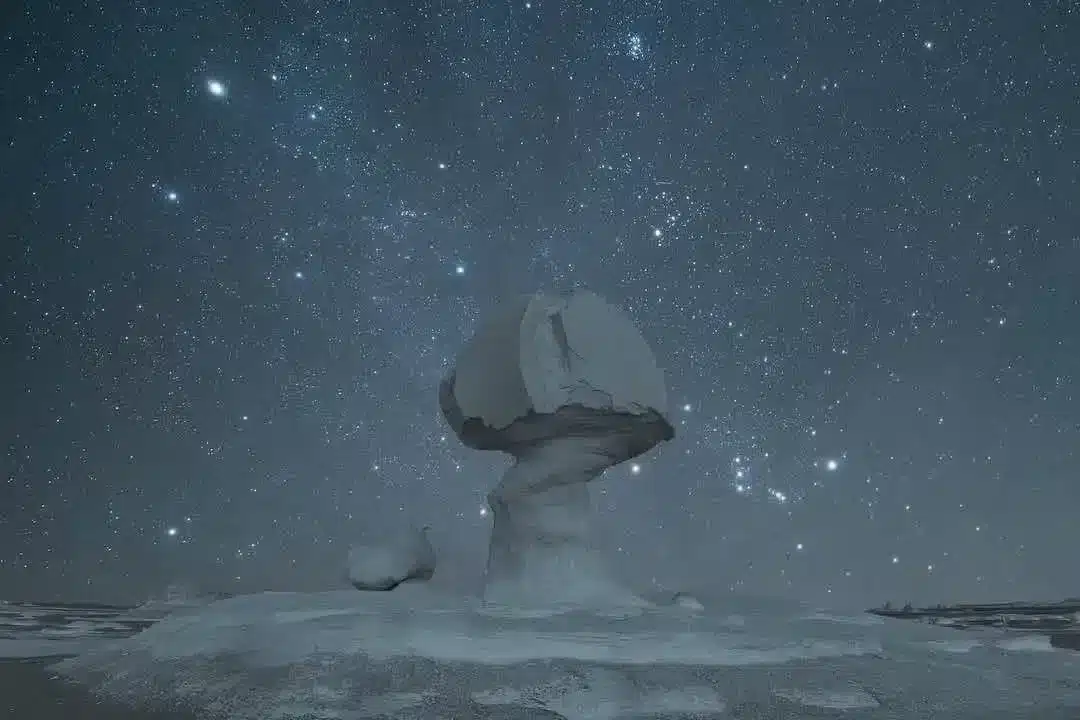
For night photography, bring a stable tripod, spare battery and headlamp with red mode. Discuss where you can stand without disturbing camp or walking near vehicles in darkness. Moon phase affects how many stars appear, but moonlight can beautifully illuminate white formations. There is no universally “best” night; choose the look you want.
Frequently asked questions about the White Desert
Is the White Desert a national park or protected area?
Yes. Egypt’s Environmental Affairs Agency lists the White Desert as a protected landscape declared in 2002, covering 3,133.5 km². Visitor routes and camp practices should respect protected-area rules.
How far is Bahariya Oasis from Cairo?
Egypt’s official tourism portal places Bahariya about 370 km southwest of Cairo and describes the road journey as approximately five hours. Actual time depends on the pickup point, traffic, stops and vehicle.
How many days do I need for the White Desert?
Two days and one night is the best first trip for most visitors because it includes sunset, camping and sunrise. One day works from Bahariya when time is limited; three days gives a slower pace; four or more days suits specialist remote routes.
Can I visit the White Desert as a day trip from Cairo?
Technically, an operator may combine long road transfers and a short desert visit, but it is an exhausting plan and misses the night experience. A day safari makes more sense when you are already staying in Bahariya. From Cairo, plan at least one overnight.
Can I drive to the White Desert without a guide?
Remote desert tracks, protected-area requirements and changing conditions make a licensed local guide and suitable 4×4 the responsible choice. Confirm the current permit and access requirements rather than treating online maps as an operating plan.
Is White Desert camping safe?
Risk depends on the operator, vehicle, route, weather, health needs and current official advice. Choose an experienced licensed team, disclose relevant needs, confirm permits and support arrangements, and check your government’s latest Egypt travel advice.
Are there toilets in the White Desert?
Permanent bathrooms are generally not part of a remote mobile camp. Ask exactly how privacy, toilet needs and waste are handled. A portable toilet may be available by prior arrangement with some operators.
Does it get cold at night?
Yes, especially in winter. The temperature can feel much colder after sunset because of dry air and wind. Bring warm layers, hat and socks, and confirm the sleeping bag and blankets supplied.
What is the difference between the Black and White Deserts?
The Black Desert is characterized by dark-covered, volcano-shaped hills and rust-toned ground. The White Desert is known for bright chalk landscapes and wind-eroded formations. Most safaris combine them because the contrast is part of the route.
Is Crystal Mountain really made of crystal?
It is a small exposed geological formation with sparkling mineral crystals and a recognizable arch. It is a short scenic stop, not a high mountain. Visitors should photograph it without removing fragments.
Can children join a White Desert safari?
Many families enjoy an overnight trip, but suitability depends on the child, heat or cold, off-road driving, basic toilets and sleep arrangements. Choose a private pace when possible and discuss ages, car seats, food and health needs before booking.
Can dietary requirements be accommodated?
Often yes when the team knows in advance. Explain allergies and dietary rules clearly before supplies are purchased in Bahariya. Ask for confirmation rather than assuming a remote kitchen can improvise.
How much does a White Desert tour cost?
The total depends on trip length, Cairo transfers, private or shared operation, group size, vehicle count, hotel nights, permits, food and camping equipment. Compare written inclusions and current quotes rather than choosing an old online price.
Official planning sources
Plan the right White Desert itinerary
Send your travel dates, number of guests, Cairo pickup needs and preferred comfort level. The Bedouin Castle team can help you choose a day safari, an overnight camp, a three-day route or a specialist expedition—and combine it with a stay in Bahariya Oasis.