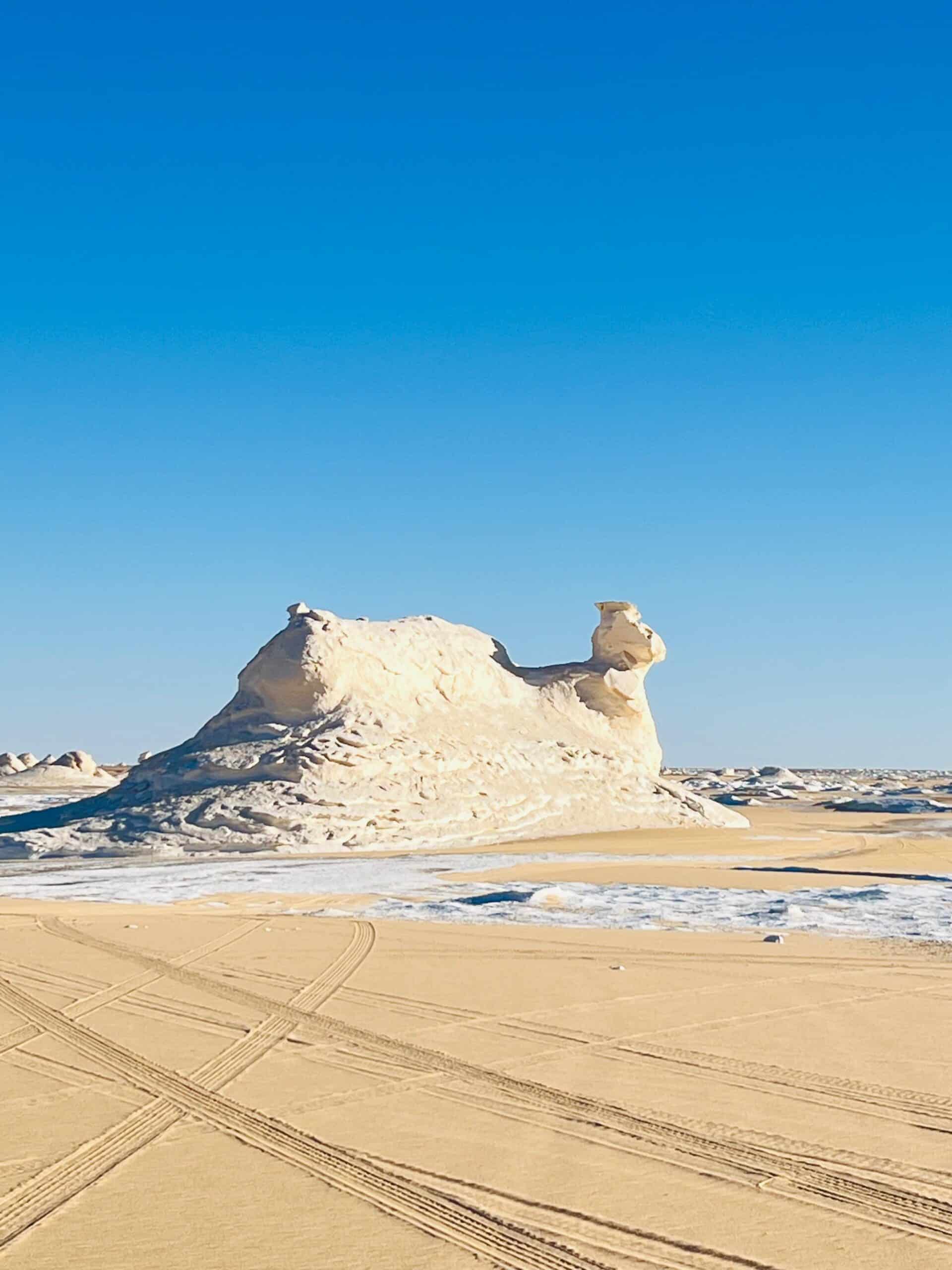
Al-Gara Cave Egypt—also written El Jara, Al Jara or Djara—is a remote limestone cave and archaeological landscape in the Western Desert. It is not a quick roadside attraction and should not be sold like an ordinary sightseeing stop. A responsible visit is a specialist multi-day expedition with current access checks, desert-capable vehicles, water and fuel planning, experienced navigation and strict respect for an exceptionally fragile natural and prehistoric setting.
Expedition enquiries: review the Al-Gara Cave tour framework, then contact the Bahariya team on WhatsApp. Dates and routes are confirmed only after current permissions, regional conditions and the group’s suitability are assessed.
Al-Gara Cave expedition quick facts
| Question | Practical answer |
|---|---|
| What is it? | A natural limestone cave within a remote prehistoric landscape |
| Where is it? | In Egypt’s Western Desert, on the limestone plateau between the Farafra and Nile Valley regions |
| Trip style | Specialist, self-sufficient multi-day 4×4 expedition |
| Starting base | Often organised through Bahariya Oasis, subject to the approved route |
| Ideal season | Generally the cooler months, with the exact departure dependent on conditions |
| Comfort level | Remote camping, long vehicle days and limited facilities |
| Main rule | Do not touch formations, rock art or archaeological material |
| Access | Never assume; permissions and regional rules must be checked for each departure |
Al-Gara, El Jara, Al Jara or Djara?
Different English spellings refer to the same cave or its immediate landscape. Arabic names can be transliterated in several ways, so online maps, academic papers and tour descriptions may use “Djara,” “Jara,” “Gara” or “Al-Gara.” The variation is linguistic, not evidence of four separate attractions. When researching, search more than one spelling and compare the context.
Academic literature frequently uses “Djara Cave.” Travel operators may prefer “Al-Gara Cave” or “El Jara Cave.” A careful itinerary should specify the region and expedition character rather than relying on the name alone. It should never imply that a pin copied from an open map is sufficient navigation in trackless desert.
Why Al-Gara Cave matters
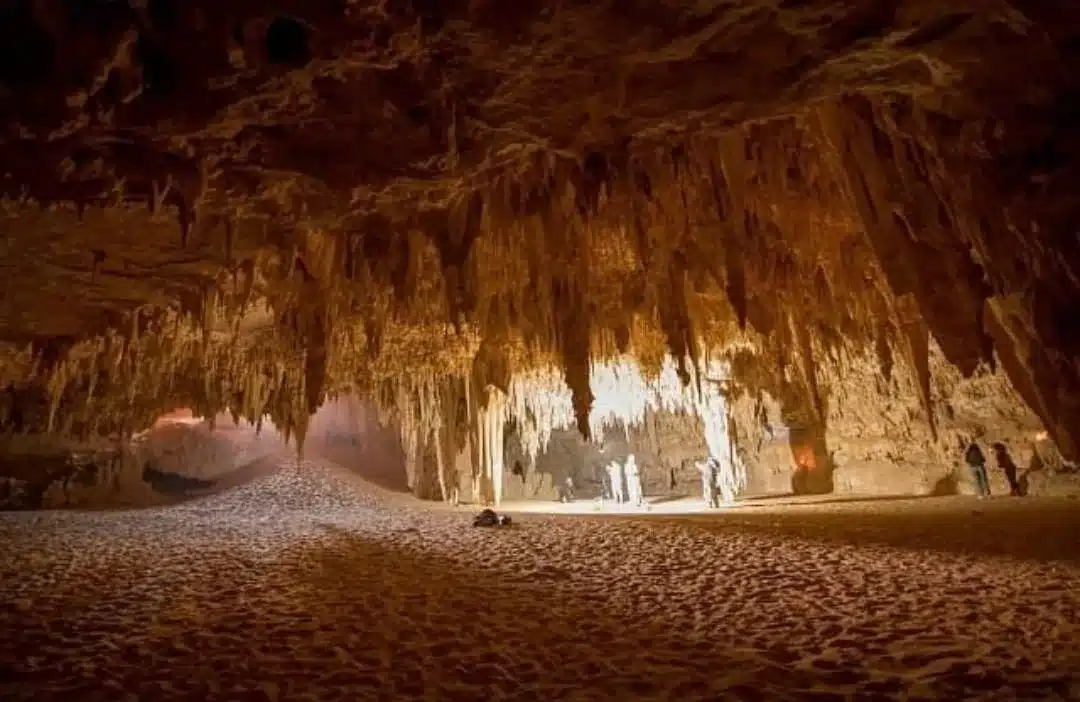
The cave is remarkable because natural history and human history occupy the same remote setting. Its interior contains mineral formations developed through long geological processes, while the surrounding area preserves evidence of prehistoric activity from periods when the Sahara was environmentally different from today. That combination demands restraint. A visitor is entering a research landscape, not a themed adventure park.
Peer-reviewed research describes Djara as a decorated cave and examines archaeological sites in the wider area. Studies connect evidence from the early and middle Holocene with questions about changing climate, mobility and human use of the desert. The cave is therefore valuable not only for its appearance but also for what the deposits, images and surrounding sites can teach when left in context.
For background, consult the scientific article on Djara and Holocene environmental evidence, the University of Minnesota record for research on cave morphology and evidence, and the archaeological publication indexed by Persée. Tour interpretation should remain consistent with evidence and admit where specialists disagree or information is incomplete.
Remoteness is part of the significance
The distance that complicates access has also limited mass visitation. That does not make the site immune to harm. A fingerprint on a formation, a boot across an archaeological scatter or a vehicle driven over fragile ground can alter a place that survived for thousands of years. Small groups, established approach practices and guide supervision are essential.
How the cave and its formations developed
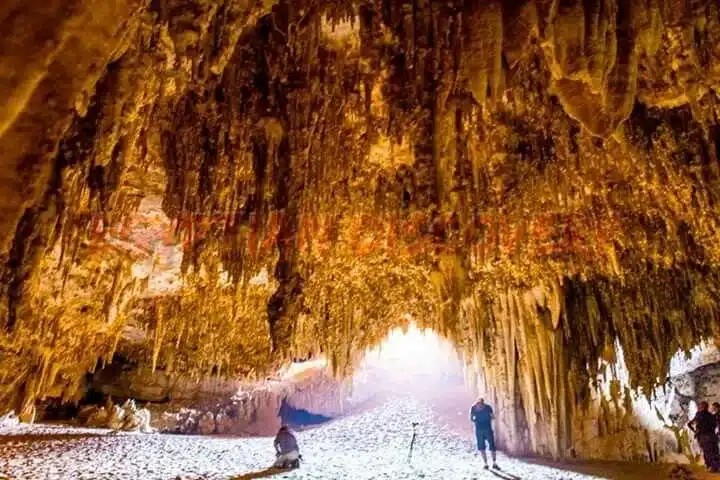
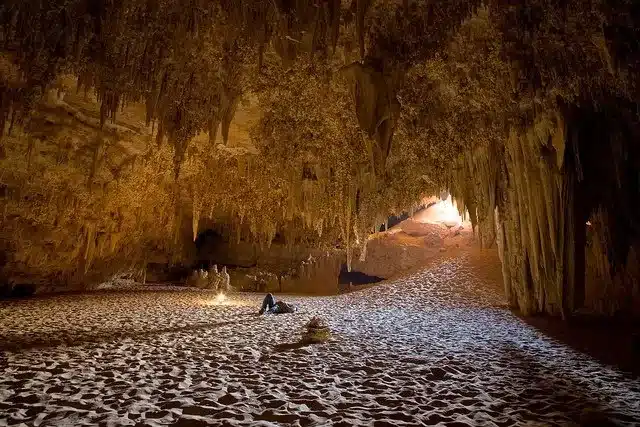
Al-Gara lies in limestone country. Caves form when water moves through fractures and gradually dissolves soluble rock, enlarging passages and chambers over long periods. Later, mineral-bearing drops can deposit calcite and create speleothems—the collective term for features such as stalactites hanging from ceilings, stalagmites rising from floors and flowstone covering surfaces.
The cave’s present dryness can mislead visitors into imagining that the forms are indestructible. They are not. Growth can be extremely slow, and a broken tip cannot be repaired on a human timescale. Skin oils and dust can change a surface. Nothing should be touched, leaned on, used as a tripod support or illuminated with hot equipment at close range.
Why the desert has a cave
Today’s arid surface is only the latest chapter. North African climate shifted repeatedly, and wetter intervals allowed water to act on limestone and supported environments very different from the modern hyper-arid landscape. Cave morphology, sediments and nearby archaeological evidence help researchers reconstruct parts of that history. A guide can explain the broad story, while specialised dates and interpretations should be attributed to research rather than presented as folklore.
What visitors may see
Depending on permitted access, light and the condition of the route, visitors may observe a chamber, pale limestone surfaces and varied mineral forms. Expectations should remain realistic: this is not a commercial show cave with electric paths, railings and theatrical lighting. The experience is quiet, dark and controlled. Entry may be limited for conservation or safety reasons.
Prehistoric archaeology and rock art
The wider Djara landscape has yielded evidence used to study prehistoric people in the Western Desert. Rock imagery and archaeological material are meaningful because of their relationship to one another and to the exact place where they remain. Removing a tool fragment or moving a stone destroys information even if the object looks ordinary.
Read images cautiously
Visitors naturally want to know what a figure “means.” Responsible interpretation distinguishes what can be described from what can only be hypothesised. An image may depict an animal or human form, but its purpose, date and cultural meaning require specialist study. Avoid guides who turn every mark into a confident legend without evidence.
Leave every object in place
Do not pick up, rearrange or clean stone pieces, pottery, bone or other material. Do not trace rock art with a finger, water, chalk or digital projection. Photography rules must be followed. If something appears newly damaged, tell the guide rather than attempting a repair.
What an Al-Gara Cave expedition actually involves
Most of the journey takes place outside the cave. Expect long off-road sections, repeated navigation decisions, simple meals, open-desert camps and dependence on the expedition team’s preparation. A polished photo of the chamber may represent only a small portion of several days. Travellers should choose the trip because they appreciate remote desert travel as a whole.
More than one capable vehicle
Remote teams commonly plan redundancy appropriate to the route: suitable 4×4 vehicles, recovery equipment, spare tyres, tools and enough fuel. The exact configuration is the operator’s responsibility and depends on group size and official requirements. A single vehicle marketed as a carefree adventure should prompt serious questions.
Water, food and fuel calculations
Supplies must cover the itinerary plus a prudent reserve. Drinking water is separate from optional washing water, and heat changes consumption. Fuel planning must account for sand, detours and idling, not merely map distance. Guests should disclose dietary restrictions early because remote menus cannot be redesigned after departure.
Navigation and communication
Mobile coverage cannot be assumed. Experienced desert navigation combines current route knowledge, appropriate equipment and the judgment to turn back. Guests do not need to direct the team, but they may reasonably ask how the operator communicates, shares the movement plan and handles delay or mechanical trouble.
Physical and psychological comfort
Long periods in a moving 4×4 can be tiring. The cave environment may feel confined, dark or uneven to someone with claustrophobia, balance problems or limited mobility. Camp toilets are basic and privacy arrangements vary. A good operator explains these realities before taking payment.
A realistic multi-day expedition framework
The following is a planning framework, not a guaranteed route. The number of days, checkpoints, camps and approach direction must reflect current authorised access. Times can change because of sand, weather, vehicle needs and official instructions.
Day 1: Cairo to Bahariya Oasis
Travel by road to the oasis, meet the team, review equipment and sleep at Bedouin Castle Hotel & Safari. This night creates space to resolve luggage, dietary questions and timing before leaving coverage and paved services. Read the Bahariya Oasis travel guide for the base itself.
Day 2: enter the Western Desert route
After the formalities and supply check, the expedition leaves the oasis on the approved route. The day may involve substantial driving with planned meal and observation stops. Camp is established before dark where possible, allowing the team to cook and organise vehicles safely.
Day 3: deeper desert travel
The group continues across changing limestone and sand landscapes. Pace depends on terrain rather than a sightseeing clock. Stops are selected to avoid fragile ground and keep the team together. Travellers help by packing promptly, securing loose items and following instructions around vehicles.
Day 4: Al-Gara Cave visit
Subject to permission and conditions, the cave is approached under guide control. Group size inside may be limited. The visit prioritises observation and conservation; it is not a free-roaming photo session. Afterward, camp may be placed at a suitable distance so the cave area remains undisturbed.
Day 5 and beyond: return route
The return is an active expedition phase, not dead time. Sufficient days must remain for a safe route back to Bahariya or the authorised exit. A hotel night before a Cairo transfer is sensible because it absorbs normal variability and gives everyone a chance to shower, eat and rest.
Some advertised programmes use fewer or more days. Judge them by distance, support and current feasibility, not by the lowest price. A plan that deletes every contingency may look efficient online but has little resilience in the field.
Camping, meals and hygiene
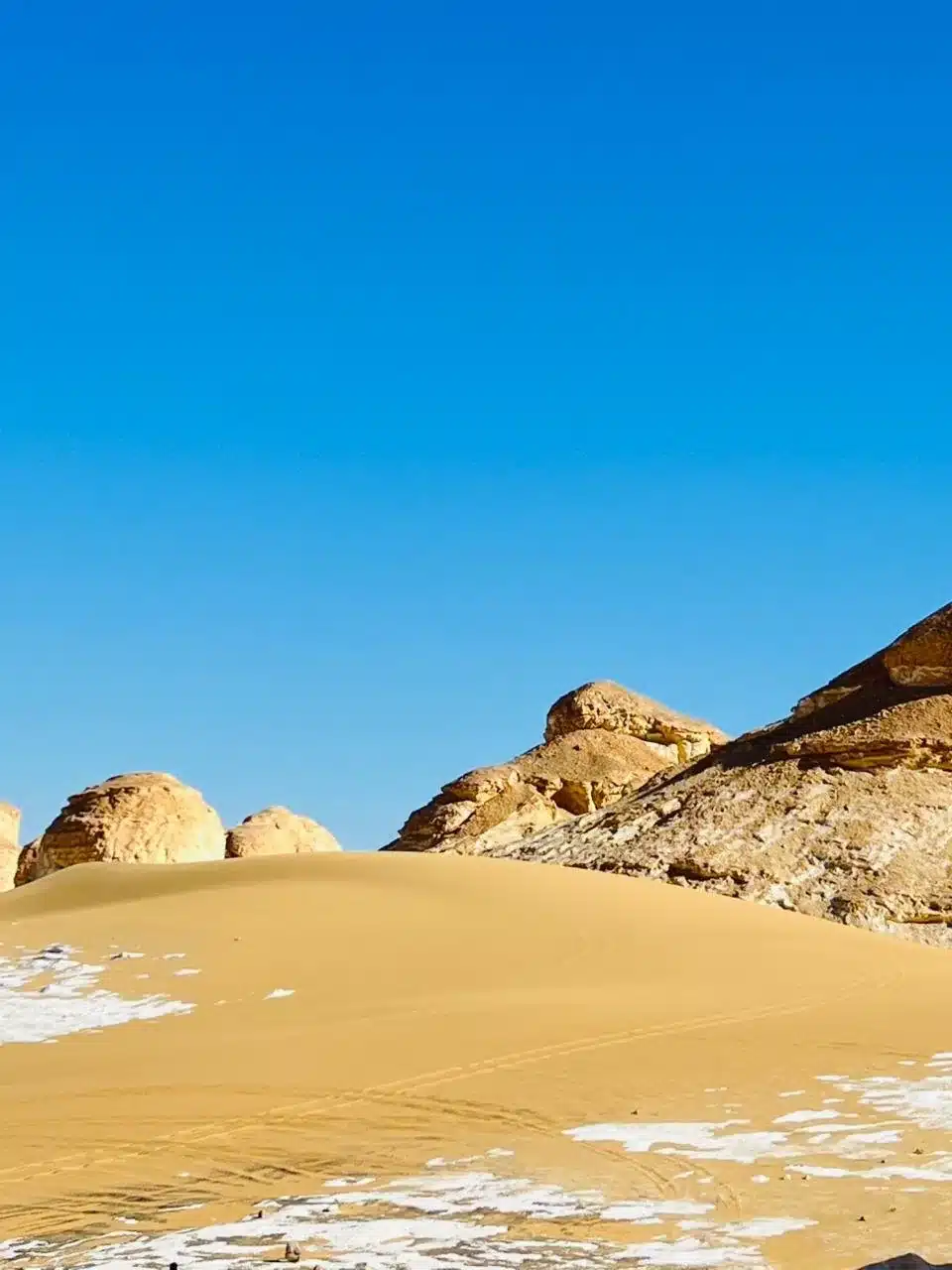
Camps are functional and leave-no-trace oriented. Depending on the arrangement, guests may sleep in tents or another explicitly described setup with mattresses and bedding. Ask for photographs of the actual equipment category, but recognise that wind and ground affect how any camp feels. Read our desert camping guide for detailed questions about tents, toilets and food.
Sleeping
Night temperatures can fall sharply. Use layered sleep clothing and confirm the temperature rating or type of supplied bedding. A personal sleeping-bag liner can add familiarity. Earplugs and an eye mask help light sleepers, while a headlamp should remain within reach.
Food
Meals are prepared from transported supplies and are usually simple, warm and filling. Inform the team about allergies, vegan requirements or religious restrictions in writing. Carry personal snacks only after checking storage; packaging and crumbs must be managed so nothing remains at camp.
Toilets and washing
There are no permanent bathrooms on a remote route. The operator should explain the privacy and waste method before booking. Water is primarily a survival resource, so bathing is limited. Bring unscented wipes if advised, hand sanitiser and sealable bags; all non-biodegradable waste leaves the desert.
Participation
Guests may be asked to keep their sleeping area organised or assist with simple camp routines. This is not luxury glamping. Treat guides, cooks and drivers as skilled expedition staff, not invisible service labour. Follow camp boundaries and never walk away alone after dark.
Al-Gara Cave packing list
| Category | Bring or confirm |
|---|---|
| Documents | Passport/ID, permits handled by operator, insurance details, offline contacts |
| Clothing | Breathable layers, warm night layers, wind-resistant outer layer, spare socks |
| Footwear | Closed shoes with grip; camp footwear only if the operator approves |
| Sun and dust | Hat, UV sunglasses, sunscreen, scarf or buff |
| Light | Headlamp with spare batteries; separate low-output backup |
| Health | Personal medicines, prescription copy, basic hygiene items |
| Power | Charged power bank and cables in a dust-protected pouch |
| Bags | Soft duffel and small daypack rather than a rigid oversized suitcase |
| Waste | Sealable bags for personal rubbish and used hygiene items |
Do not bring a drone on the assumption that it can be flown. National, security, protected-area and archaeological restrictions may apply, and importing or operating equipment can require permission. Large lighting rigs, generators and climbing equipment are inappropriate unless explicitly authorised for professional work.
Best time for an Al-Gara expedition
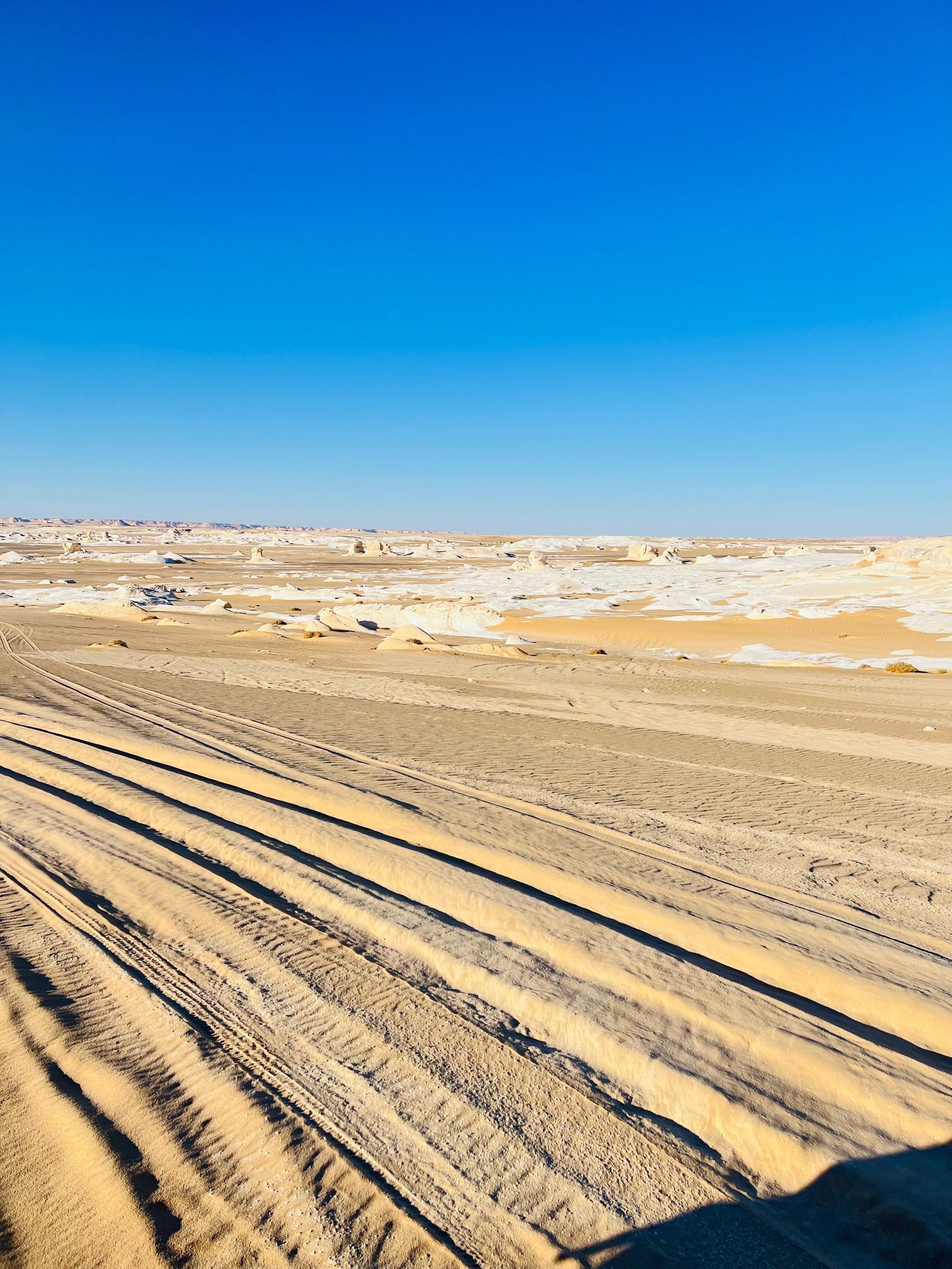
Cooler months are generally more suitable for remote Western Desert travel, but a calendar alone cannot approve a departure. Day heat, cold nights, wind, visibility, sand condition and official access must all be considered. Our best-time guide for the White Desert provides useful regional season context, though Al-Gara’s longer remoteness requires a stricter decision.
Winter advantages and trade-offs
Winter reduces extreme daytime heat but can produce very cold camps. Shorter daylight also affects the working schedule. Travellers need a sleep system appropriate to the forecast, not merely a fashion jacket. Cold-sensitive guests should discuss whether the available equipment is sufficient.
Shoulder-season conditions
Autumn and spring may provide warmer nights, yet hot spells and wind remain possible. The operator may adjust departure hours or camp location. Flexibility is valuable: reserve time after the expedition instead of booking an inflexible flight immediately after the planned return.
Why summer is different
Remote heat increases water demand, vehicle stress and consequences of delay. A standard sightseeing approach is not acceptable. If an operator proposes a hot-season trip, require a clear explanation of suitability and current authorisation. People with medical concerns should obtain professional advice.
Photography without damaging the cave
Low light encourages long exposures, but equipment must never contact formations or archaeological surfaces. Use only the support and lighting method permitted by the guide. Keep straps controlled, avoid blocking narrow areas and give other visitors space. Flash or continuous light may be restricted.
Manage expectations
Dust, darkness, limited time and conservation boundaries shape the result. A phone with night mode may be more practical than a complex kit. The objective is not to reproduce a heavily edited promotional image at any cost. Record the experience honestly, and never stage a person touching the wall.
Do not geotag sensitive details casually
Publicising precise approach tracks can encourage unprepared access and put fragile places at risk. Share the broad location and credit the authorised expedition, but consider whether detailed coordinates or route files should remain with responsible operators and authorities.
Image rights and people
Ask before photographing guides or other guests. Commercial filming has different requirements from personal photography and must be disclosed before booking. A permit for travel does not automatically grant permission for a professional production.
Safety, permissions and changing access
Remote Western Desert travel may be affected by government permissions and regional restrictions. Information from an old trip report is not current authorisation. The operator must check the intended route for the actual dates, and the itinerary may change or be cancelled if approval or safe conditions are absent.
Review official advice for your nationality and insurance policy. The UK government’s regional Egypt guidance is one public reference, but travellers should use their own government’s current advice as well. Protected-area information from the Egyptian Environmental Affairs Agency explains the conservation framework relevant to desert travel.
Health disclosure
Tell the operator about heart or respiratory disease, severe allergies, diabetes, pregnancy, mobility limitations, recent surgery, claustrophobia or medication needing refrigeration. This is not an invitation for the operator to give medical clearance; it allows them to explain the environment so you and a qualified clinician can judge suitability.
Insurance and evacuation expectations
Confirm that insurance covers Egypt, remote off-road travel and the planned activity. Ask how an emergency would be communicated and what the realistic response time might be. “We have a first-aid kit” is not a complete emergency plan. Evacuation from remote terrain cannot be expected to resemble an urban ambulance response.
Group behaviour
Seat belts should be used where fitted, instructions around recovery operations must be obeyed and nobody should stand close to a moving or stuck vehicle. Do not wander beyond the agreed camp boundary. Alcohol or behaviour that undermines judgment is incompatible with a remote expedition.
How to choose an Al-Gara Cave operator
- Ask about current access: the answer should refer to checks and conditions, not permanent guarantees.
- Request the trip structure: number of days, start and finish, approximate vehicle time and hotel nights.
- Clarify support: vehicle plan, staff roles, water, fuel, recovery and communication.
- Discuss conservation: group rules inside the cave and around archaeological evidence.
- Confirm inclusions: meals, bedding, permits, transfers, rooms and payment terms.
- Disclose needs: diet, health, mobility, sleep and photography equipment.
- Check flexibility: understand what happens if access, weather or safety changes.
Price matters, but a remote expedition cannot be evaluated like a city transfer. Extremely cheap offers may hide fewer support resources, unrealistic timing or excluded hotel and permit costs. Choose the clearest safety and logistics explanation, supported by local experience and a fixed contact point.
Frequently asked questions
Where is Al-Gara Cave in Egypt?
It is in the remote Western Desert limestone plateau, broadly between Farafra and the Nile Valley region. Exact access is handled through an authorised expedition, not a self-drive map pin.
Is Djara Cave the same as Al-Gara Cave?
Yes. Djara, Jara, El Jara and Al-Gara are common English transliterations used for the same cave and surrounding area.
Can I visit it on a day trip?
No responsible plan treats it as a normal day trip. Its remoteness requires a multi-day expedition with supplies, vehicles, camps and current permission checks.
Can I drive there in a rental car?
No. The route requires desert-capable vehicles, experienced navigation and an organised team. Standard rental conditions also commonly exclude off-road use.
How many days are needed?
The approved route determines duration, but travellers should expect several expedition days plus sensible hotel and transfer time. Ask for a written current itinerary rather than relying on an old online schedule.
Is the cave difficult to enter?
Conditions can involve uneven ground, darkness and confined-feeling space. Suitability depends on current access and the traveller’s mobility and comfort. Discuss limitations before booking.
Are there toilets or showers?
There are no permanent facilities on the remote route. Camps use a basic privacy and waste system, with limited water for hygiene. The operator should explain the arrangement.
May I touch the formations?
No. Touching can contaminate or damage slow-growing mineral surfaces. The same no-contact rule applies to rock art and archaeological objects.
Can I collect a rock or artefact?
No. Removing or moving natural and archaeological material damages the site and may be illegal. Leave everything exactly where it is.
Is photography allowed?
Personal photography may be possible under current rules, but lighting, tripods, drones and commercial filming can be restricted. Confirm in advance and obey the guide on site.
What is the best season?
Cooler months are generally preferred, with cold nights and variable wind. The operator must assess the actual forecast, route and permissions for every departure.
Can children join?
The long vehicle days, remote camps and cave environment make this a specialist decision. Provide ages and experience to the operator; a shorter White Desert itinerary may be more appropriate for many families.
What if permission changes?
The expedition must be changed, postponed or cancelled according to the applicable rules. A trustworthy operator will not bypass a restriction to protect a sale.
How do I request a trip?
Open the Al-Gara Cave tour page and send dates, group size and experience through the contact page or WhatsApp +20 12 77512687.
Plan the expedition with the right expectations
Al-Gara Cave Egypt rewards travellers who value the journey, science and silence as much as the destination. Its remoteness is not a marketing obstacle to be hidden; it is the central logistical fact and part of the site’s protection. Begin at Bedouin Castle Hotel in Bahariya Oasis, confirm current feasibility with the local team and build adequate time around the expedition. If your schedule or comfort needs do not match this route, the White Desert travel guide and shorter desert tours offer valuable alternatives.