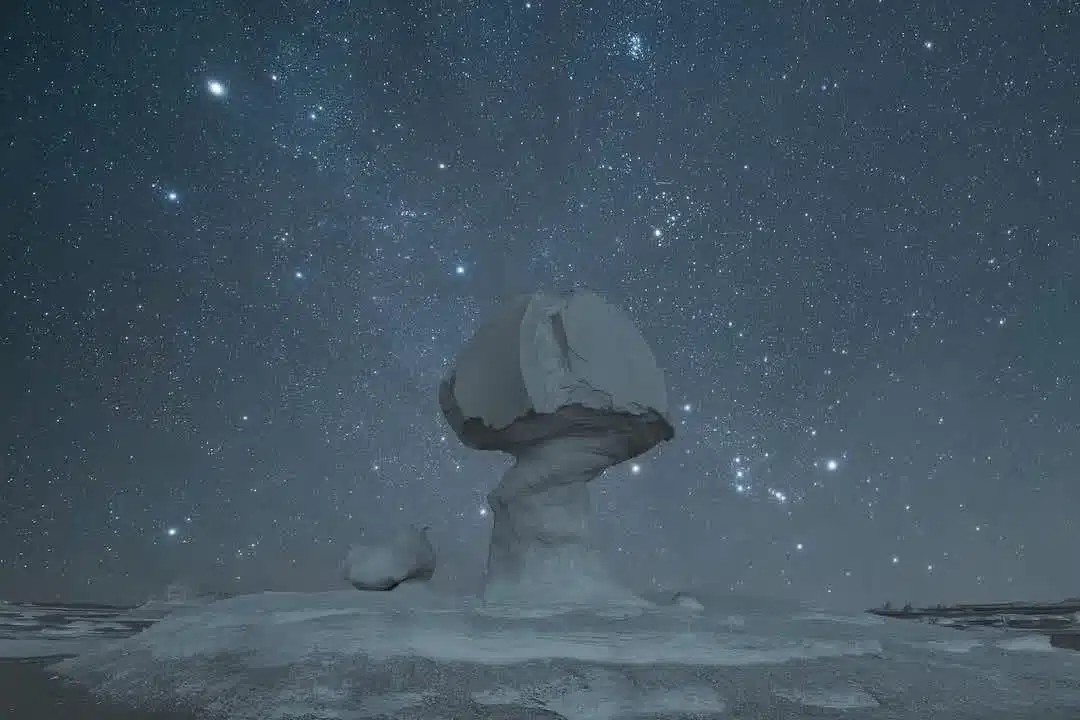
Choosing between a White Desert day trip and overnight camping changes far more than the number of hours you spend away from Bahariya Oasis. A day safari is a practical introduction for travelers who cannot or do not want to sleep outdoors. An overnight safari adds sunset, a simple desert camp, the night sky and sunrise—the moments that give the White Desert its strongest atmosphere. This guide compares both options honestly so you can choose the right itinerary for your time, comfort, budget and travel style.
Already know your dates? Compare the White Desert day trip from Bahariya with the 2-day White Desert camping tour. If you are still arranging the journey from Cairo, read the Cairo to White Desert transport guide first.
Ask the local Bahariya team: send your dates, number of guests and preferred comfort level on WhatsApp +20 12 77512687.
White Desert day trip or overnight camping: the quick answer
Choose a day trip when you are already staying in Bahariya Oasis, have one available day, prefer a bed and private bathroom at night, or are traveling with someone who is not comfortable with basic desert camping. You can still see major landscape changes and selected stops, but you return before the full after-dark experience.
Choose overnight camping when this is your first White Desert visit and your health and comfort needs allow a simple mobile camp. The overnight option is usually the better-value experience because sunset, dinner, stars, silence and sunrise are not optional extras: they are central parts of what makes the protected landscape memorable.
Do not confuse a White Desert day safari from Bahariya with a relaxed day trip from central Cairo. Bahariya is about 370 km southwest of Cairo according to Egypt’s official tourism portal. Combining the road journey in both directions with meaningful desert time creates a very long day. For most visitors coming from Cairo, one night in Bahariya or one night in the desert produces a safer, calmer itinerary.
White Desert day trip vs overnight camping comparison
| Decision point | Day trip from Bahariya | Overnight camping |
|---|---|---|
| Best for | Limited time, no camping, hotel comfort | First-time visitors seeking the complete experience |
| Typical duration | One full daytime safari | Two days and one night |
| Sunset and stars | May include late light, but usually no full night | Core part of the itinerary, weather permitting |
| Sunrise | No | Yes, when camp timing and conditions allow |
| Sleep | Return to a Bahariya hotel | Simple tent or sheltered mobile camp |
| Toilet | Hotel before and after; basic stops during safari | Remote camp arrangement; no permanent bathroom |
| Pace | More driving within a fixed daylight window | More time for stops, meals and changing light |
| Weather exposure | Mostly daytime sun, wind and dust | Day conditions plus a potentially cold night |
| Photography | Good landscape overview | Better range of sunset, stars and sunrise |
| Cost | Usually lower headline price | Higher, but includes camp logistics and more hours |
The exact route is never guaranteed by a comparison table. Protected-area access, permits, weather, road and track conditions, daylight, group pace and official instructions can change the sequence. A trustworthy operator explains what is planned and what may be adjusted rather than promising every remote stop on every date.
What a White Desert day trip is really like
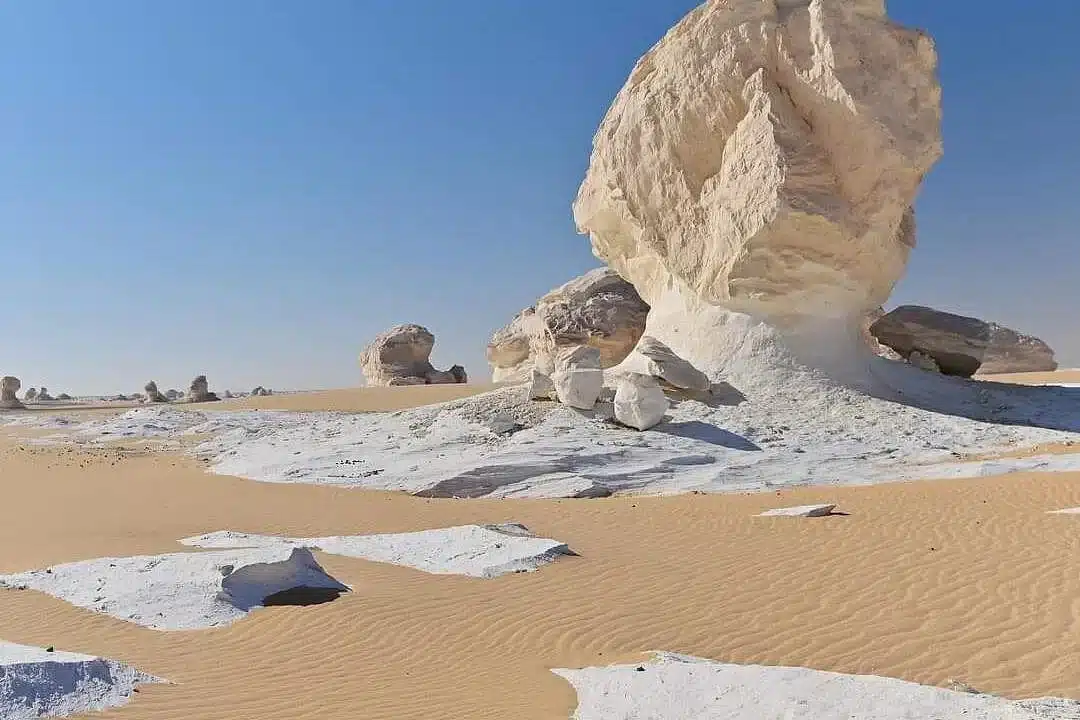
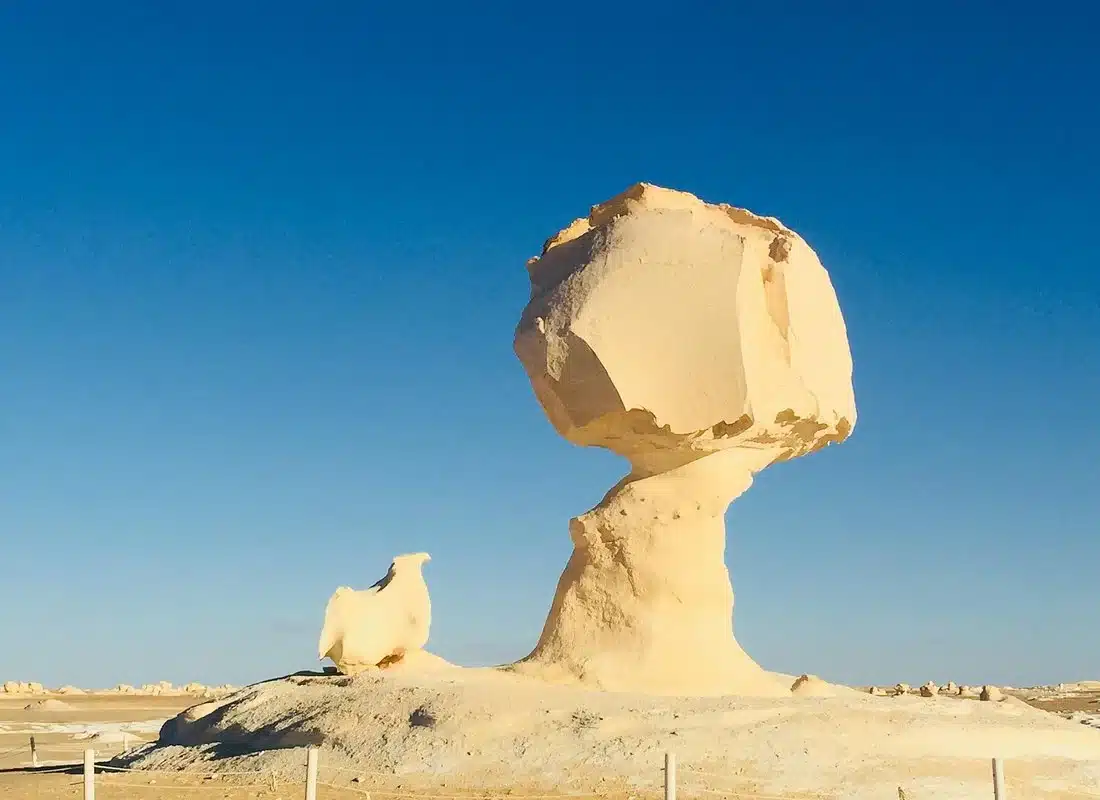
A well-planned day trip begins in Bahariya Oasis, not after an early morning drive from central Cairo. The local team confirms documents and current access, prepares the 4×4, loads drinking water and food, and agrees on the day’s route. You then leave the oasis and travel through a sequence of desert environments. Depending on current conditions, the program may include Black Desert viewpoints, a spring or rest stop, Crystal Mountain, the Agabat area and selected White Desert formations.
The main advantage: you return to a hotel
For many travelers, sleeping in a private room matters more than seeing the night sky. A day trip allows you to experience rough tracks, open landscapes and geological stops, then return for a shower, proper bathroom, mattress, electricity and a predictable sleeping environment. This can be the right choice for light sleepers, travelers with back problems, people who use night-time medical equipment, or anyone who simply does not enjoy camping.
Staying at the Bedouin Castle Hotel in Bahariya Oasis before and after the safari also creates useful buffer time. You can leave large luggage at the hotel, carry only what you need in the 4×4, and avoid connecting a desert return directly to a flight or another fixed booking.
The main compromise: daylight controls the schedule
A day safari must fit the route into a fixed window. Stops may feel shorter, and the guide has less flexibility if the group departs late or spends longer at an early viewpoint. You may see late-afternoon light, but the vehicle normally needs to return toward Bahariya rather than remain at a remote camp. The trip can show you the formations; it cannot reproduce the stillness that begins after vehicles settle and the sky darkens.
Who gets the most from the day option?
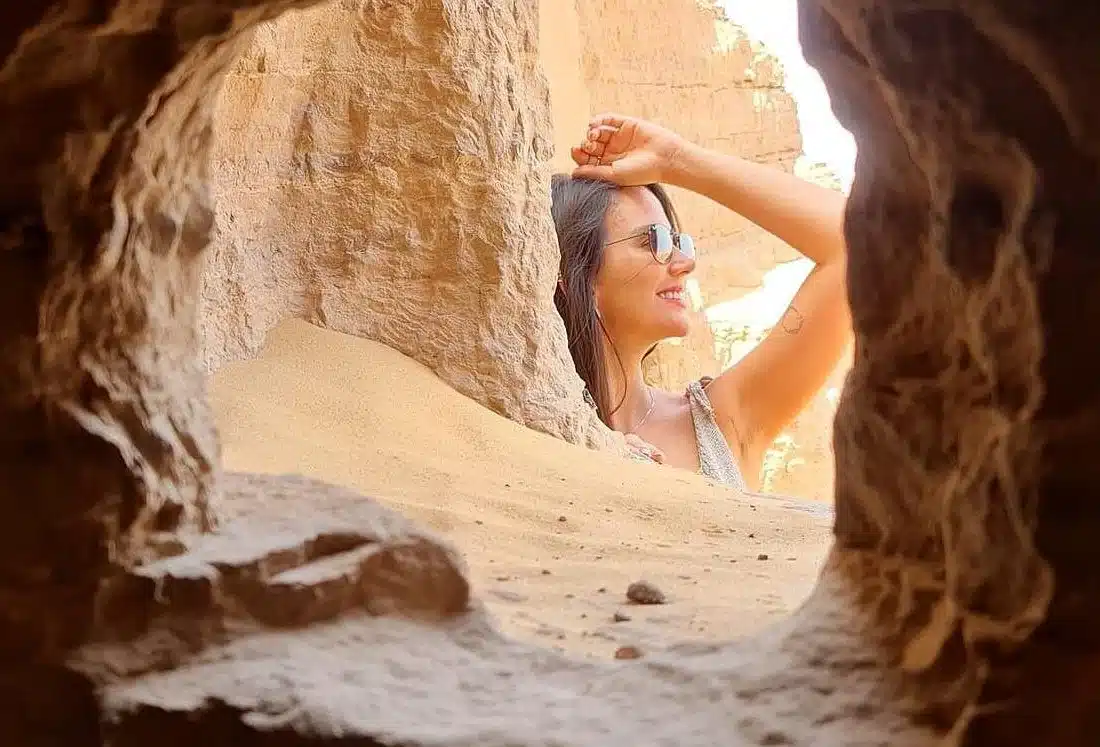
The day trip works particularly well for travelers who have already spent a night in Bahariya, want a landscape-focused outing and accept that they will not see the full night-to-sunrise cycle. It also suits mixed groups when one person strongly dislikes camping. Choosing the option everyone can enjoy is better than pressuring a reluctant traveler into an uncomfortable night.
It is not automatically an “easy” excursion. You still spend hours in a 4×4, walk on uneven sand or rock, experience sun and wind, and use limited facilities away from the oasis. Discuss mobility, motion sickness, dietary needs and any medical concerns before departure.
What overnight White Desert camping adds
An overnight itinerary slows the journey at exactly the time when the landscape becomes most expressive. After the daytime route, the team chooses an approved camp position according to current instructions and conditions. Equipment is unloaded, a simple camp is prepared, dinner and tea are served, and the group remains in the desert instead of racing the fading light back to Bahariya.
Sunset is a transition, not a photo stop
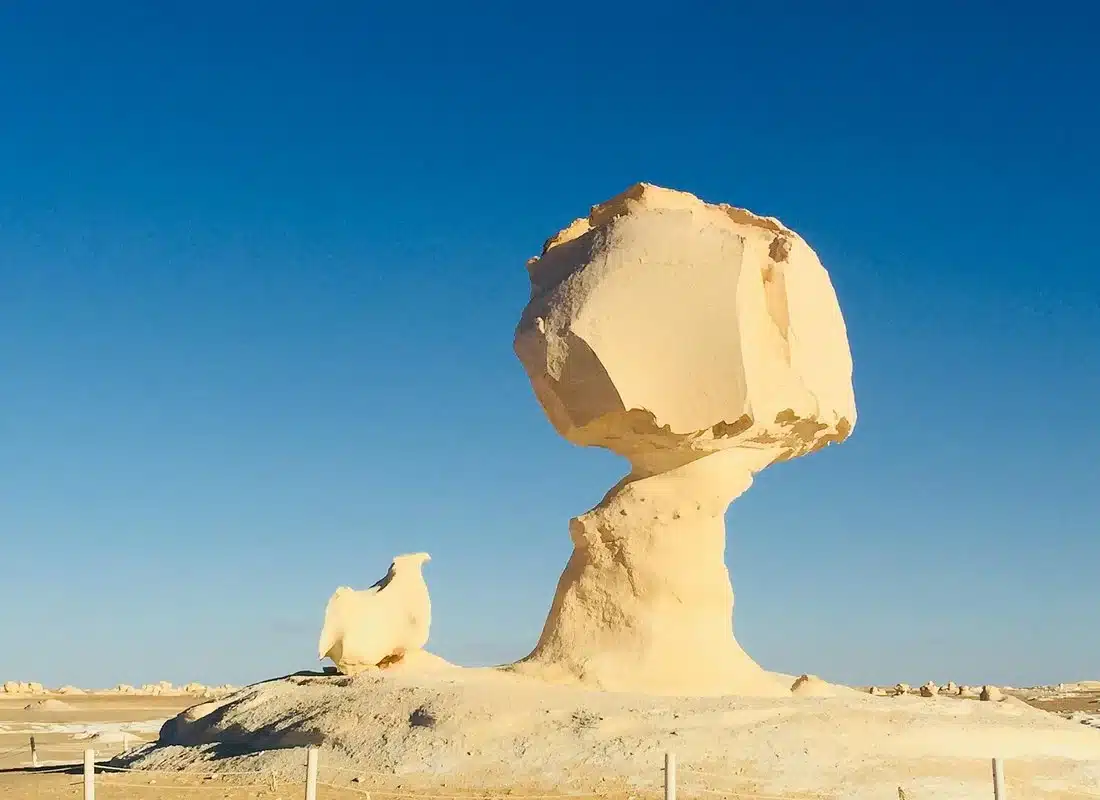
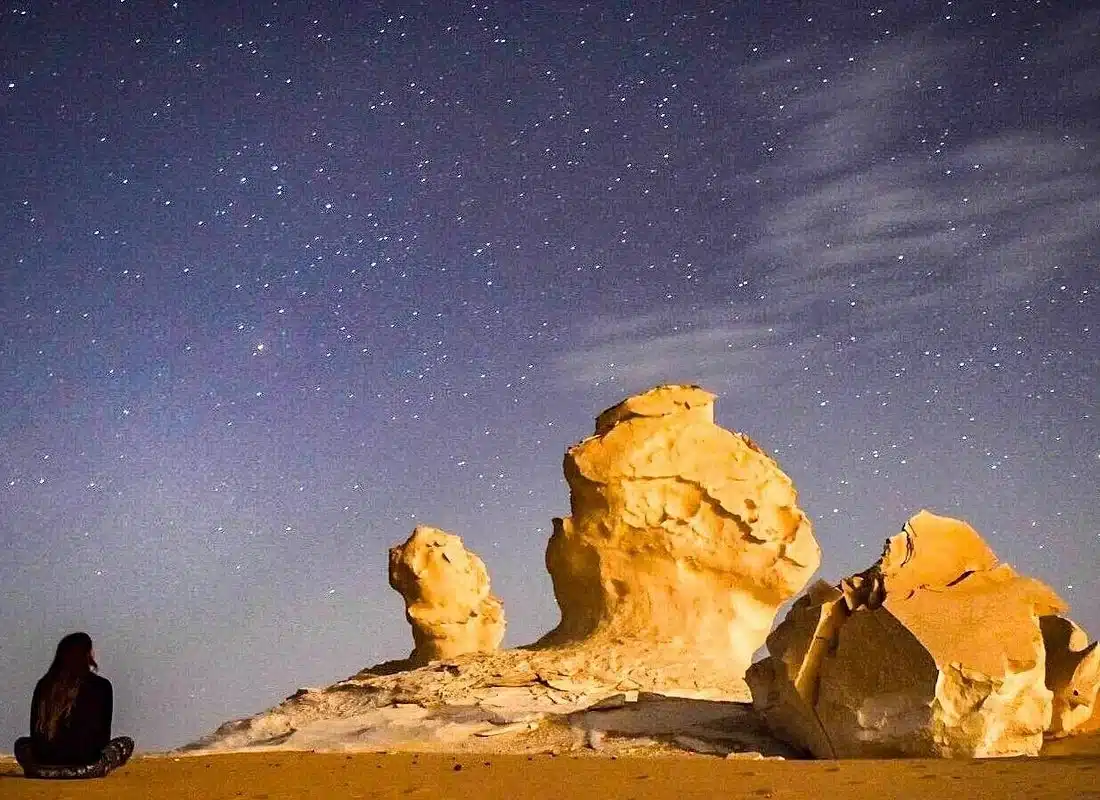
On a camping trip, sunset is not limited to a few minutes beside the vehicle. You watch the chalk change from bright white to cream, pink and blue-grey. Long shadows define formations that look flat at midday. The temperature falls, wind can change, and the atmosphere becomes quieter. This extended transition is one of the strongest reasons to stay overnight.
The night sky and silence
Cloud, dust, wind and moonlight affect every night, so no operator can guarantee a specific Milky Way photograph. Even when stars are less dramatic, the absence of city noise and the scale of the dark landscape can be exceptional. Use light carefully around camp, avoid shining torches into other people’s faces, and give your eyes time to adjust.
Sunrise changes the experience again
Waking early gives you a second period of low-angle light. The desert can feel completely different before breakfast, when the air is cooler and footprints from the previous evening are the only nearby signs of activity. After sunrise, the team prepares breakfast, packs the camp and continues the route or returns toward Bahariya according to the itinerary.
The compromise: camping is intentionally basic
A mobile desert camp is not a hotel room placed on the sand. Sleeping may be in a tent or sheltered setup with mattresses, sleeping bags and blankets. There is generally no permanent bathroom, plumbing or mains electricity. Privacy, bedding thickness and toilet arrangements vary, so ask exact questions before booking. The right expectations prevent disappointment.
Starting from Cairo versus starting in Bahariya
Your starting point is one of the biggest decision factors. A traveler who is already in Bahariya can choose a true day safari and sleep at the hotel that night. A traveler in Cairo must first cover the long road transfer to the oasis. Trying to add the same desert program without allowing travel time turns a clear choice into an exhausting schedule.
If you start in Cairo
For most first-time visitors, the practical options are:
- Travel to Bahariya, stay at the hotel, take a day safari the next day, then return to Cairo.
- Travel to Bahariya and continue on a two-day/one-night desert program with realistic arrival timing.
- Arrive in Bahariya the evening before, sleep properly, and begin the overnight safari after breakfast.
The third option creates the most comfortable buffer after an international arrival. Flight delays, immigration, luggage and Cairo traffic make a same-day connection uncertain. Never plan the desert return immediately before a flight; road conditions, checkpoints, group pace and weather can affect timing.
If you are already staying in Bahariya
You have more flexibility. The day trip becomes genuinely efficient, while the overnight option can depart without the fatigue of a long transfer that morning. You can also spend time in the oasis, organize luggage and discuss the program directly with the local team. The complete White Desert Egypt travel guide explains how Bahariya functions as the main practical base.
Comfort, food, toilets and sleep
Food and water
Both options should include sufficient drinking water and clearly stated meals. A day route may include lunch and tea; an overnight route normally adds dinner and breakfast. Confirm inclusions in writing. Allergies, vegetarian requirements and religious or medical dietary needs must be reported before supplies are purchased. A remote kitchen cannot reliably replace ingredients after leaving Bahariya.
Toilets
A day traveler can use the hotel before departure and after returning, but facilities during the safari remain basic. Overnight travelers need a clear explanation of how the camp toilet and privacy are managed. Some programs can arrange a portable toilet when requested in advance; others use a designated private area and responsible waste method. Wet wipes and toilet paper must be packed out rather than left in the desert.
Sleeping temperature
Winter nights can feel surprisingly cold after a pleasant afternoon. Wind increases heat loss, and people who sleep cold need more insulation than they expect. Ask what mattress, sleeping bag and blankets are supplied. Bring warm layers, socks and a hat rather than relying on one light jacket. In warmer months, heat exposure during the day becomes the greater concern.
Families, older travelers and accessibility
Age alone does not decide which trip is suitable. The important questions are tolerance for off-road driving, ability to enter and exit a 4×4, confidence on uneven ground, toilet needs, temperature sensitivity and sleeping requirements. A healthy older traveler who enjoys camping may prefer the overnight route, while a younger traveler with back pain may be happier on a day safari.
Traveling with children
Children often love the open landscape and camp atmosphere, but parents should discuss ages, vehicle seating, car seats, food, night temperatures and supervision around camp. A private tour allows more stops and a pace matched to the family. Bring familiar snacks, sun protection, extra warm layers and medication. Do not let children climb fragile formations or wander away from the camp after dark.
Limited mobility
Many views can be enjoyed close to the vehicle, but sand, rocks and vehicle steps create barriers. Explain the exact mobility limitation rather than asking only whether the trip is “accessible.” The team needs to know whether the guest uses a cane, needs assistance transferring, can walk on loose surfaces or requires a specific toilet setup. A modified day itinerary may provide a better balance than camping.
Which option is better for photography?
The overnight trip wins for the range of light: late afternoon, sunset, blue hour, stars, moonlight and sunrise. It also gives photographers more time to wait for shadows or move carefully between permitted viewpoints. Bring a tripod, spare batteries, lens cloth, blower and a headlamp with a red-light mode. Discuss where tripods can be placed without blocking camp movement.
A day trip can still produce excellent images. Concentrate on contrasts between the Black Desert, Crystal Mountain, sand, cliffs and chalk. Avoid assuming midday is useless; hard light can emphasize graphic shapes when you compose carefully. A day traveler also carries less overnight equipment and can focus on a compact camera kit.
Never ask a driver to create fresh tire tracks for a photograph, leave approved tracks or approach a fragile formation. Do not climb chalk for a dramatic angle. Protected landscapes are not studio sets, and responsible images should not require damage.
How cost and value differ
A day trip usually has a lower headline price because it uses fewer operating hours, meals and camp supplies. Overnight camping costs more because the team transports bedding, food, water and equipment, prepares camp, remains with the group and operates across two days. The cheapest offer is not automatically the best value.
Compare written inclusions:
- Cairo or Giza transfer, or start in Bahariya only.
- Private or shared road transfer and desert 4×4.
- Number of guests in each vehicle.
- Meals and drinking water.
- Protected-area permits and current fees.
- Hotel night before or after the safari.
- Tent, mattress, sleeping bag and blankets.
- Portable toilet if specifically required.
- Route-change and cancellation conditions.
An overnight tour may provide better experiential value even when it costs more, while a day tour may provide better personal value for someone who would sleep badly and enjoy the next day less. The correct decision is the one that matches your real needs—not the option that sounds more adventurous online.
Permits, safety and responsible travel
The White Desert is a protected landscape, not an unrestricted self-drive area. Egypt’s Environmental Affairs Agency describes the protectorate as a rare karst and chalk environment with geological, fossil, wildlife and archaeological importance. Access zones and permitted activities differ. Your operator should confirm the current route, permits and fees.
Current official travel advice can change. The United Kingdom’s regional guidance, for example, distinguishes Bahariya, the White and Black Deserts and the Giza–Farafra road corridor from other Western Desert areas while also explaining permit and official-guide requirements. Travelers should read the latest advice issued by their own government and confirm operating conditions shortly before departure.
For either itinerary:
- Use an experienced local guide and suitable 4×4.
- Tell the team about medical, mobility and dietary needs.
- Wear a seat belt where provided and keep essential medication with you.
- Follow route changes caused by weather, access or official instructions.
- Do not remove chalk, crystals, fossils or archaeological material.
- Pack out wipes, tissues, cigarette ends and all plastic.
- Keep distance from wildlife and never feed animals.
What to pack for each option
For both day and overnight trips
- Closed shoes with reliable grip.
- Breathable clothing that protects shoulders and skin.
- Hat, sunglasses, broad-spectrum sunscreen and lip balm.
- Scarf or buff for sun, wind and dust.
- Reusable water bottle and personal medication.
- Power bank, camera batteries and a dust cloth.
- Small soft bag instead of a hard suitcase.
Add for overnight camping
- Fleece or warm mid-layer and insulated jacket in winter.
- Warm hat, long trousers and dry socks.
- Headlamp, preferably with red mode.
- Small pillow or inflatable pillow.
- Sleeping-bag liner if you prefer your own layer.
- Hand sanitizer, tissues and sealable waste bags.
- Earplugs if small sounds disturb your sleep.
Do not bring excessive luggage, fragile hard cases, drones without verified authorization, or equipment for collecting rocks. Leave large bags at your Bahariya accommodation whenever possible.
A practical decision checklist
Choose the day trip if most of these are true:
- You are already sleeping in Bahariya Oasis.
- You have only one full day.
- A private bathroom and proper bed are important.
- You are uncertain about cold, wind or basic toilets.
- You want an overview rather than night photography.
- A member of the group has needs that are easier to manage at a hotel.
Choose overnight camping if most of these are true:
- This is your first White Desert visit.
- You want sunset, stars and sunrise.
- You accept basic sleeping and toilet arrangements.
- You prefer a slower pace and more photographic light.
- You can carry warm layers and manage a night outdoors.
- You have enough schedule buffer before your next booking.
If the answers are mixed, stay in Bahariya the night before and discuss a private itinerary. The team may be able to adjust walking time, meal timing or route pace without pretending that a remote camp has hotel facilities. Use the contact page to send detailed requirements.
Frequently asked questions
Can I visit the White Desert in one day?
Yes, a day safari is practical when it starts and ends in Bahariya Oasis. It can include selected major landscapes, but it does not include a full desert night or sunrise. A same-day round trip from central Cairo is much more tiring.
Is overnight camping worth it?
For most first-time visitors, yes. The additional value comes from changing light, dinner in the desert, stars, silence and sunrise—not only from sleeping outdoors. It is worthwhile when you accept the basic facilities.
Do I need to camp to see the White Desert?
No. A day trip from Bahariya can show key scenery and route contrasts. Camping is recommended for the fuller atmosphere, but it should never be forced on someone whose health or comfort needs make it unsuitable.
Can I take a White Desert day trip from Cairo?
It may be sold that way, but the road transfer to Bahariya is long in both directions. A more responsible plan includes a hotel or desert night. If you only have one day, first confirm exactly how many hours will be spent in the desert versus on the road.
Are there toilets at the overnight camp?
Permanent bathrooms are generally not part of a mobile remote camp. Ask how privacy and waste are managed and whether a portable toilet can be arranged. Do not assume the phrase “camp” means fixed facilities.
Will I sleep in a tent?
It depends on the operator, weather and program. Guests may use tents or a sheltered camp setup with mattresses, sleeping bags and blankets. Confirm whether tents are private or shared and what bedding is included.
How cold does the White Desert get at night?
Winter nights can feel very cold, especially with wind, even after a pleasant afternoon. Exact temperatures vary. Bring real warm layers and ask about the supplied sleeping bag and blankets shortly before departure.
Which trip is better with children?
Both can work. A day trip is simpler for children who struggle with basic toilets or disrupted sleep. An overnight trip can be memorable for families who prepare for temperature, off-road driving and supervision. A private pace is often best.
Which option is better for older travelers?
Choose based on mobility, vehicle access, sleep, toilet and temperature needs rather than age alone. A modified day route may be ideal, while an active older camper may prefer the overnight experience.
Does the overnight trip include the Black Desert and Crystal Mountain?
Many routes include them, but exact stops depend on the approved itinerary, access, weather and timing. Ask for the planned sequence and accept responsible changes when current conditions require them.
Is a private tour better than a shared tour?
A private tour gives more control over pace, photo stops, dietary needs and family requirements. A shared tour can reduce cost. Ask whether both the Cairo transfer and desert 4×4 are private, because the term can describe different parts of the trip.
How far in advance should I book?
Book earlier for weekends, holidays and the cooler October-to-April season, especially if you need a private vehicle, specific hotel night, dietary preparation or portable toilet. Last-minute operation also depends on permits and team availability.
What happens if weather or access changes?
The operator may adjust timing, camp position or route. This is a sign of responsible desert management when explained clearly. Ask about the route-change and cancellation policy before payment.
Choose your White Desert itinerary
The day trip is a valuable option when hotel comfort or limited time matters. Overnight camping is the stronger first choice when you want to understand why the White Desert is remembered as an experience rather than a collection of rocks. Either can be excellent when it starts from realistic expectations, a suitable vehicle and a responsible local team.
Compare all White Desert tours and safaris, combine the trip with a Bahariya hotel stay, or message Bedouin Castle on WhatsApp for a recommendation matched to your dates.