The best time to visit White Desert Egypt is generally from October to April, when daytime conditions are usually more comfortable for 4×4 travel, short walks and camping than during the hottest summer months. December through February offers the coolest days but can bring genuinely cold nights. October, November, March and April often provide a warmer balance, although wind, dust and unusual weather can affect any date.
This guide helps you choose a month according to your priorities—not a generic “high season” label. It compares temperatures in practical terms, night comfort, daylight, wind, photography, family travel, crowds, packing and itinerary length. Conditions and access can change, so confirm the final route and forecast with an experienced Bahariya operator shortly before departure.
Start with the complete White Desert Egypt guide, compare the available White Desert tours, or ask the local team about your month on WhatsApp +20 12 77512687.
Best time to visit the White Desert: quick answer
- Best overall balance: October, November, March and early April for warm daylight and cooler evenings.
- Best for cool daytime walking: December through February, with serious preparation for cold nights.
- Best for first-time overnight camping: October to April, choosing your month according to how well you tolerate cold or heat.
- Best for fewer cold-night concerns: October, November, March and April, while still carrying layers.
- Most demanding period: the hottest summer months, when heat changes timing, comfort and health risk.
There is no month that guarantees a clear sky, no wind, perfect stars and comfortable temperatures. Desert weather is variable, and the right month depends on the traveler. Someone who sleeps cold may enjoy November more than January. A photographer who wants crisp winter daylight may accept a freezing-feeling night. A family with young children may prefer a warmer shoulder month and a private itinerary.
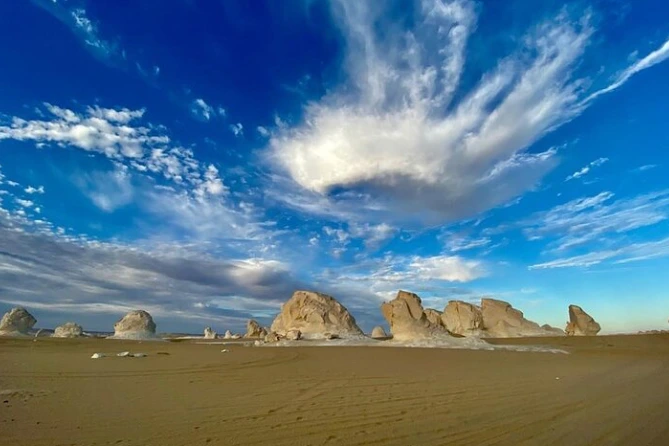
White Desert seasons at a glance
| Period | General character | Main advantage | Main preparation |
|---|---|---|---|
| October–November | Warm days, cooler evenings | Comfortable first-trip balance | Sun protection plus real night layers |
| December–February | Coolest general period | Good daytime walking and clear winter light | Cold-night bedding, jacket, hat and socks |
| March–April | Warmer spring conditions | Longer-feeling daylight and milder nights | Wind and dust flexibility |
| May–September | Hot to extremely hot periods | Potentially fewer visitors | Heat-risk planning and honest suitability check |
These descriptions are planning guidance rather than a forecast. Check a reliable current weather service for Bahariya and the relevant desert area shortly before the trip, then ask the operating team how the forecast affects departure time, clothing, water and camp position. A single daily maximum never describes the full experience: sun, wind, shade, vehicle time and the drop after sunset all matter.
Why Bahariya conditions matter
Most short White Desert safaris are organized through Bahariya Oasis, around 370 km southwest of Cairo according to Egypt’s official tourism portal. The route then continues through different elevations and exposed landscapes. A forecast for central Cairo is not enough. Use Bahariya as the practical starting reference and expect the open desert to feel different, especially after dark.
Why the temperature range matters more than one number
Travelers often pack for the warmest afternoon number and forget the night. Dry air, wind and inactivity at camp make a cool temperature feel colder. In summer, the opposite problem appears: a morning that feels manageable can become difficult after hours of sun and off-road travel. Pack and plan for the entire day-night cycle.
October and November: the easiest balance for many travelers
October and November are strong choices for a first White Desert trip because they generally avoid the coldest winter nights and the most intense summer heat. Daylight can still feel warm, so hats, sunscreen and drinking water remain essential. After sunset, a fleece and proper outer layer may still be necessary; “warm month” does not mean “warm desert night.”
October
October is a transition away from summer heat. Earlier dates may still feel hot during exposed stops, while later dates can provide a more comfortable balance. Travelers who dislike cold often choose October, but should not underestimate the sun or assume long walks are appropriate at any hour. A guide may adjust the route around heat, shade and the group’s pace.
October can work well for a two-day White Desert camping tour because the evening is often easier for people nervous about winter cold. Bring a light base layer, fleece and wind-resistant jacket anyway. Weather does not follow a fixed calendar.
November
November is one of the most broadly suitable months. Daytime sightseeing is generally more comfortable than in early autumn, and nights may be less severe than midwinter. This makes November useful for couples, first-time campers and families who want the overnight experience without choosing the coolest part of the year.
Popular travel weeks can fill private vehicles and hotel rooms. Reserve earlier if you need Cairo pickup, a private tent, family pacing or a hotel night before the safari. Last-minute availability is not only about beds; it also depends on guides, vehicles, permits and camp equipment.
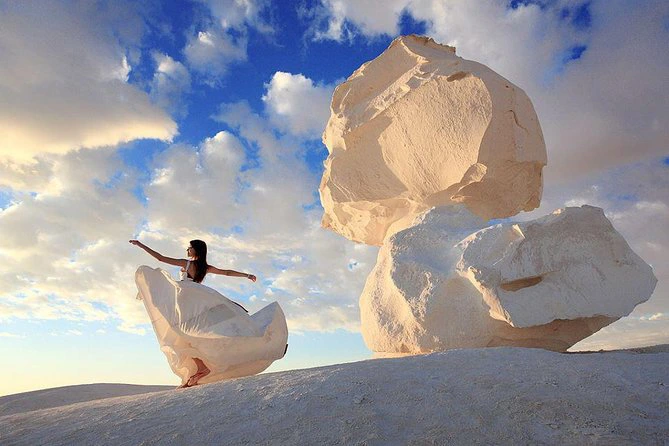
December, January and February: cool days and cold nights
Winter is excellent for travelers who prefer cooler daytime conditions and do not mind preparing carefully for camp. Walking, photography and vehicle stops can feel comfortable under the sun, but exposed nights can be very cold. Wind removes heat quickly. The difference between an enjoyable winter camp and a miserable one is often preparation rather than the date itself.
December
December combines pleasant daytime sightseeing with increasingly cold evenings. Holiday demand can raise pressure on vehicles, rooms and guides. Book early around Christmas and New Year, and avoid planning a tight return connection during a busy travel period. Confirm whether sleeping bags and blankets are appropriate for winter conditions rather than relying on a generic “camping equipment included” statement.
January
January is commonly treated as the coolest month. It can be ideal for active travelers, photographers and people who dislike heat, but it is a poor choice for anyone who refuses warm clothing or sleeps badly when cold. Bring thermal or warm base layers, a fleece, insulated jacket, hat and dry socks. Ask for additional blankets before the vehicle leaves Bahariya.
Cold affects electronics too. Keep spare camera batteries close to your body and carry a reliable power bank. Condensation can form when cold equipment moves into warmer air, so leave cameras in a closed bag while temperatures equalize.
February
February remains a winter month even as daylight begins to shift. Nights can still be cold, and conditions vary from week to week. It is a good choice for travelers who want cool sightseeing but cannot travel in January. Continue packing full winter layers rather than assuming the calendar guarantees early spring.
Who should reconsider a midwinter camp?
Travelers with a medical condition aggravated by cold, very young children, people who need frequent night-time bathroom access and guests who cannot sleep without a thick mattress should discuss alternatives. A White Desert day trip from Bahariya plus a hotel night can deliver the landscapes without the coldest hours outdoors.
March and April: warmer days with wind and dust considerations
March and April attract travelers who want warmer conditions and a lower chance of a bitter-feeling night. The trade-off is that spring can bring wind and dust. No responsible operator should guarantee calm air. The advantage of a local team is the ability to choose a more sheltered meal or camp position, change timing and adjust the route when visibility or comfort deteriorates.
March
March often provides a useful compromise between winter cold and late-spring heat. Layers remain important, but many travelers find the evening easier than January. It can be a strong month for a first overnight trip, especially for people who want sunrise and stars without choosing the coolest season.
April
April days can become noticeably warmer, and the difference between early and late April may matter. Sun protection and hydration become increasingly important. Wind-blown sand can affect eyes, contact lenses and camera equipment. Pack a scarf or buff, wraparound sunglasses, lens cloth and a sealable camera bag.
Travel demand may rise around Easter and regional holidays. Reserve private arrangements early and confirm the latest program. A longer itinerary needs more logistical flexibility than a standard overnight route.
May to September: when heat changes the decision
Summer is not simply “the same trip with fewer clothes.” High heat changes the safe operating window, water needs, walking comfort, vehicle exposure and suitability for children, older travelers and people with relevant health conditions. Some programs may operate during parts of summer, but travelers should not choose the date only because a low price appears online.
May and September
These shoulder periods can still be very warm. Early-morning and late-afternoon activity may be more comfortable than midday stops. Ask the local operator how departure time, shade, meals and camp plans change for heat. If you are heat-sensitive, a cooler-season date may be worth reorganizing the wider Egypt itinerary.
June, July and August
The hottest period requires a conservative approach. Heat stress can develop through sun, dehydration, rough driving and fatigue. Warning signs such as headache, dizziness, nausea, confusion or unusual weakness must be reported immediately. The group should never pressure an unwell traveler to continue a walk for the sake of an itinerary or photograph.
Anyone with heart, respiratory, kidney or medication-related heat concerns should seek personal medical advice before committing. Families with small children should discuss whether a hotel-based oasis visit and shorter outing would be more appropriate. A private 4×4 cannot remove the environmental risk.
Can summer still work?
Possibly, for experienced heat-tolerant travelers with a well-prepared local operator, flexible timing and no unrealistic checklist. It is not the season to improvise a self-drive or assume an old route operates unchanged. Confirm permits, current advice and conditions close to departure.
Best time for White Desert camping
October through April is the practical camping season for most visitors. Within that range, choose based on sleep comfort:
- If you sleep cold: favor October, November, March or April and still carry layers.
- If you dislike heat: favor December, January or February and prepare for a cold night.
- If wind worries you: keep dates flexible; no month guarantees calm conditions.
- If you need a private tent or extra bedding: request it before booking, not at camp.
A two-day/one-night trip gives most first-time visitors the best balance. Three days add a second sunset and sunrise, more route flexibility and a slower pace, but also another basic night. Read the day trip versus overnight comparison before choosing.
Best time for White Desert photography and stars
Every season offers different light. Winter produces low-angle morning and afternoon light and generally comfortable daytime camera work. Shoulder months may provide warmer evenings for long tripod sessions. Spring dust can soften distant views or reduce clarity, while a clear dusty-free day can arrive in any month.
Moon phase versus month
For night photography, moon phase can matter more than season. A darker moon period reveals more stars, while moonlight illuminates chalk formations and creates a completely different image. Neither is universally better. Decide whether you want a star-dense sky or a landscape lit naturally by the moon, then check the lunar calendar for your dates.
Plan around sleep and temperature
A photographer who stays outside for hours after dinner needs warmer clothing than someone who enters a tent early. Bring gloves thin enough to operate controls, spare batteries and a headlamp with red mode. Tell the guide your plan so you do not walk near vehicles or fragile formations in darkness.
Do not damage the subject
The Egyptian Environmental Affairs Agency describes the White Desert as a protected karst and chalk landscape. Never climb formations, collect pieces, direct a vehicle off approved tracks or carve names for a photograph. The best season for photography is meaningless if the image requires environmental damage.
Best time for families and older travelers
For many families, November, March and early April offer a useful balance between daytime comfort and less severe nights. This is not a rule. Children who become overheated easily may prefer winter; children who cannot sleep when cold may prefer a shoulder month and extra bedding.
Older travelers should choose according to health, mobility, vehicle access, toilet needs and temperature sensitivity rather than age alone. A cool winter day may make walking easier, but a cold night may aggravate discomfort. A private day trip with a hotel night can be more enjoyable than camping when sleep and bathroom access are priorities.
Tell the operator the ages of children, whether a car seat is required, how far guests can walk, and whether anyone needs medication kept cool. These details influence the vehicle and schedule more than a vague request for a “family-friendly tour.”
Wind, dust and changing weather
Wind is part of desert travel. It affects perceived temperature, camp placement, cooking, visibility and photography. Dust can irritate eyes and lungs, contaminate contact lenses and enter camera equipment. A responsible guide may shorten a walk, move a meal, change the camp position or adjust the route.
How to prepare
- Carry a scarf or buff and wraparound sunglasses.
- Bring any prescribed inhaler and tell the guide about respiratory conditions.
- Use glasses instead of contact lenses when blowing dust is likely.
- Keep cameras in a closed bag and change lenses inside the vehicle when possible.
- Pack lip balm and moisturizer for dry air.
- Accept route or camp changes made for safety and comfort.
Weather apps cannot describe track conditions, protected-area instructions or local visibility at every stop. Use forecasts as one input, then follow the team operating the trip.
Seasonal White Desert packing guide
Pack in every season
- Closed shoes with grip.
- Hat, sunglasses, sunscreen and lip balm.
- Breathable long clothing for sun protection.
- Scarf or buff for wind and dust.
- Reusable water bottle and personal medication.
- Headlamp, power bank and spare camera batteries.
- Small soft bag and sealable waste bags.
Add for December through February
- Warm base layer or thermals.
- Fleece or substantial mid-layer.
- Insulated, wind-resistant jacket.
- Warm hat, gloves and thick dry socks.
- Sleeping-bag liner if desired.
Emphasize in warmer months
- Extra sun protection and breathable coverage.
- Electrolytes if appropriate for your health.
- Honest heat-risk discussion with the operator.
- Medication storage plan.
- Flexible timing rather than a rigid sightseeing list.
Confirm what the operator supplies. “Camping equipment” may mean different mattress thickness, sleeping-bag warmth and tent arrangements. If an item is essential, get a specific answer.
Crowds, prices and booking timing
October to April is the main season, so private vehicles, rooms and experienced guides can be busy around weekends, Christmas, New Year and Easter. Book earlier when your dates cannot move, your group is large, or you need special arrangements.
Do not select summer only because the price is lower. Compare the operating program, heat exposure, included transfer, vehicle arrangement, permits, hotel nights, meals and bedding. Good value means a suitable trip with clear inclusions—not the smallest headline number.
If your Egypt itinerary includes a flight, Nile cruise or fixed train, keep a buffer after the desert. Weather, checkpoints, road traffic and group pace can affect return timing. A hotel night in Bahariya can protect the next booking and give you time to rest.
How to choose your dates step by step
- Choose your temperature preference. Decide whether cold nights or hot days are harder for you.
- Decide whether you will camp. A day trip and overnight trip have different exposure.
- Review health needs. Consider heat, cold, dust, medication and mobility.
- Check the wider Egypt itinerary. Do not create a tight connection after the desert.
- Check moon phase if night photography matters.
- Request current advice from Bahariya. Ask about conditions, bedding, permits and route.
- Check the forecast again shortly before travel. Adjust packing without assuming the month guarantees conditions.
Use the Plan With Us contact page to send your exact dates, group size and preferences. If you are traveling from Cairo, the Cairo to White Desert guide explains the transfer and timing.
Frequently asked questions about White Desert weather
What is the single best month to visit the White Desert?
November and March are strong all-round choices for many travelers, but there is no universal best month. Choose January if you prefer cool days and can manage cold nights; choose October if you tolerate warmth better than cold.
Is January too cold for camping?
Not when you have suitable clothing, bedding and health. January can be excellent, but travelers who sleep cold must request adequate sleeping bags and blankets and carry an insulated jacket, hat and warm socks.
Can I visit the White Desert in summer?
Some trips may operate, but heat changes the risk and schedule. Confirm current conditions with a local operator and assess medical, family and heat-tolerance needs honestly. Do not treat summer as a routine copy of the winter itinerary.
Does it rain in the White Desert?
Rain is uncommon, but unusual weather can occur. Wind, dust and temperature change are more frequent planning concerns. Always check a current forecast rather than assuming desert means guaranteed conditions.
Which month has the clearest stars?
Cloud and dust vary, and moon phase strongly affects the visible sky. A clear, dark-moon night can occur in different months. Choose dates by moon phase if star density is your priority and remember that no sky is guaranteed.
When is the White Desert least crowded?
Outside major holidays and weekends can feel quieter. Summer may have fewer visitors but is not automatically a better time because heat can make the trip unsuitable. Ask about your exact dates.
What should I wear in December?
Use layers: breathable daytime clothing, warm base or mid-layer, insulated wind-resistant jacket, long trousers, hat and warm socks. Sun protection remains necessary during the day.
What should I wear in April?
Pack breathable sun-protective clothing, hat, sunglasses and dust scarf, plus a warm evening layer. April can be windy and the night can still feel cool.
Is October good for children?
It can be, particularly later in the month, but afternoons may still be warm. Discuss ages, heat tolerance, vehicle seating, food and night layers. A private pace is helpful.
When should photographers visit?
October to April provides practical conditions. Winter favors cool daytime work; shoulder months provide warmer nights. Select the moon phase for the night look you want and allow an overnight itinerary for sunset and sunrise.
Can wind cancel a White Desert trip?
Severe conditions may require a delay, route change or cancellation. More commonly, the team adjusts walks, meals or camp position. Ask about the operator’s weather and cancellation policy before payment.
How far ahead should I check the forecast?
Use seasonal guidance for initial planning, then check again during the week before travel and close to departure. The local operator should interpret the forecast against the actual route.
Plan for the season, not just the calendar
The best time to visit the White Desert is the period that matches your health, sleeping comfort, photography goals and schedule. October to April is the main recommendation, but the choice within that season matters. Prepare for changing conditions and allow the local team to make responsible adjustments.
Browse the full tour collection, add a Bahariya hotel night, or send your travel month to Bedouin Castle on WhatsApp.