
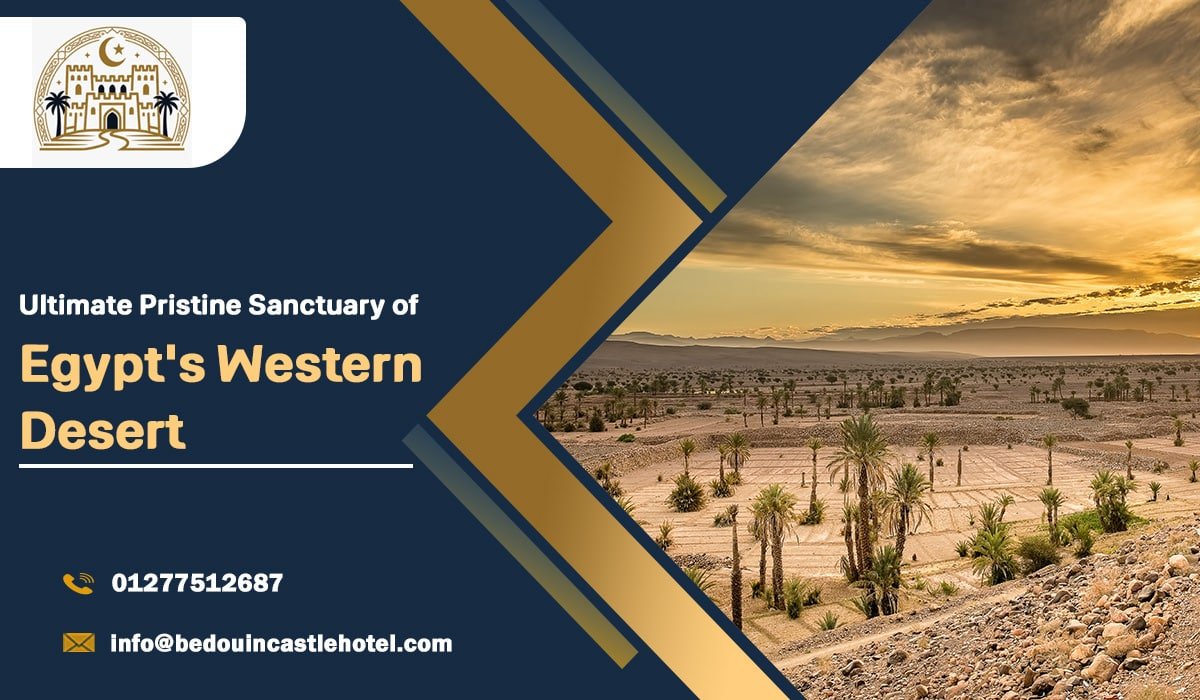
Situated approximately 370 km from the bustling streets of Cairo, the Bahariya Oasis Ultimate Pristine Sanctuary of Egypt’s Western Desertemerges as a spectacular hidden treasure within Egypt’s expansive Western Desert. It is a destination where breathtaking natural phenomena, profound ancient history and a vibrant cultural tapestry weave together seamlessly. Historically recognized by the ancient titles “Deses” and “Parva”, this tranquil haven boasts otherworldly landscapes like the iconic White and Black Deserts. It is also home to monumental historical sites, including the renowned Golden Mummies Museum and the sacred Ain El Muftella Temple, alongside deeply restorative geothermal waters like the Bir Sigam hot springs. By flawlessly combining deep archaeological significance with the quiet serenity of the Sahara, Bahariya stands as a premier destination for adventurous souls and history aficionados alike.
This pristine depression serves as an ecological sanctuary, overflowing with terrestrial treasures and celestial marvels that date back to the very dawn of human civilization. The core objective of this comprehensive guide is to illuminate every essential fact, detail and historical insight regarding the magical Bahariya Oasis Ultimate Pristine Sanctuary of Egypt’s Western Desert. Meticulously compiled by a highly experienced team of dedicated tour operators, expert guides, seasoned scholars and professional travel consultants, this article will serve as your ultimate roadmap to exploring the wonders of Bahariya.
Rising defiantly from the stark, unforgiving environment of the Egyptian Western Desert, the Bahariya Oasis Ultimate Pristine Sanctuary of Egypt’s Western Desert blossoms into one of the country’s most genuinely captivating and mesmerizing locales. Beyond its undeniable visual allure, the oasis carries immense historical gravity, with its roots thoroughly entrenched in early ancient Egyptian culture. Over the decades, it has proven to be an archaeological goldmine, unveiling some of the most spectacular and vital historical discoveries of the modern era..bedouincastlehotel
The Etymology: Tracing the Origins of the Name
The widely accepted moniker “Bahariya” is derived directly from the Arabic word Bahr, which literally translates to “Sea.” In the context of ancient geography, this terminology was used as a reference to the Mediterranean Sea and the broader northern territories of the Egyptian empire. During the era of the great Pharaohs, the local inhabitants designated the oasis as “Desdes.” Centuries later, upon their conquest of the region, the Romans rebranded the area as “Parva”, which translates elegantly to “the little oasis.”
Geographical Splendor and Strategic Positioning
Located exactly 370 km north of Egypt’s capital, Cairo, the oasis spans an impressive 94 km in length and 40 km in width, encompassing a total surface area of roughly 2,000 km². The vibrant town of Bawiti serves as the capital and sits directly in the heart of the depression. Enveloping this lush, fertile valley are several massive, imposing mountain ranges, most notably Gebel Ghurabi, Gebel Maghrafa and Gebel Dist. Today, the regional economy is primarily sustained by a thriving tourism sector and lucrative iron ore mining operations.
Life relentlessly finds a way to flourish here, allowing for the rich cultivation of vital agricultural staples such as dates, olives, mangoes and guavas. Moving to the absolute northernmost edge of the oasis, visitors will discover the picturesque Lake Al Marun. Additionally, the northern sectors are dotted with numerous natural thermal springs that bubble up from the earth. The area also houses a localized museum exhibiting a variety of brilliant indigenous artistic creations. The dramatic topography is further defined by towering peaks like Gebel Maghrafa, Gebel Ghurabi and the famous Gebel Dist, which is frequently referred to by locals and tourists alike as the “English Mountain.”
Key Settlements and Thriving Local Communities

Key Settlements and Thriving Local Communities
Presently, the Bahariya Oasis Ultimate Pristine Sanctuary of Egypt’s Western Desert accommodates a growing and vibrant population exceeding 30,000 residents. These inhabitants are predominantly settled across four primary residential zones that make up the lifeblood of the region: Bawiti (the bustling capital and central administrative hub), Al Qaser (recognized widely as the oldest historical village in the area), Mandisha and Zabw.
The expansive stretch of rugged land situated between the towns of Bawiti and Al Qaser features numerous mountain formations that harbor ancient burial grounds, such as the Qarat Subi Necropolis and the Abis Necropolis of Qarat Feragi.
The landscape is also exceptionally rich with thermal water sources. Notable examples include Ain Bishmu, which traces its origins all the way back to the Roman occupation; Bir Al Nebag, conveniently positioned within Bawiti; and Bir Matar, situated further to the north. At the absolute northern boundary of the oasis rests the tranquil Lake Al Marun, a pristine body of water entirely surrounded by untouched areas that attract flocks of rare, exotic bird species.
Understanding the Desert Climate: When to Visit
Because it is situated deep within Egypt’s vast Western Desert, Bahariya naturally experiences a classic arid desert climate. Below is a detailed breakdown of its seasonal weather patterns to help you plan your journey:
- Summer (May to September): The summer months are fiercely hot and exceptionally arid, characterized by daytime temperatures that regularly fluctuate between 30°C and 40°C (86°F to 104°F). Severe heatwaves can easily push the thermometer well above 45°C (113°F). The near-total absence of humidity and rainfall creates a dusty, dry atmosphere, though evening temperatures usually offer a slight, cooling reprieve.
- Winter (November to February): The winter season brings mild, highly agreeable weather, with daytime highs comfortably hovering between 15°C and 25°C (59°F to 77°F). Conversely, once the sun sets, nights can become quite frigid, with temperatures sharply plummeting to between 5°C and 10°C (41°F to 50°F). Consequently, packing warm clothing and heavy layers is highly advised for nighttime excursions.
- Spring and Autumn (March to April & October): These brief transitional seasons are widely considered the absolute optimal times to travel to the oasis. They boast moderate, balmy conditions, with temperatures spanning from a pleasant 20°C to 30°C (68°F to 86°F). This specific weather window is perfectly suited for wandering through the open-air archaeological sites and natural wonders.
- Rainfall: Aligning perfectly with the rest of the Egyptian desert ecosystem, Bahariya sees practically no rain. Sporadic, brief showers might occasionally occur during the deepest parts of winter, but the annual precipitation average remains starkly under 10 mm, sustaining the barren, beautifully sandy aesthetic.
A Journey Through Millennia: The Historical Legacy
The historical narrative of human settlement in Bahariya stretches remarkably far back to the Neolithic period. However, the first truly substantial human communities were founded during the Middle Kingdom of ancient Egypt (1975–1640 BC). A wealth of ongoing archaeological finds confirms this extensive timeline, including a prehistoric hunter-gatherer encampment located at El Heiz and an Old Kingdom structural settlement discovered at Qārat el-Abyaḍ.
Additionally, ancient Middle Kingdom rock carvings, alongside various inscriptions from subsequent eras, have been thoroughly documented in the area of el-Harrah. Throughout the 18th Dynasty, Bahariya achieved significant political and economic clout due to its prime geographic location along crucial trade arteries. These routes vitally linked the Nile Valley to various Libyan tribes and the wider expanses of the Western Desert. One prominent historical figure from this specific epoch is Amenhotep, widely known as Huy, whose elaborate tomb was constructed in Qarat Hilwah. By the time of the 26th Dynasty, the oasis had fully transformed into an energetic commercial epicenter. This immense prosperity is perfectly mirrored by the economic and cultural vibrancy surrounding the chapels at Ain el-Muftella, as well as the intricate tombs situated at Qārat Qasr Salim and Qarat esh-Sheikh Subi.
Bahariya enjoyed an era of unprecedented wealth and expansion during the Greco-Roman period (332 BC–395 AD). During these centuries, it earned a stellar international reputation for its massive agricultural output, specifically in the production of wine, cereals, dates and olive oil. Highlighting this period’s architectural grandeur is the temple at Qasr el-Miqisba, erected by Alexander the Great in direct honor of the deity Ammon. Unquestionably, one of the most astonishing historical breakthroughs here occurred in 1999 with the monumental unearthing of the Valley of Golden Mummies, yielding around thirty-four pristine tombs in its initial excavation.
The Romans also left undeniable military footprints across the sands, such as the construction of the formidable Qarat el-Toub fortress. In 2010, researchers unearthed a well-preserved Roman-era mummy alongside diverse relics in el-Harrah. Subsequent excavations have uncovered 19 major architectural structures, including a prominent 5th-century Christian church. In a massive 2021 revelation, an entire complex featuring monks’ cells and three separate churches was located, deeply emphasizing the region’s strong religious importance during the early Christian epoch.
Moving into the modern era, Bahariya’s physical connection to the broader Egyptian state improved drastically with the establishment of the Bahariya Military Railway during the First World War. This was followed by the laying of a direct asphalt highway linking the oasis to Cairo in the 1970s. These crucial infrastructure projects catalyzed cultural integration and deeply influenced the linguistic trajectory of the local Waḥātī dialect, which has since increasingly absorbed traits and vocabulary from Cairene Arabic.
Enigmatic Landmarks and Natural Wonders
Spread across the expansive 2,000 km² terrain of the oasis are numerous breathtaking landmarks that illuminate the profound ecological wealth and aesthetic majesty of this divine region. These attractions manifest in a myriad of dazzling shapes, colors and geological formations, each harboring unique narratives. The most prominent must-see sites include:
The Surreal White Desert
Often referred to as Sahara el Beyda, this incredibly alien landscape sits about 45 km north of Farafra Oasis and roughly 100 km south of Bahariya. It is globally celebrated for its surreal, chalk-white rock structures, meticulously carved over thousands of years by the abrasive forces of wind and sand. These striking formations mimic abstract art, giant mushrooms, icebergs and animal silhouettes. The rocks dramatically shift hues based on the sun’s position, radiating bright blinding white at noon and glowing with soft pinks and fiery oranges at dusk. It is a wildly popular overnight camping location, giving travelers a chance to soak in the eerie tranquility and marvel at the brilliantly starry night skies, which remain completely unobstructed by light pollution. Though seemingly desolate, it hosts resilient wildlife like gazelles, desert foxes and various birds.
The Dramatic Black Desert
Situated squarely between Bahariya and the White Desert, this region presents a jarring visual contrast to its pale counterpart. Its moniker derives from the dark, volcanic debris blanketing the sandy plains, creating a gloomy yet mesmerizing atmosphere. These small black stones are the ancient remnants of volcanic eruptions that occurred millions of years ago. Some sectors boast distinct black-capped mounds that contrast beautifully with the golden-yellow sand beneath. Tourists frequently scale these modest volcanic peaks for sweeping, panoramic photographic opportunities.
The Museum of the Golden Mummies
Serving as one of modern archaeology’s crowning achievements, this museum safeguards a breathtaking assortment of mummies extracted from the adjacent Valley of the Golden Mummies. Discovered by renowned Egyptian antiquities expert Zahi Hawass in 1996, the massive burial site yielded hundreds of bodies dating back to the Greco-Roman era. The deceased were remarkably preserved, with many sporting lavishly gilded masks, a clear indicator of their elite societal status and immense wealth. The burial chambers also contained rich hoards of pottery, amulets and ornate jewelry. The museum publicly displays a curated selection of these golden mummies alongside intricate sarcophagi, providing profound insights into ancient funerary practices.
The Ornate Tomb of Bannentiu
This critical heritage site dates back to the 26th Dynasty (approximately the 6th century BC) and is celebrated for its stunning array of artifacts and vivid interior art. Unearthed in 1938, the tomb belonged to Bannentiu, a highly affluent priest of his time. The intricately adorned walls serve as a testament to his wealth, displaying elaborate religious rituals, divine offerings and powerful symbols of the ancient Egyptian afterlife. The brilliantly colored frescoes depict Bannentiu interacting with paramount gods like Anubis (the god of mummification) and Osiris (the ruler of the underworld).
The Sacred Temple of Ain El Muftella
This fascinating cluster of ancient chapels acted as a bustling religious epicenter during the 26th Dynasty. The complex features multiple intimate shrines dedicated to powerful deities such as Horus and Amun. The remaining walls are in excellent condition, showcasing beautifully carved hieroglyphic inscriptions and detailed illustrations of the Egyptian pantheon. Ingeniously, the temple was erected directly around a naturally occurring water spring (Ain), which was revered as sacred and utilized in various spiritual purification ceremonies.
Healing Waters: Bir Sigam Hot Spring
Located a mere 7 km from the heart of Bahariya, Bir Sigam is a natural thermal spring widely beloved by tourists seeking therapeutic rejuvenation after grueling desert treks. Geothermal forces naturally heat the mineral-dense waters, which are highly reputed for their medicinal properties, specifically in alleviating skin conditions and soothing chronic joint pain. The waters provide a deeply comforting contrast to the chilly winter air. Surrounded by raw, rugged desert scenery, Bir Sigam provides an incredibly peaceful atmosphere for ultimate relaxation.
Where to Stay: Premier Accommodations and Camps
Despite its classification as a remote desert outpost, Bahariya offers an excellent spectrum of lodging options, ranging from rustic, simple camps to highly comfortable upscale lodges:
- Ahmed Safari Camp and Hotel: Positioned near Bawiti, this venue delivers a highly authentic desert lodge vibe. It features neat, straightforward rooms, essential modern amenities and a relaxing garden space. The management frequently organizes excursions, making it an optimal pick for budget-conscious explorers.
- Qasr El Bawity Hotel: Representing the more luxurious end of the spectrum, this property seamlessly merges heritage architecture with contemporary conveniences. Guests can choose from suites or standard rooms and enjoy on-site facilities like an expansive swimming pool and a top-tier restaurant.
- International Hot Spring Hotel: Situated close to the center of Bahariya, this establishment is famous for integrating naturally heated thermal springs directly into its premises. It is a massive draw for wellness tourists who wish to soak in outdoor pools after long days of sightseeing.
- Old Oasis Hotel: This charming, family-operated establishment offers an intimate, highly affordable experience right in the village of Bawiti. Guests are treated to hearty traditional meals, cozy rooms and bespoke guided tours of the region.
- Desert Fox Camp: Tailor-made for the ultimate adventurer, this camp strips back the luxury to provide a raw, authentic desert camping experience. It allows guests to fully immerse themselves in the quiet majesty of nature under the brilliant night sky.
Essential Travel Safety and Health Guidelines
Bahariya Oasis Ultimate Pristine Sanctuary of Egypt’s Western Desert maintains a strong reputation as a highly secure tourist destination, particularly for those utilizing professional tour guides and established operators. Given its location in the sparsely inhabited Western Desert, independent travelers should always review current advisories issued by their home governments or the Egyptian Ministry of Tourism. Should you venture into the deep desert, hiring a knowledgeable local guide familiar with the treacherous terrain is absolutely mandatory.
The vastness of the desert poses severe risks to the inexperienced. Visitors must carry abundant water supplies, utilize heavy sun protection and strictly avoid strenuous activity during peak sunlight hours. Because medical infrastructure is basic, bringing personal medical supplies and first aid is highly advised. Stick strictly to purified or bottled water and exercise standard caution with unfamiliar foods. While malaria poses zero threat here, packing insect repellent is smart when visiting water-rich areas. General crime is virtually non-existent and the native population is famously welcoming. Still, practicing basic situational awareness is recommended. Furthermore, while wildlife encounters are rare, remain vigilant for desert insects, scorpions and snakes and always wear sturdy footwear.
Embark on an Unforgettable Egyptian Adventure
Transform your Egyptian holiday into an indelible, lifelong memory by immersing yourself in the boundless natural splendor of the desert that knows no earthly bounds. Uncover every staggering landmark of this divine location, soak in the therapeutic springs and marvel at its unrivaled archaeological artifacts by booking a comprehensive Egypt tour and Nile River cruise today.. contact us


