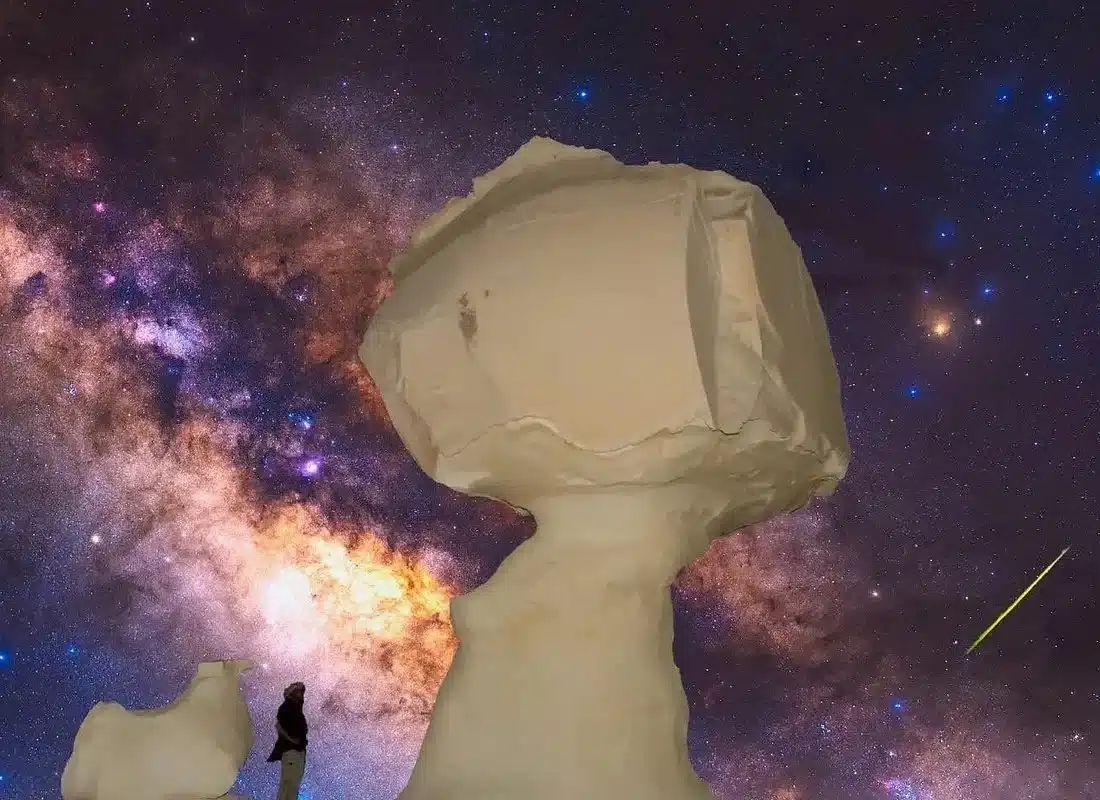
White Desert camping is a mobile wilderness experience, not a permanent resort hidden among the chalk formations. A local team carries water, food, bedding and shelter by 4×4, prepares a simple camp in an approved area, cooks dinner, manages waste and packs everything again after sunrise. The reward is sunset, silence, stars and morning light; the trade-off is basic toilets, changing temperatures and limited connectivity.
This White Desert camping guide explains what a responsible overnight safari should include, what sleeping and toilets are really like, how food and water are handled, what to pack, how to prepare for cold or wind, and how to choose an operator without relying on vague marketing promises.
Compare the 2-day White Desert camping tour, read the day trip versus overnight guide, or send your dates and camping questions on WhatsApp +20 12 77512687.
White Desert camping: quick facts
| Best first itinerary | Two days and one night for most first-time visitors |
|---|---|
| Main gateway | Bahariya Oasis, reached by road from Cairo or Giza |
| Camp style | Simple mobile camp transported by the safari team |
| Sleeping | Tent or sheltered setup with mattress, sleeping bag and blankets depending on the operator |
| Bathroom | No permanent plumbing; privacy and waste method must be explained |
| Electricity | No mains power; bring charged power banks and spare batteries |
| Signal | Unreliable away from roads and settlements |
| Best general season | October to April, with cold winter nights and possible spring wind |
| Essential preparation | Warm layers, sun protection, closed shoes, medication and realistic expectations |
The Egyptian Environmental Affairs Agency lists the White Desert as a protected landscape declared in 2002. Its chalk floor, karst features, fossils, wildlife and archaeological traces require controlled use. Camping should take place only where the current rules and operating permissions allow. A beautiful empty area is not automatically a legal or responsible camp location.
What White Desert camping is really like
The experience begins long before the tent appears. From Bahariya, the 4×4 moves through contrasting desert landscapes and stops according to the approved route, timing and conditions. The group may see Black Desert hills, a spring or rest point, Crystal Mountain, broad valleys and chalk formations before the team chooses a camp area.
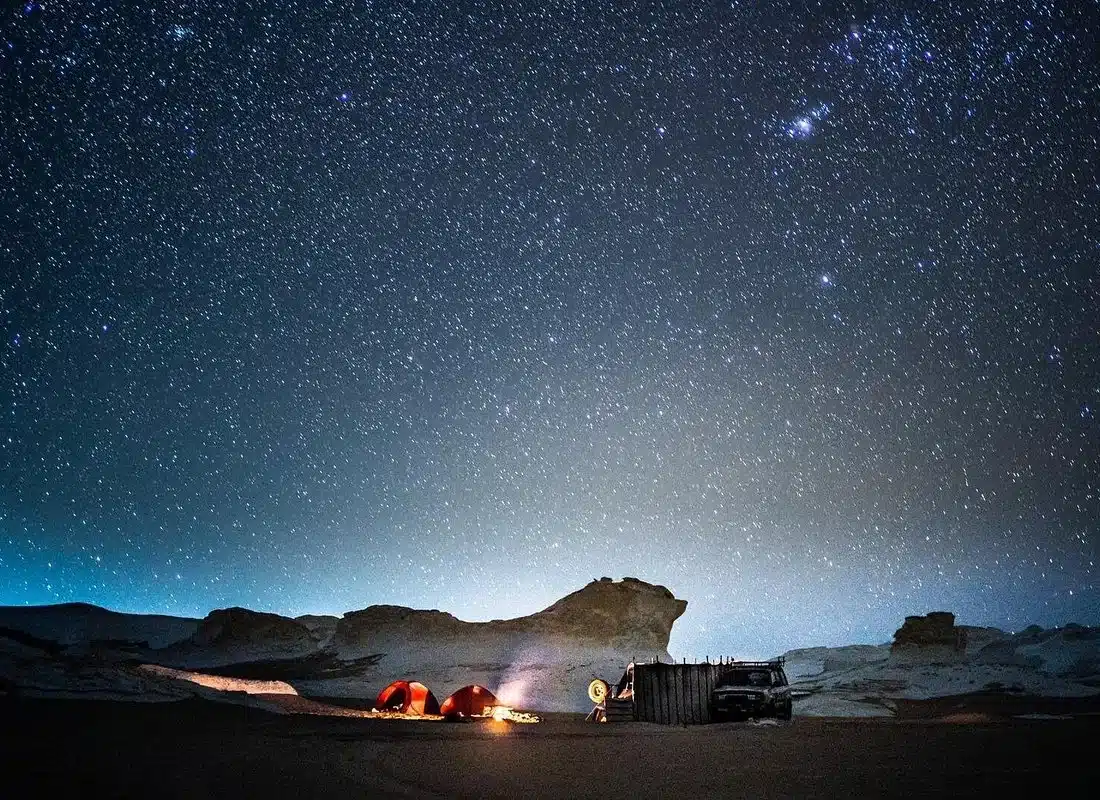
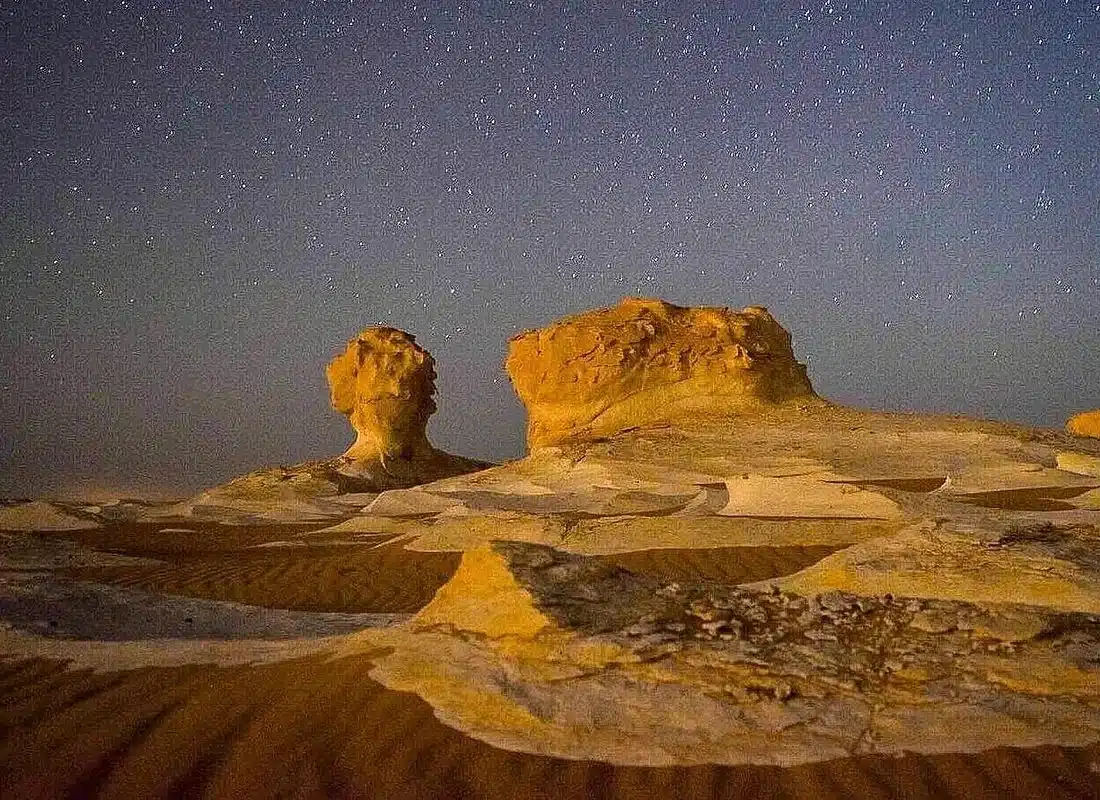
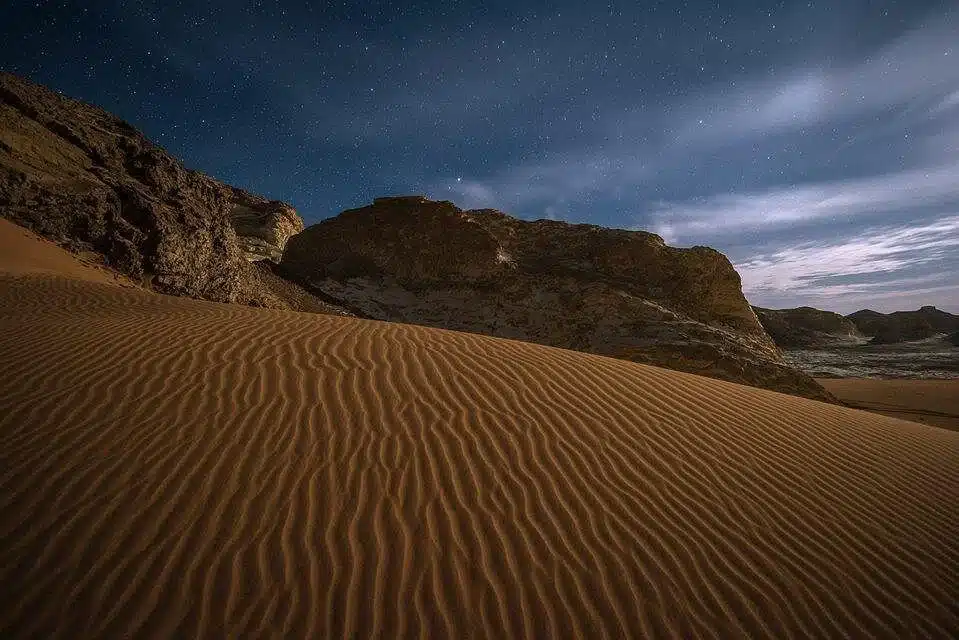
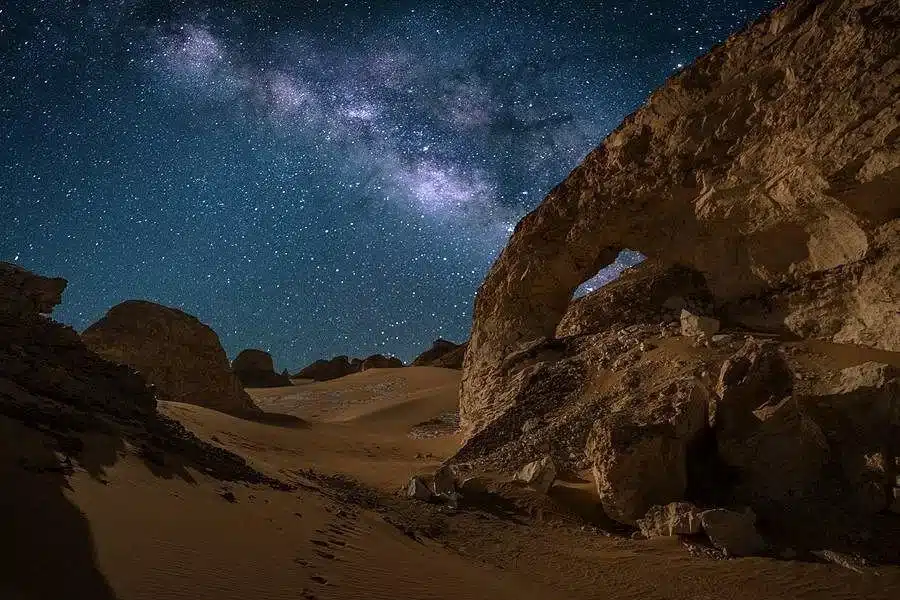
As the light softens, the pace changes. Guests may walk nearby where permitted, photograph formations or sit while the team organizes shelter and food. After sunset, artificial light becomes limited, dinner is served and conversation replaces the constant movement of a sightseeing day. The night can be completely quiet or windy; stars can be brilliant or softened by dust, cloud or moonlight.
Beautiful does not mean luxurious
Marketing often uses “Bedouin camp,” “desert glamping” and “authentic camp” without defining them. Ask what you will physically receive. A simple mobile camp may include fabric wind protection, tents, foam mattresses, sleeping bags, blankets, low tables and a cooking area. It normally does not include a tiled bathroom, hot shower, permanent electricity or hotel bed.
Luxury expectations are not wrong, but they must match the product. If you require a private en-suite bathroom, the correct plan may be a day safari followed by the Bahariya Oasis hotel. If you accept basic facilities, the lack of infrastructure is part of why the night feels remote.
The strongest moments are often simple
Travelers remember the temperature falling after sunset, tea near camp, shadows from moonlight, the first quiet minutes before sunrise and breakfast in open space. These moments cannot be scheduled like a museum visit. Wind, group energy and weather change the atmosphere. Choose the trip for the complete process, not for one guaranteed photograph.
How an overnight White Desert safari usually works
Before departure in Bahariya
The local team checks the operating plan, documents, food, water, fuel, bedding and group needs. Guests should leave large luggage at the hotel and carry a small soft bag. This is the moment to repeat allergies, medication storage, mobility limits, children’s needs and any request for a private tent or portable toilet.
Day one: landscapes and camp
The vehicle leaves the oasis and follows the permitted program. Exact stops vary. A responsible description uses words such as “planned” and “subject to access” rather than guaranteeing every remote place. Lunch or tea may be prepared during the route. The team reaches the camp area with enough time to organize safely before full darkness.
Night: dinner and rest
Dinner is prepared with ingredients transported from Bahariya. Guests should drink regularly even when the evening feels cool. The guide explains the toilet area, camp boundaries and any wildlife precautions. Phones may lose signal; place them in airplane mode to conserve power. Quiet behavior makes the experience better for wildlife, other camps and your own group.
Day two: sunrise, breakfast and return
Many guests wake before sunrise. After breakfast, the team removes the camp, checks for litter and continues the route or returns to Bahariya. Do not schedule a tight flight connection that evening. Desert pace, road traffic, checkpoints and weather can affect return time.
How a responsible desert camp is set up
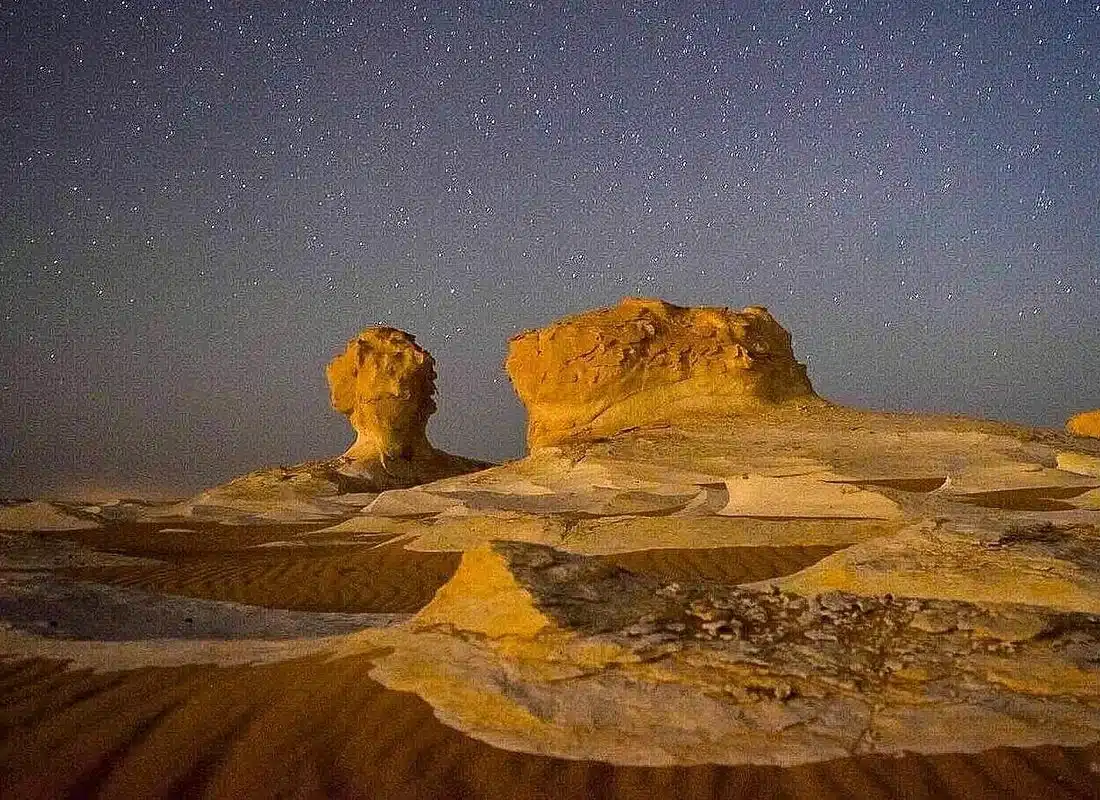
Camp position should follow protected-area instructions, current access and local conditions. The team considers ground stability, wind direction, vehicle access, distance from fragile formations and the need for privacy. Guests should not pressure drivers to camp beside a famous formation if that location is restricted or unsuitable.
Shelter and wind protection
Fabric screens, tents or natural topography may provide shelter. Wind can change during the night, so loose items must be secured. Keep plastic bags, tissues and light clothing inside a closed bag. One gust can turn an unattended item into litter that is difficult to recover in darkness.
Cooking area
Food preparation should be separated from sleeping and toilet areas. The team manages fuel, flame and hot equipment. Guests should keep children away from cooking equipment and follow instructions during strong wind. Food scraps must not be offered to wildlife or left behind.
Light
Small camp lights and headlamps are enough. Excessive bright lighting affects night vision, photography, wildlife and neighboring groups. Use red mode when walking near camp and point lights toward the ground. Never walk behind a vehicle without making your presence known.
Tents, mattresses, sleeping bags and blankets
Sleeping comfort varies more than trip names suggest. Ask four separate questions: Is there a tent? Is it private or shared? How thick is the mattress? What sleeping bag and blankets are provided for the expected season? “Everything included” is not a useful answer when you have back pain or sleep cold.
Tent versus open or sheltered sleeping
Some travelers enjoy sleeping with a view of the sky; others need a fully enclosed tent for wind, privacy or insects. Weather and operating style influence the setup. If an enclosed private tent is essential, request confirmation before booking. Do not wait until the vehicle is packed.
Mattress comfort
A foam mattress can be adequate for one night, but thickness matters. Travelers with back, hip or joint problems should describe the issue and ask what can be provided. A compact inflatable pad may add comfort, but check whether it is suitable for the ground and protected from puncture.
Warmth
Winter nights can feel very cold because of dry air and wind. Wear dry layers to sleep, including socks and a warm hat when necessary. Avoid going to bed in damp or sweaty clothing. A sleeping-bag liner improves hygiene and adds a little warmth, but it does not replace an appropriate sleeping bag.
If you become cold, tell the team early. Additional blankets are easier to arrange before everyone settles than after the camp is asleep.
Toilets, washing, hygiene and privacy
Remote White Desert camps generally have no permanent bathrooms. This should be explained clearly, not hidden until arrival. The guide designates a private toilet area and describes the waste method. Some operators can arrange a portable camping toilet by prior request. Availability, privacy screen and waste handling must be confirmed.
What to carry
- Toilet paper or tissues in a waterproof bag.
- Hand sanitizer.
- Unscented wet wipes used sparingly.
- Sealable bags for all personal waste.
- Small personal towel.
- Necessary menstrual products and disposal bags.
- Prescription hygiene or medical supplies.
“Biodegradable” wipes do not disappear during one night. Pack them out. Do not bury plastic, sanitary products or tissues. Avoid soaps and chemicals near springs or natural water. A basic wash with a small personal cloth is more appropriate than attempting a shower.
Night-time movement
Wear shoes, carry a headlamp and tell a companion when leaving the sleeping area. Walk slowly and stay within the boundary explained by the guide. Do not rely on a phone flashlight with low battery. If frequent night toilet access is medically necessary, request the closest safe tent position and a clear plan.
Food, drinking water and dietary requirements
Typical overnight programs include lunch or a route meal, dinner, breakfast, tea and drinking water, but inclusions differ. Request a written list. The team buys and packs supplies in Bahariya, so dietary communication must happen in advance.
Allergies
State the allergen, reaction severity and cross-contact concern. Carry prescribed emergency medication yourself and explain where it is. Do not assume a remote cooking area can guarantee the separation available in a professional allergen-controlled kitchen. If the risk is severe, discuss whether bringing sealed personal food is appropriate.
Vegetarian, vegan and religious diets
Many needs can be accommodated with notice. Ask what meals are planned rather than accepting a generic yes. Clarify ingredients that matter to you. A written message reduces misunderstanding and gives the team time to shop correctly.
Hydration
Drink throughout the day; do not wait for strong thirst. Cool evenings can hide dehydration after hours of sun. Bring a reusable bottle that is easy to reach in the vehicle. Ask how much drinking water is carried and whether extra is available for your group.
Food hygiene
The operating team should protect ingredients from heat and dust, separate raw and ready-to-eat foods and keep utensils clean. Travelers with sensitive stomachs may bring familiar snacks. Wash or sanitize hands before eating.
Cold, heat, wind and changing conditions
October to April is the main practical season for White Desert camping. December through February can bring cold nights. March and April may be warmer but can be windy or dusty. Summer heat changes the risk and may make camping unsuitable for some travelers.
The best time to visit the White Desert guide compares the months in detail. Regardless of date, check a current forecast and ask the local team how it affects the camp.
Wind
Wind changes the perceived temperature, carries dust and affects cooking and shelter. Follow instructions if the team moves camp or shortens an activity. Keep contact lenses protected and use wraparound sunglasses. Store cameras in closed bags when blowing dust increases.
Heat
Headache, dizziness, nausea, confusion and unusual fatigue can indicate heat-related illness. Report symptoms immediately. Travelers with conditions or medication affected by heat should seek personal medical advice and disclose needs to the operator.
Cold
Layer before you feel chilled. Eat, drink and change into dry clothing. Wind-resistant outerwear matters. People who are unable to maintain warmth should use extra bedding, move to better shelter or return if the guide judges it necessary.
Complete White Desert camping packing list
Clothing
- Breathable long-sleeved daytime layers.
- Long trousers suitable for vehicle travel and camp.
- Fleece or warm mid-layer.
- Insulated wind-resistant jacket in winter.
- Warm hat, gloves and dry socks for cold months.
- Wide-brim or secure sun hat.
- Scarf or buff for wind and dust.
- Closed shoes with grip; optional camp sandals.
Sun and health
- Sunscreen, sunglasses and lip balm.
- All personal medication in original packaging.
- Extra doses for delay.
- Allergy medication and emergency plan if applicable.
- Small personal first-aid items.
- Reusable bottle.
Sleep and hygiene
- Small pillow or inflatable pillow.
- Optional sleeping-bag liner.
- Earplugs.
- Headlamp with spare battery.
- Tissues, sanitizer and sealable waste bags.
- Small towel and minimal toiletries.
Electronics and photography
- Charged power bank and cables.
- Spare camera batteries and memory cards.
- Tripod if needed.
- Blower and microfiber cloth.
- Protective camera bag.
Pack in a small soft bag. Hard suitcases waste vehicle space and are difficult at camp. Leave valuable or unnecessary items at the hotel. Do not bring tools for collecting rocks, fossils or crystals. Drone use requires careful legal and protected-area authorization; never assume remoteness makes flying legal.
Families, solo travelers and accessibility
Families
Children may love the camp, but parents must prepare for off-road driving, basic toilets, temperature change and night supervision. Discuss ages, car seats, familiar food, medication and bedding. A private tour gives the family control over stops and sleep timing. Children must not climb chalk formations, approach cooking equipment or leave camp alone.
Solo travelers
Ask whether the trip is private or shared, who will be in the vehicle and whether the tent is private. Share the operator’s contact and itinerary with someone you trust. Keep passport, money, phone and medication secured. A reputable local operator should answer group and safety questions directly.
Mobility and medical needs
Explain whether you can enter a high 4×4, walk on loose sand, sleep on a foam mattress and manage a remote toilet. Ask about assistance rather than using only the word “accessible.” Some guests will be happier on a modified day trip with a hotel night. The right itinerary is more important than completing a camping checklist.
Night photography and camp etiquette
For stars, bring a sturdy tripod, wide lens, spare battery and red-light headlamp. Moon phase changes the result: dark nights show more stars; moonlit nights reveal the chalk landscape. Discuss where you can stand without crossing vehicle routes or disturbing sleepers.
Keep bright lights short and directional. Do not illuminate another person or tent without consent. If photographing guides or guests, ask permission. Do not ask the team to move vehicles off approved tracks, create tire patterns or light fires for an image.
Cold reduces battery performance. Keep spares warm. Dust enters equipment easily; change lenses inside the vehicle or sheltered area. When bringing a cold camera into warmer air, leave it in a closed bag until temperatures equalize.
Safety, permits and communication
Western Desert operation depends on current rules, permits, official guidance and route conditions. Use an experienced licensed guide and suitable 4×4. Do not treat online maps or an old blog itinerary as permission to self-drive into remote protected areas.
Ask the operator:
- Who operates the desert section?
- How many guests travel in each vehicle?
- What permits and protected-area fees are included?
- What is the communication plan outside mobile coverage?
- What vehicle support exists for a mechanical problem?
- How are weather and route changes decided?
- What emergency information should guests provide?
Review current travel advice issued by your own government. Advice differs by nationality and can change. The operator should confirm local operating status, but travelers remain responsible for their government guidance, insurance and personal medical decisions.
Responsible camping in a protected landscape
White Desert camping is sustainable only when each camp leaves almost no trace. The chalk is fragile, wildlife is easily disturbed and wind spreads light waste quickly.
- Use permitted routes and camp areas.
- Do not climb, carve or break formations.
- Do not remove fossils, crystals, chalk, plants or archaeological material.
- Pack out all plastic, wipes, paper, cans and cigarette ends.
- Manage toilet waste according to current protected-area practice.
- Do not feed wildlife or leave food scraps.
- Keep noise and lighting considerate.
- Use reusable bottles and containers when practical.
- Support local guides, drivers, cooks, hotels and suppliers.
The Environmental Affairs Agency management information describes different protection zones and levels of access. Follow current instructions even when another traveler’s older photo shows a vehicle or camp somewhere that is no longer appropriate.
How to choose a White Desert camping tour
Compare more than price and duration. Ask for a written program that separates Cairo transfer, Bahariya hotel, desert vehicle, meals, permits, bedding and return timing.
Questions before payment
- Does the trip begin in Cairo, Giza or Bahariya?
- Are transfers private or shared?
- How many guests are in the 4×4?
- Which stops are planned and subject to current access?
- Are permits and fees included?
- What meals and water are included?
- Is the tent private or shared?
- What mattress, sleeping bag and blankets are supplied?
- How are toilet privacy and waste handled?
- Can dietary and mobility needs be accommodated?
- What happens if weather changes the route?
- What is the cancellation policy?
A transparent answer is more valuable than dramatic promises. If a provider refuses to explain toilets, permits or bedding, keep looking. Bedouin Castle combines a local Bahariya base with safari planning; use the contact page for a written itinerary.
Frequently asked questions about White Desert camping
Is White Desert camping safe?
Safety depends on current advice, permits, weather, vehicle condition, guide experience and traveler needs. Choose an experienced local operator, disclose medical requirements, follow route changes and review your government’s latest travel advice.
Are there toilets in the White Desert?
Permanent bathrooms are generally not available at a mobile camp. The guide provides a private arrangement and waste method. A portable toilet may be possible with advance notice; confirm exactly what is included.
Can I shower at camp?
A normal shower is usually not part of a one-night mobile camp. Use minimal water, a personal cloth and packed-out wipes. Stay away from soaps or chemicals near natural springs.
Will I sleep in a tent?
It depends on the program and weather. Ask whether the setup is an enclosed tent or sheltered sleeping area, whether it is private, and what mattress and bedding are supplied.
Does the camp have electricity?
No mains electricity. Bring charged power banks and spare batteries. Put phones in airplane mode when there is no signal to conserve energy.
Is there phone signal?
Coverage is unreliable away from roads and settlements. Treat disconnection as expected. Confirm the operator’s communication and emergency plan rather than relying on your personal phone.
How cold does it get at night?
Winter nights can feel very cold, especially with wind. Exact conditions vary. Bring thermal or warm layers, jacket, hat and socks, and confirm the sleeping bag and blankets before departure.
Can vegetarians eat at camp?
Usually, with advance notice. Explain dietary rules and allergies clearly before supplies are purchased. Ask for confirmation of the planned meals.
Can children camp in the White Desert?
Many families do, but suitability depends on age, off-road tolerance, toilets, sleep and temperature. Choose a private pace when possible and discuss car seats, food, bedding and supervision.
How many nights should I camp?
One night is the best first choice for most visitors. Two nights offer a slower pace and more photography, but add another basic night. Longer remote expeditions require additional planning and flexibility.
Can I camp without a guide?
Remote tracks, protected-area rules and changing conditions make a licensed local guide and suitable 4×4 the responsible choice. Confirm current permits and access through an experienced operator.
What should I do with rubbish?
Pack it out. Keep a sealable personal waste bag and give larger waste to the team’s system. Wipes, tissues and cigarette ends must never remain in the desert.
Can I fly a drone?
Do not assume so. Drone possession and use in Egypt and protected areas require careful legal and permit checking. Obtain clear authorization before bringing equipment.
Plan a White Desert camp with clear expectations
The best White Desert camping experience combines a capable local team, responsible protected-area practice and travelers who prepare for basic conditions. Ask direct questions, pack for the full day-night range and allow the route to change when safety or conservation requires it.
Browse all Bedouin Castle tours, combine camping with a Bahariya hotel stay, or message the local team on WhatsApp.