Local review required before publication. Operational details last verified on September 28, 2026.
A White Desert tour for solo travelers can be one of Egypt’s most memorable journeys, but it works best when the details are settled before you leave Cairo. The desert section is not a place to improvise transport, camp equipment or access arrangements after arrival. A solo guest needs to know whether the departure is genuinely private, whether a shared place is confirmed, where the quoted trip starts, and what happens if no matching traveler joins. This guide explains those decisions without pretending that one format suits everyone. It covers private and shared options, realistic cost drivers, Cairo and Bahariya start points, sleeping privacy, food, communication and the questions a solo woman may reasonably ask. It also shows why an arrival night in Bahariya can turn a rushed transfer into a calmer, better-organized safari.
Quick answer
Yes, a solo traveler can visit the White Desert, but the trip must be organized around licensed/local transport, a 4×4 desert team and current access requirements. A private tour gives certainty and flexibility; a shared option can reduce cost only when another traveler or a scheduled departure matches the same date and itinerary. The most practical plan is often to arrive in Bahariya the evening before, stay at a hotel, and begin the desert route after breakfast.
Table of contents
- Can solo travelers visit the White Desert?
- Private, shared or scheduled departure?
- What makes a solo trip cost more?
- Starting in Cairo or Bahariya
- A practical 2-day / 1-night itinerary
- Camping privacy, sleeping and toilets
- Questions for solo women
- How to join another traveler
- Staying in Bahariya before or after
- 12-point booking checklist
- Recommendations by traveler type
- Frequently asked questions
Can Solo Travelers Visit the White Desert?
Solo travel is possible, but “solo” does not mean traveling unsupported across the protected desert. The paved part of the journey may begin in Cairo, while the desert route normally changes to a local 4×4 with a team that understands the terrain, access conditions and camp setup. A responsible plan confirms those arrangements in writing. It also distinguishes between traveling alone in your own vehicle and being the only guest inside a shared departure.
The key limitation is economics rather than eligibility. A 4×4, driver, camp equipment, meals and local logistics have costs that do not disappear when only one person travels. A private departure therefore carries a single-traveler supplement or a higher total than the per-person headline designed for two guests. Bedouin Castle’s current tour information shows a solo supplement on its core overnight product, but the exact total must be confirmed for the travel date because pickup and operational details on the live site are not fully consistent.
Solo guests also need certainty about communication. Before leaving, save the operator’s main phone number, the name of the person meeting you, the pickup point and a written itinerary. Share the booking confirmation with someone you trust. These are normal planning steps, not reasons to fear the journey. The White Desert Egypt travel guide gives broader destination context, while this page focuses on the decisions unique to one-person bookings.
Private, Shared or Scheduled Departure?
These labels are often used loosely, so ask what each one means for your booking. A private tour means the itinerary and 4×4 are reserved for you or your named party. A shared tour means you join people who may have booked separately. A scheduled departure has a fixed date and normally leaves only under the organizer’s stated conditions. “We may find someone” is not the same as a confirmed shared departure.
| Option | Best for | Main advantage | Question to settle |
|---|---|---|---|
| Private | Fixed dates, photographers, privacy | Clear departure and flexible pacing | Total solo price and exact inclusions |
| Shared | Flexible guests seeking lower cost | Costs may be divided | Who is confirmed, group size and vehicle seating |
| Scheduled | Travelers who can match a set date | Known timetable | Minimum guests and cancellation policy |
Private travel is usually the simplest answer when dates cannot move. It also helps if you want longer photography stops, an earlier return or specific privacy at camp. Shared travel can be excellent when the match is real and both parties understand the route. Ask whether rooms, tents and vehicle seating are allocated individually. Do not pay a non-refundable transfer based only on the possibility that another guest will appear.
A scheduled departure should come with written terms: meeting time, start point, minimum number, what happens if the minimum is not reached, and whether you will be offered a refund, alternative date or private supplement. This simple distinction prevents the most common solo-booking disappointment.
What Makes a Solo White Desert Trip Cost More?
The headline price of an overnight desert tour is often calculated per person at a minimum occupancy. One traveler still needs a safe vehicle, fuel, local crew time, camp equipment, food preparation and protected-area arrangements. Hotel rooms may also be priced per room rather than per guest. This is why dividing the same operating cost between two people usually produces a lower per-person figure.
Ask for an itemized quote rather than negotiating only the final number. It should show the start point, paved-road transfer, desert 4×4, guide or driver, meals, drinking water, sleeping equipment, hotel use, current fees and any single supplement. That list makes two offers comparable. A cheaper quote beginning in Bahariya is not equivalent to one that includes the road transfer from Cairo.
Local insight
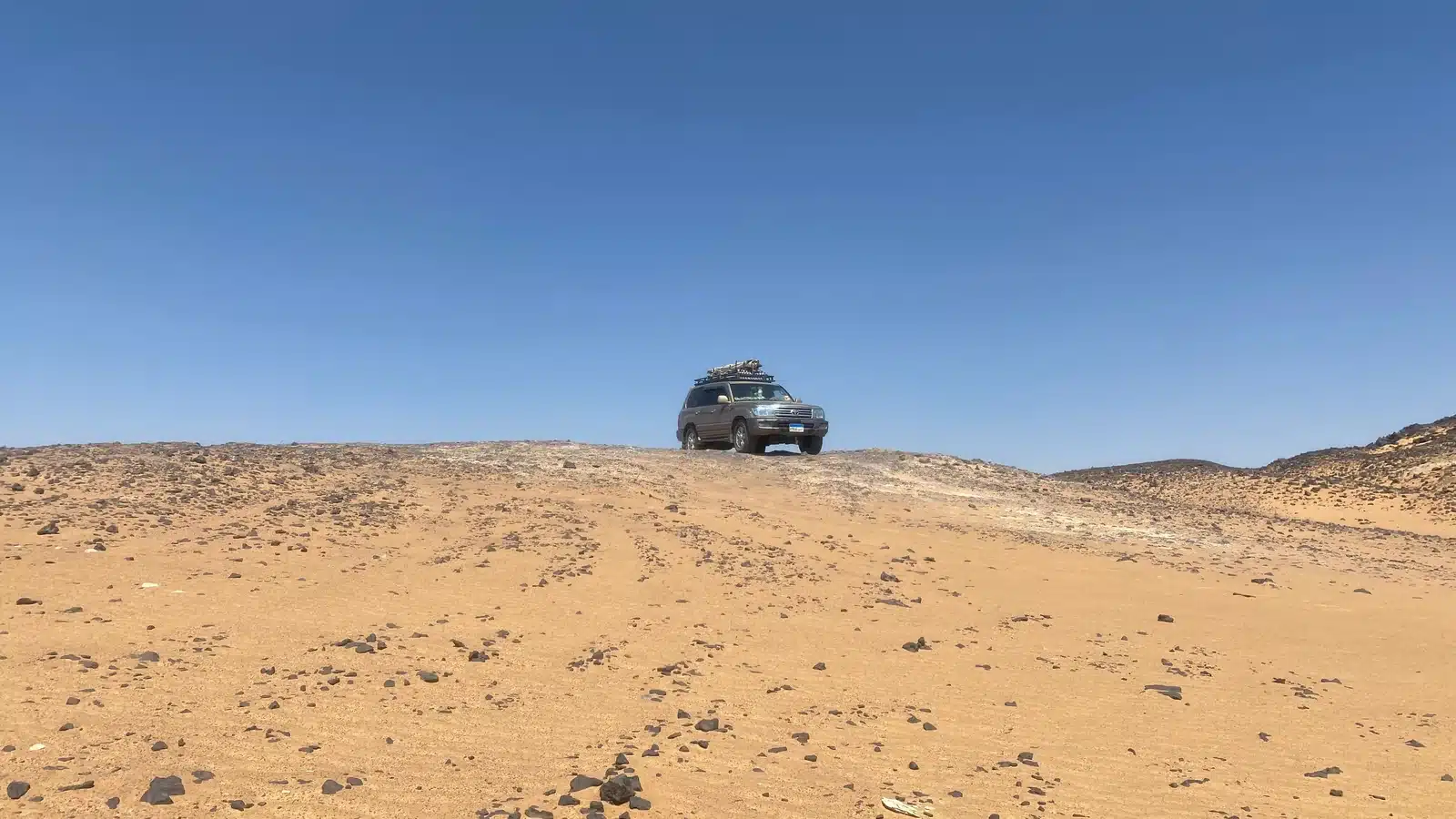
For a solo guest, date flexibility can be more valuable than chasing a generic “shared” label. Give the local team two or three possible dates and ask whether a compatible confirmed booking already exists. The match must still be approved by everyone involved.
Never assume a quoted price remains valid after changing the group size, pickup point or number of nights. Ask for the currency, payment schedule, cancellation terms and balance method. Keep the written confirmation. This is practical consumer protection and makes the trip easier for the local team as well.
Starting in Cairo vs Starting in Bahariya
A Cairo start is convenient because the road transfer is coordinated with the safari. Confirm the pickup district, time, vehicle type and whether the same quote covers the return. “Cairo pickup” may not automatically include every airport or distant suburb. The journey is long enough that a very late pickup can compress the first day, so ask how the timing affects meals and desert stops.
A Bahariya start gives you more control. You can arrive by prearranged transfer or public transport, sleep at the oasis and begin after breakfast. This often suits travelers arriving from another Egyptian city, guests who want to recover from a flight, and anyone uncomfortable combining a long road journey with a full desert program. The detailed Cairo to White Desert guide explains the transfer choices.
Bedouin Castle’s commercial hub currently states that its from-$70-per-person 2-day offer, based on a minimum of two guests, includes Cairo pickup. The individual tour page contains older wording that treats Cairo transport as optional. Because this inconsistency should be corrected before publication, a solo traveler must request one written, date-specific total rather than relying on either snippet alone.
A Practical 2-Day / 1-Night Solo Itinerary
The following is a planning model, not a promise of a fixed route. Current access, daylight, weather and group pace can change the sequence. If you slept in Bahariya, the morning can begin with breakfast and a briefing. Check what stays at the hotel and what enters the 4×4. Keep your passport, phone, medication and valuables with you unless the property gives a specific secure-storage instruction.
Day one: transfer, main landscapes and camp
After meeting the local team, the route typically connects major Western Desert landscapes such as the Black Desert, a spring stop when suitable, Crystal Mountain, the Agabat/Aqabat region and White Desert formations. Not every place is guaranteed on every day. Ask the guide which stops are accessible and how much time is planned at each. A solo guest can use private pacing well: choose one or two longer stops instead of turning every landmark into a five-minute photograph.
Before sunset, the team selects an appropriate camp location according to conditions and current rules. Dinner and the sleeping setup follow. Confirm beforehand whether the tent is single occupancy, what mattress and bedding are supplied, and how toilet privacy is managed. Keep a warm layer, headlamp and water close to the sleeping area.
Day two: sunrise, breakfast and return
Sunrise can be one of the quietest moments of the trip. Stay within the boundaries the guide gives you; it is easy to lose visual reference among similar formations. After breakfast and packing, the route may include additional formations before returning to Bahariya. Confirm the expected arrival time and the onward Cairo plan. If you have a flight or train, leave generous contingency rather than treating the safari return as a precise airport transfer.
Camping Privacy, Sleeping and Toilets
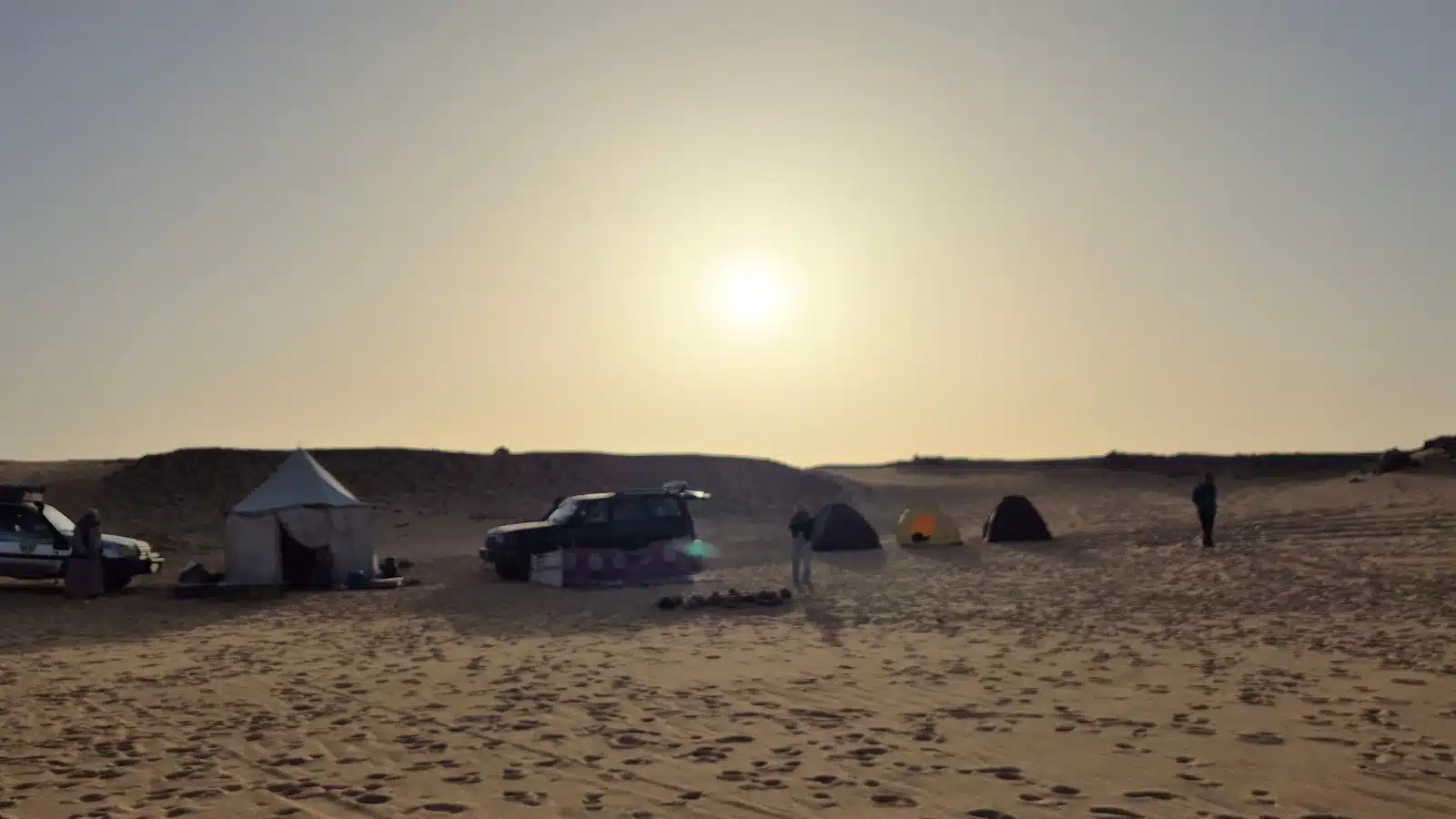
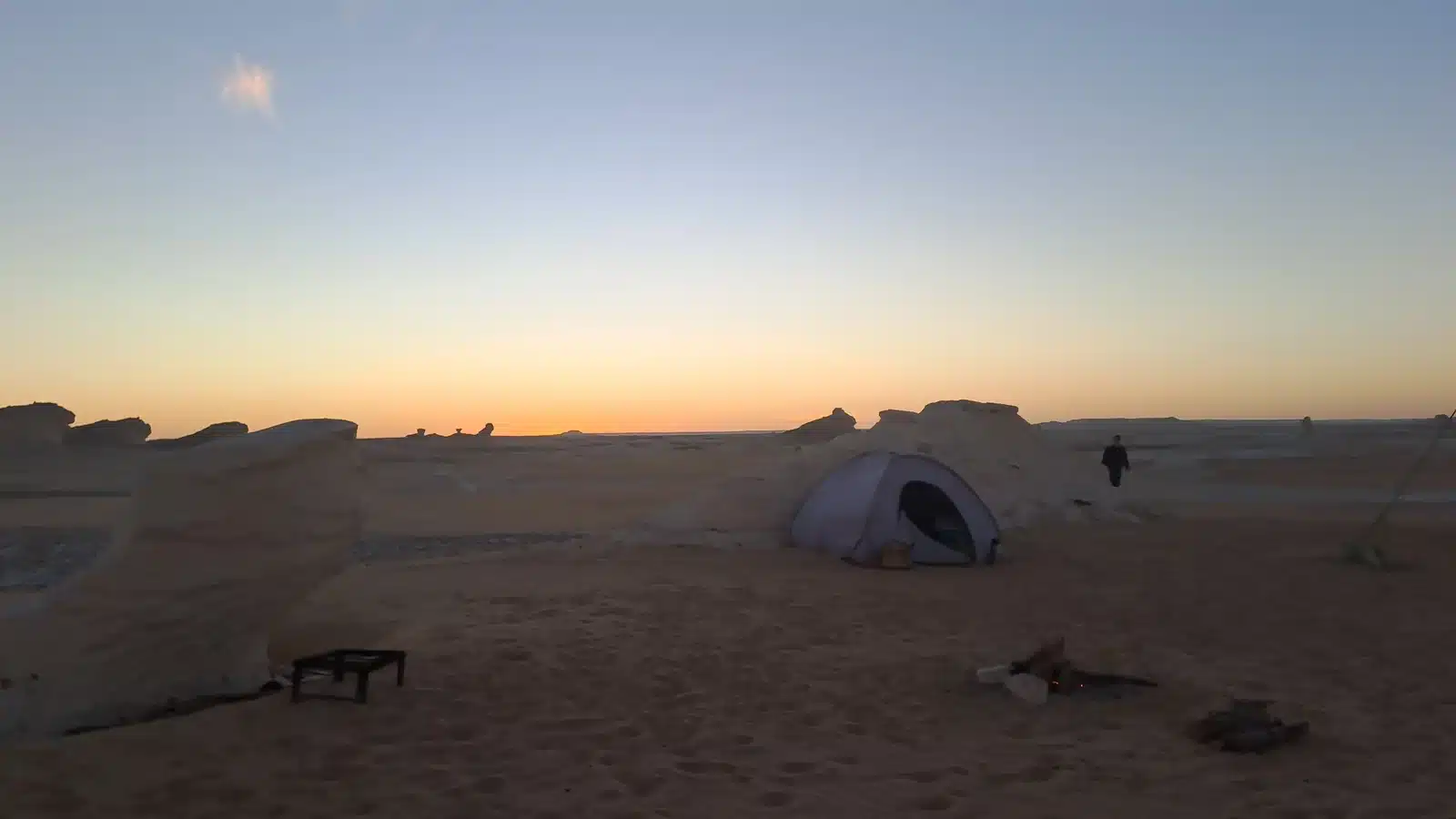
Desert camping is simpler than a hotel and should be described honestly. Ask whether the trip uses a closed tent, an open sleeping arrangement or a choice based on wind. Confirm the mattress type, blankets or sleeping bag, clean liner, pillow and seasonal warmth. A photograph of the actual equipment is more useful than a generic “all camping gear included” claim.
For a shared departure, ask whether you receive your own tent. Solo travelers should not assume they will be asked to share, but they also should not assume single occupancy is automatic. Privacy around changing clothes is another reasonable question. A small dry bag, compact towel and layered clothing make the transition from evening to sleep easier.
Toilet arrangements are basic and depend on the operator’s setup and the camp location. There is not a permanent bathroom beside every campsite. Ask whether a privacy shelter and toilet equipment are provided, how waste is handled, and what the guide expects guests to do. The White Desert camping guide covers packing, hygiene and sleeping in more detail. At natural springs, do not use soap or shampoo unless the local team explicitly confirms that it is permitted.
Questions Solo Women Should Ask
A solo woman does not need a separate, alarmist version of the trip, but she should receive clear answers about who will accompany her and how privacy works. Ask for the lead contact’s name, the number of crew members, whether another group will share camp, and who will meet you in Cairo or Bahariya. Request a recognizable meeting point and vehicle description shortly before departure.
Clothing can be practical and respectful: loose layers, closed shoes, a scarf for wind or dust, and warm sleepwear. At camp, ask where to change and how far the toilet area is from the sleeping area. Keep your phone, passport and essential medication in a small bag. If anything in the plan changes, ask the operator to explain it before you enter the desert.
Recent reviews can reveal communication patterns, but reviews are not a substitute for a written booking. Look for consistent business names, phone numbers and real property or vehicle photographs. Avoid sending passport images through an insecure channel; ask what document information is required, why, and how it should be submitted. Share the confirmed itinerary and contact with a trusted person. These steps apply to all solo travelers.
How to Join Another Traveler Without Creating Uncertainty
Start by giving the operator a flexible window rather than one immovable date. State your preferred tour length, Cairo or Bahariya start, and whether you will accept a mixed group. The operator can then check confirmed departures. Do not rely on a public promise that “shared tours leave daily” unless the company can name the date and minimum group status.
- Ask whether other guests are already confirmed and paid.
- Confirm the maximum number in the road vehicle and desert 4×4.
- Check whether the route, meals and camp night are identical.
- Ask how tents are allocated and whether a private tent costs extra.
- Confirm the fallback if the other booking cancels.
- Do not exchange private contact details with strangers unless everyone agrees.
Another approach is to arrive in Bahariya with a hotel night and let the local team match a departure only if a suitable booking exists. This should not be treated as guaranteed. Keep a clear alternative—private supplement, day trip, extra hotel night or date change—so that you are not pressured into an unsuitable arrangement after a long journey.
Should You Stay in Bahariya Before or After the Safari?
An arrival night can be especially useful for a solo guest. It separates the intercity road journey from the off-road safari, gives time to meet the team, and lets you check equipment questions in person. It also reduces the risk that a delayed Cairo departure steals daylight from the desert route. Breakfast before departure is easier to coordinate from the same property that handles the safari.
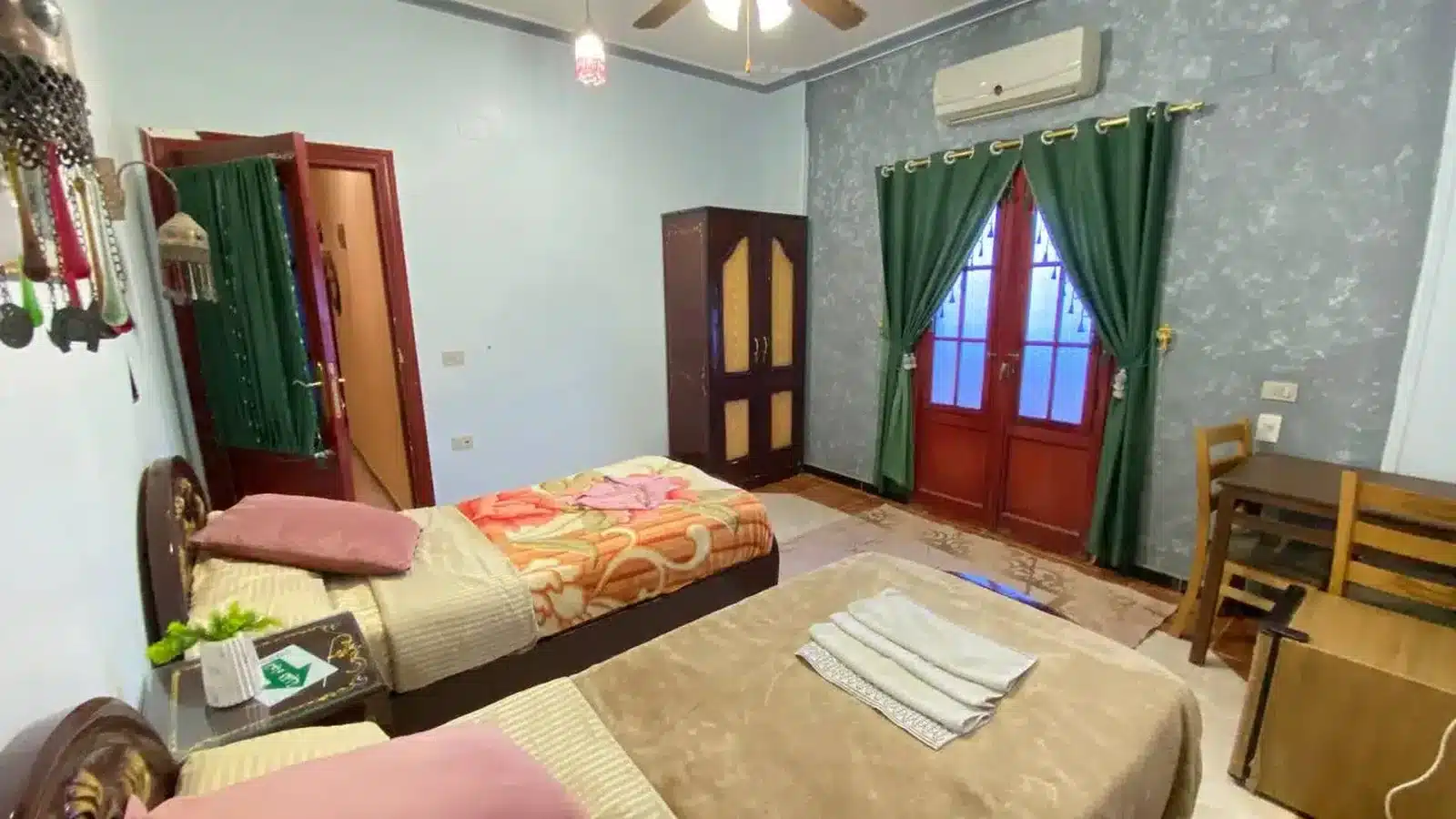
The current Bedouin Castle Hotel page confirms single, double and triple rooms priced per room per night with breakfast, plus private bathrooms, air conditioning and Wi-Fi. Room availability and prices should still be reconfirmed for the date. Luggage storage and shower-only use are not currently confirmed as automatic services, so ask specifically rather than assuming they are included.
A post-safari night is helpful when the return time is uncertain or you do not want to combine packing, showering and the Cairo road on the same day. If you only need a room for a few hours, request a specific quote; do not assume day use is complimentary. The right answer depends on your onward transport, energy and budget.
12-Point Solo Booking Checklist
Copy this list into your WhatsApp or email conversation and keep the answers with your booking confirmation.
- Date and status: Is the departure confirmed, shared, scheduled or private?
- Start point: Exact Cairo district, Bahariya hotel or another meeting place?
- End point: Where and approximately when does the service finish?
- Total price: What is the one-person total, currency and payment schedule?
- Transfers: Which paved-road transfers are included?
- Desert vehicle: Which 4×4, how many passengers and how is luggage handled?
- Team: Who is the named contact, driver and guide?
- Current access: How are permits, entrance arrangements and route changes handled?
- Meals and water: How many are supplied, and are dietary needs confirmed?
- Camp equipment: Private tent, mattress, bedding and seasonal warmth?
- Toilet and privacy: What equipment or shelter is provided?
- Cancellation: What happens if access, weather, another guest or the operator changes the plan?
A clear operator should be comfortable answering these questions without rushing you. If an answer is uncertain, ask that it be marked as subject to reconfirmation rather than converted into a promise. The goal is not paperwork for its own sake; it is to make the safari and the handover between road transport, hotel and 4×4 predictable.
Final Recommendations by Traveler Type
First-time solo visitor with fixed dates: choose a private 2-day / 1-night departure and add a Bahariya arrival night if the schedule allows. You pay more than two guests sharing the operating cost, but you gain certainty and avoid waiting for a match.
Budget-conscious traveler with flexible dates: ask about confirmed shared or scheduled departures across a window of several days. Set a maximum budget and agree on the fallback before traveling to the oasis.
Photographer or slow traveler: consider a private 3-day itinerary so time is not dominated by transfers and rushed stops. Confirm charging, night-light etiquette and camp location flexibility rather than assuming every night produces the same conditions.
Traveler unsure about camping: stay at the hotel and begin with a day trip from Bahariya. A day tour cannot reproduce a desert night, but it may be the right first experience.
The best White Desert tour for solo travelers is not defined by the lowest headline price. It is the option whose date, start point, team, equipment, privacy and cancellation terms are clear enough that you can focus on the landscape rather than solving logistics during the trip.
Frequently Asked Questions
Can I visit the White Desert alone without a tour?
Independent travel inside the desert is not the same as taking the road to Bahariya. Access, protected-area arrangements and off-road conditions should be handled with a local team and appropriate 4×4. A solo guest can book alone, but should not plan to navigate or camp alone. Confirm current requirements before departure because routes and official arrangements can change.
Is a private White Desert tour worth it for one person?
It can be worth it when your date is fixed, privacy matters, or you want control over the pace. The disadvantage is cost because one guest carries operating expenses that two or more people would share. Compare the private total with a genuinely confirmed shared departure, not with an unconfirmed headline price.
How can a solo traveler find a shared departure?
Give the local operator several possible dates and ask whether paid guests have already confirmed the same route. Request the group size, vehicle seating, tent allocation and fallback if someone cancels. Do not travel to Bahariya on the assumption that a match will definitely appear unless your accommodation and alternative plan are settled.
Is the White Desert safe for solo female travelers?
No operator can offer a universal safety guarantee. Practical checks include the named team, consistent business contact, private sleeping arrangement, clear meeting point, recent reviews and a written itinerary shared with someone you trust. Ask direct questions about crew, other guests, changing privacy and toilet arrangements before paying.
How much does a solo White Desert tour cost?
The total varies by date, tour length, start point, private or shared format, hotel use and current fees. Bedouin Castle’s live pages show a solo supplement for its overnight trip, but the Cairo-transfer wording is inconsistent across pages. Request a date-specific written total listing road transfer, 4×4, meals, equipment, fees and hotel.
Will I have my own tent?
Do not assume it automatically. Ask whether the camp uses closed tents or open sleeping, whether single occupancy is included, and what bedding is supplied. On a shared departure, confirm tent allocation in writing. Conditions such as wind can influence setup, so the operator should explain both the planned and alternative arrangement.
Should I stay in Bahariya the night before?
It is often the calmest plan after the Cairo road journey. An arrival night creates time to rest, meet the team, check equipment, eat breakfast and begin the safari without compressing the first day. It is especially useful after a flight or late arrival. Confirm room, breakfast, luggage and departure time separately.
What should I do if the route or weather changes?
Ask before booking how operational changes are communicated and what alternatives are offered. Desert access, wind, vehicle conditions and official instructions can alter a route. A responsible plan protects the core experience without promising every named stop. Keep onward travel flexible and preserve the written cancellation and change terms.
Sources & verification
- Egyptian Environmental Affairs Agency — protected areas information
- EEAA — White Desert Protected Area management plan
- UNESCO World Heritage Centre — Great Desert Landscapes
- Bedouin Castle — current White Desert tour comparison
- Bedouin Castle — current 2-day tour page
- Bedouin Castle — current hotel rooms and confirmed amenities