
Local review required before publication. Operational details last verified on September 28, 2026.
Bahariya Oasis hot springs are part of everyday oasis life, not a row of standardized spa pools. Travelers may encounter warm or hot water at one stop and cooler water at another, with different access, privacy, depth and maintenance. Names also appear in several spellings online. That makes local, same-day advice more useful than a fixed “top three” list copied from an old itinerary. This guide explains why springs occur in the oasis, how warm and cool stops differ, what facilities to expect, and how to visit respectfully. It avoids therapeutic claims and exact temperatures that have not been measured for the day. Before publication, Bedouin Castle’s local team must reconfirm the common names, access, water character and suitability of every specific stop mentioned.
Quick answer
Bahariya Oasis has both warm/hot and cool spring stops used by locals and travelers, but they are not uniform spa facilities. Each spring can differ in temperature, access, privacy, depth and maintenance. The best visit is usually arranged with a local guide who knows which spring is suitable that day and can combine it with an oasis tour, hotel stay or White Desert departure.
Table of contents
- Why Bahariya has natural springs
- Hot versus cold springs
- Main springs travelers ask about
- What facilities are really like
- Can you swim or soak?
- Local etiquette and privacy
- What to bring
- Best time of day and season
- Combining springs with Bahariya
- Before or after a safari
- Questions before you go
- FAQ
Why Bahariya Has So Many Natural Springs
Bahariya is a depression in Egypt’s Western Desert where groundwater has supported settlement, farming and palms for generations. Regional hydrogeological research links the Western Desert oases with large aquifer systems, including groundwater held in deep sandstone formations. Wells and natural or managed outlets bring that water to the surface. The exact source depth, flow and temperature differ by location, so one simple explanation should not be applied to every pool.
Warm water can reflect depth and the geothermal gradient: water circulating farther underground may return warmer. Local infrastructure also matters. Pipes, pumps, wells, maintenance and mixing can alter what a visitor experiences. A travel article should therefore describe the observed setting and current local name rather than declare a precise geological mechanism without site-specific measurements.
The springs are not just tourist props. Some are used by residents or sit near cultivated areas. Visitors should treat them as local places, not private resort facilities. Ask whether a stop is currently open, appropriate for mixed groups and suitable for bathing. A guide can redirect the visit when maintenance, privacy or community use makes another location better.
The Bahariya Oasis travel guide explains the wider setting. Springs fit into that story alongside palm groves, local settlements and desert routes; they should not be presented as a medical attraction.
Hot Springs vs Cold Springs: What Is the Difference for Visitors?
“Hot,” “warm” and “cold” are relative words. A pool that feels hot on a mild evening may feel different after hours in a vehicle. Unless temperature has been measured recently with a reliable instrument, use descriptive language and let the local team assess it. Enter slowly and follow guidance.
| Factor | Warm/hot stop | Cool stop |
|---|---|---|
| Typical appeal | Relaxing in cooler weather or after driving | Refreshing in warm daylight |
| Best timing | Often morning, late day or cool season | Often warmer part of day |
| Visit length | Short and gradual, based on comfort | Short swim or refreshment if permitted |
| Clothing | Modest swimwear and warm layer afterward | Modest swimwear, towel and dry clothes |
| Families | Temperature and depth need adult checks | Depth, surface and supervision still matter |
| After safari | May feel soothing but is not treatment | Can feel refreshing; facilities must be confirmed |
Neither category tells you whether there is shade, seating, a changing place, a bathroom, a ladder or a clean edge. Those are separate operational questions. Water appearance can also change with minerals, algae, maintenance or flow; do not diagnose quality from a travel photograph.
Travelers with cardiovascular conditions, pregnancy, skin concerns or other medical needs should seek professional advice before using very warm water. This article makes no claim that a spring cures pain, skin disease or any condition.
The Main Springs Travelers Ask About
Online itineraries commonly mention names transliterated as Bir Sigam, Bir El-Ghaba and Bir El-Matar. “Bir” means a well, and spellings vary when Arabic names are written in English. The presence of a name in an old tour description does not prove that the same stop is open, maintained or suitable today.
Bir Sigam
Bir Sigam is frequently described in traveler material as a warm or hot stop near Bahariya. Before publication, the local team must reconfirm the English spelling, current access, whether bathing is accepted, privacy and the honest facility description. Until that check is complete, it should be treated as a commonly referenced local name, not a guaranteed inclusion.
Bir El-Ghaba
Bir El-Ghaba also appears as a popular warm-water stop in oasis itineraries. The surrounding setting, access road and visitor arrangement should be verified for the current season. Do not attach an exact temperature or medical benefit based on copied listings. Ask whether the stop is public, whether residents are using it, and whether photography is appropriate.
Bir El-Matar and other local names
Bir El-Matar is often mentioned as a cooler spring, but current local confirmation is required before presenting that classification as final. Guides may use other names or suggest another outlet according to maintenance, cleanliness and the group. A useful itinerary says “a locally suitable spring stop, if available” and identifies it after the guide confirms the day’s plan.
What the Facilities Are Really Like
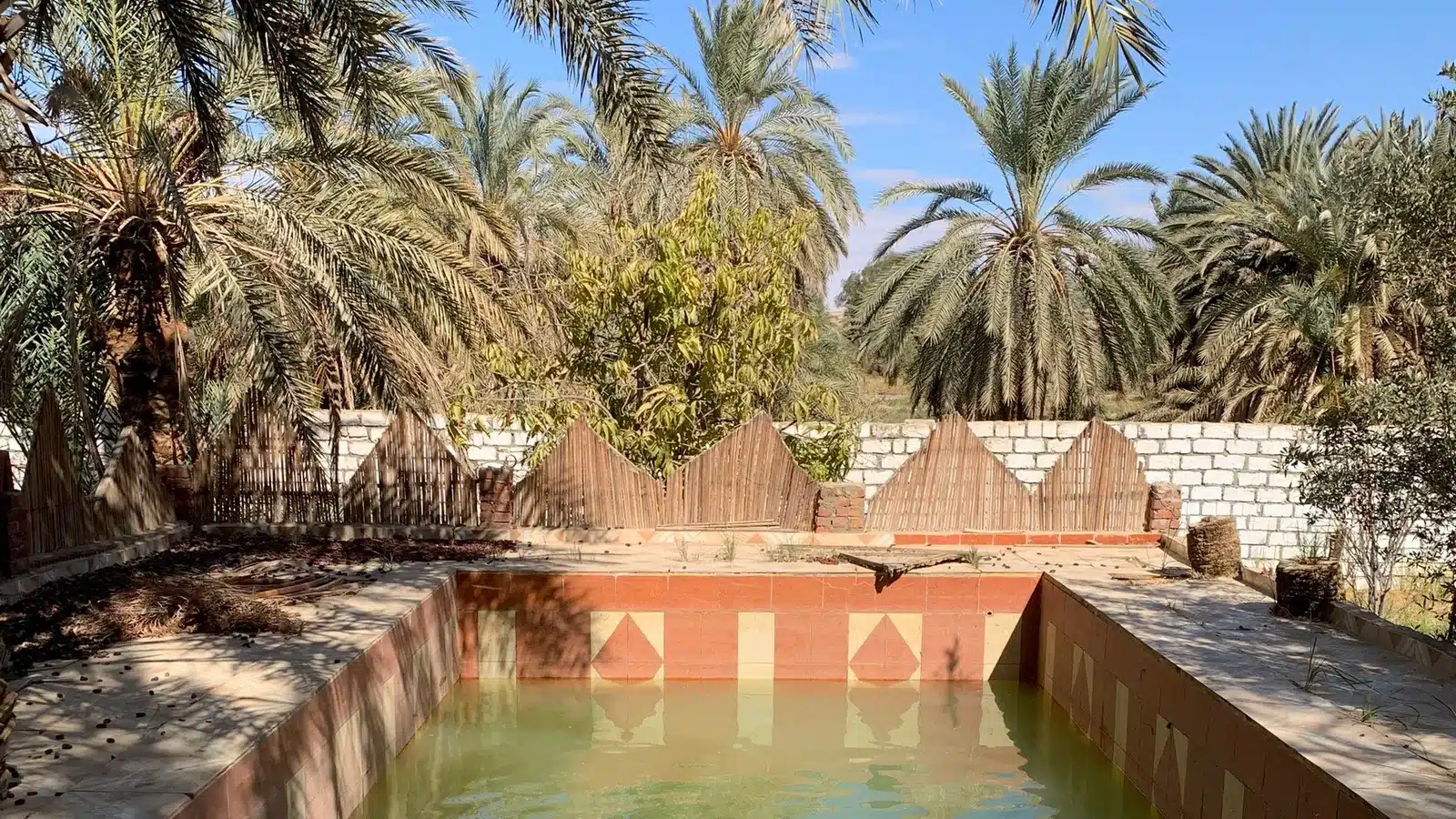
A Bahariya spring is generally a practical local stop, not a managed spa with identical changing rooms, lockers, lifeguards and towels. Some locations may have a simple pool edge, shade or seating; others may be more basic. Facilities can change faster than an article can be updated, so each item needs date-specific confirmation.
Ask about the path from the vehicle, surface around the water, steps or ladder, water depth, shade, seating, changing privacy and nearby toilet. Photographs should show the current real environment rather than an unrelated resort. If a person with limited mobility is traveling, describe the need precisely and request a current access photo.
Bring your own towel and sandals unless the hotel or guide states otherwise. Keep valuables at the hotel or with a trusted member of the party because lockers should not be assumed. A dry bag protects a phone and clean clothes from splashes and dust.
Cleanliness is a reasonable question, but avoid insulting local use or expecting sterile swimming-pool conditions. Ask when the outlet was last checked and whether the guide recommends entering that day. If the answer is uncertain, enjoy the palms and setting without bathing.
Can You Swim or Soak?
Possibly, depending on the stop. Some pools are suitable for sitting or short immersion; others may be too shallow, deep, warm, public or operationally unsuitable. The guide should explain the edge, depth and safest entry. Never dive into water whose depth and bottom are unknown.
Enter warm water gradually and leave if you feel dizzy or uncomfortable. Children require close adult supervision and a separate temperature check. Do not treat “natural” as a guarantee of safety. Travelers with medical conditions should ask an appropriate health professional whether warm-water immersion is suitable for them.
Swimming clothing should fit the local setting. Modest swimwear plus a cover-up is a practical choice for mixed public places. Change only where privacy has been confirmed. Do not photograph bathers, residents or children without permission.
Water contact is not compulsory. A short tea, palm-grove or photography stop may be enough. The value lies in understanding oasis water and local life, not in forcing every itinerary to include a swim.
A simple personal suitability check
Before entering, pause for three questions. First, do you understand the depth, temperature and exit point? Second, can you enter and leave without relying on an unstable edge? Third, has the guide confirmed that bathing is appropriate at that moment? If any answer is unclear, remain outside. Parents should perform the same check for each child rather than deciding for the family as a single group.
Avoid alcohol before using warm water, and do not remain immersed merely to match another traveler. Drink water, leave gradually and put on dry clothing. If you feel faint, unusually short of breath or unwell, exit and seek appropriate help. These are general precautions, not medical instructions. Guests with known health risks should obtain individual professional advice before travel.
Local Etiquette and Privacy
Ask the guide before entering. A spring may be in local use, undergoing maintenance or unsuitable for a mixed group at that moment. Keep voices moderate, give residents space and do not occupy a small pool as if it were private. If the guide asks the group to wait, move or skip the stop, follow that instruction without argument.
Use modest clothing between the vehicle and water. Bring a cover-up and dry clothes. Never use soap, shampoo, detergent or cosmetic products in the water unless an authorized local manager explicitly confirms that it is allowed. Even biodegradable labels do not make a product appropriate for a shared spring.
Photography requires consent. A wide landscape without identifiable people is easier, but still ask when local homes or private areas are visible. Do not fly a drone; Egyptian drone rules and local privacy require separate official verification.
Take every wrapper, wipe and bottle away. Do not leave wet clothing, food or glass near the edge. The simplest sign of respect is that the place looks unchanged after the group leaves.
Photographing the setting without invading privacy
The palms, water channel, reflections and wider oasis can tell a stronger story than a close photograph of someone bathing. Compose from the public path identified by the guide and exclude identifiable residents unless they clearly agree. If consent is given for a portrait, explain where the picture may appear. Do not assume that permission to take a photograph also means permission to use it in advertising.
Keep tripods and bags out of narrow access routes. Avoid artificial light, drones and loud direction. When the place is busy, put the camera away. A responsible visitor accepts that some local moments are not content.
What to Bring
- Modest swimwear appropriate to a shared local setting.
- A cover-up and complete dry change of clothing.
- Personal towel; do not assume one is supplied.
- Sandals or water-resistant footwear for the immediate edge.
- Closed shoes for other oasis or desert stops.
- Dry bag or sealable pouch for phone and documents.
- Drinking water and sun protection.
- Warm layer after an evening warm-water stop.
- Small trash bag for personal waste.
- Any personal medication normally required, with professional advice where relevant.
Keep the load compact. Large bags create clutter around a small public place. Remove jewelry that could be lost and leave passports secured according to the hotel’s confirmed arrangement. If a towel or swimwear will stay wet during a safari, pack a separate ventilated or waterproof bag.
Do not carry soap for use in the spring. A hotel shower is the place for washing products. If no changing room is confirmed, prepare a modest, practical method with a cover-up and the guide’s privacy advice.
Best Time of Day and Season
Warm water may be most appealing during cooler mornings, evenings or seasons. Cool water can be refreshing during warm daylight, but strong midday sun can make the surrounding stop uncomfortable. There is no fixed “best hour” because water temperature, shade, group privacy and the rest of the itinerary matter.
In hotter conditions, prioritize shade and hydration and keep a cool-spring visit short. In cooler weather, bring a dry layer so the period after leaving the water is comfortable. Wind can make wet clothing feel much colder. The best-time guide gives seasonal context for the connected desert route.
Avoid placing the spring immediately before a rushed departure. Families need time to change; photographers need to respect residents; and the team may need to adjust around local use. Sunset can be enjoyed from another oasis viewpoint rather than demanding that every spring also deliver a sunset scene.
How to Combine the Springs with a Bahariya Tour
Half-day local plan
Begin from the hotel, visit a locally confirmed heritage or landscape stop, take a short palm-grove break, and use one suitable spring if access and privacy allow. Finish with a viewpoint or meal. The sequence should minimize backtracking rather than chase names from an old list.
Full-day oasis plan
A full day can add more context: local settlement, palms, a museum or heritage site when open, a warm or cool spring, lunch and a sunset viewpoint. Opening hours and access must be checked. Do not advertise an attraction as included until the local team confirms it.
Spring plus desert day trip
A day trip from Bahariya already contains driving and major landscape priorities. Add a spring only if timing remains comfortable. Ask whether it occurs before the 4×4 route, during a permitted stop or after return. The commercial tour comparison helps choose a route before layering extra activities.
Springs Before or After a White Desert Safari?
Before the safari, a short spring visit can introduce the oasis and provide a calm afternoon after arriving from Cairo. It works best when the guest already has a booked room for changing and drying items. Avoid staying so long that the family starts the next morning tired or dehydrated.
After the safari, cool water may feel refreshing and warm water may feel relaxing, but neither replaces a booked hotel bathroom. Sand, privacy, luggage and wet clothing are easier to manage when a room or day-use arrangement has been confirmed. Do not promise a complimentary shower or room.
The safest choice depends on the day’s access, water condition, weather and onward transport. A guest leaving immediately for Cairo may prefer a shower and meal at a hotel if booked; another staying overnight may enjoy an unhurried local spring. Contact the local team for the current plan rather than building the trip around a fixed spring name.
Questions to Ask Before You Go
- Which spring do you recommend on my date, and what local name do you use?
- Is it currently open and appropriate for visitors?
- Is the water warm, hot or cool today?
- Is entering the water accepted, or is it a viewing stop?
- How deep is the accessible area?
- Is it suitable for children with direct supervision?
- Is there a private changing place?
- Is a toilet nearby?
- Are towels or a hotel room included? If not, what should we bring?
- How long is the stop?
- Is it public or private, and will residents be using it?
- Is photography acceptable?
- Is the stop included in the written price?
- What footwear is best around the edge?
- What alternative is offered if conditions are unsuitable?
A precise “not available today” is better than a vague promise. The objective is a respectful, comfortable stop, not completing a checklist at the expense of residents or the wider safari.
How to compare two itinerary offers
If two operators both list “hot spring,” compare the detail behind the words. Which named or currently selected stop do they mean? Is entering the water planned or only possible? How much time is allowed? Are changing, towel, guide, transport and hotel access included? Is the spring before the 4×4 route or after return? A lower price may simply exclude the room or transfer you expected. A stronger quotation states what will be confirmed on the day and what alternative applies if access or privacy makes the stop unsuitable.
Frequently Asked Questions
Are Bahariya Oasis springs naturally hot?
Bahariya has groundwater outlets that travelers and locals describe as warm or hot, as well as cooler stops. Temperature differs by source, depth, infrastructure and day. Do not rely on an old exact figure. Ask the local guide which spring is currently suitable and enter warm water gradually.
Which Bahariya spring is best for swimming?
There is no permanent winner. The best option depends on access, depth, temperature, cleanliness, privacy, maintenance and local use that day. Ask a guide to recommend a suitable stop. If conditions are unclear, visit for the oasis setting without entering the water.
Are there changing rooms at the springs?
Do not assume so. Some stops may have a simple private area; others may not. Confirm a changing place, toilet, shade and seating separately. Bring a cover-up and dry clothes. A booked hotel room is the most reliable place to change and shower.
Can families visit the springs?
Families can visit suitable stops, but adults must check depth, surface, water comfort and privacy. Children require direct supervision. Send the children’s ages and mobility needs before booking. A local guide may recommend viewing only or a different spring.
Do I need a guide?
A local guide is strongly useful because names, access, maintenance and community use change. The guide can select an appropriate stop, explain etiquette and combine it efficiently with a hotel stay or safari. Do not navigate to a pool from an old map and assume entry is welcome.
Can I visit a spring after the White Desert?
Often it can be planned, but confirm timing, wet-clothing storage, privacy and onward transport. A spring is not a guaranteed shower. If you want to wash and change fully, reserve a hotel room or specific day-use service rather than assuming access.
Are the springs included in a safari package?
Only when the written itinerary and price say so. A route may pass a spring or include it conditionally, while another date may skip it for access or timing. Ask whether transport, guide time and any local fee are included and what alternative applies.
Do the springs have medical benefits?
This guide makes no therapeutic claim. Warm water may feel relaxing, but it is not a proven treatment recommendation. Travelers with medical conditions, pregnancy or concerns about heat should seek professional advice. Never stop prescribed care because of a tourism claim.