Local review required before publication. Operational details last verified on September 28, 2026.
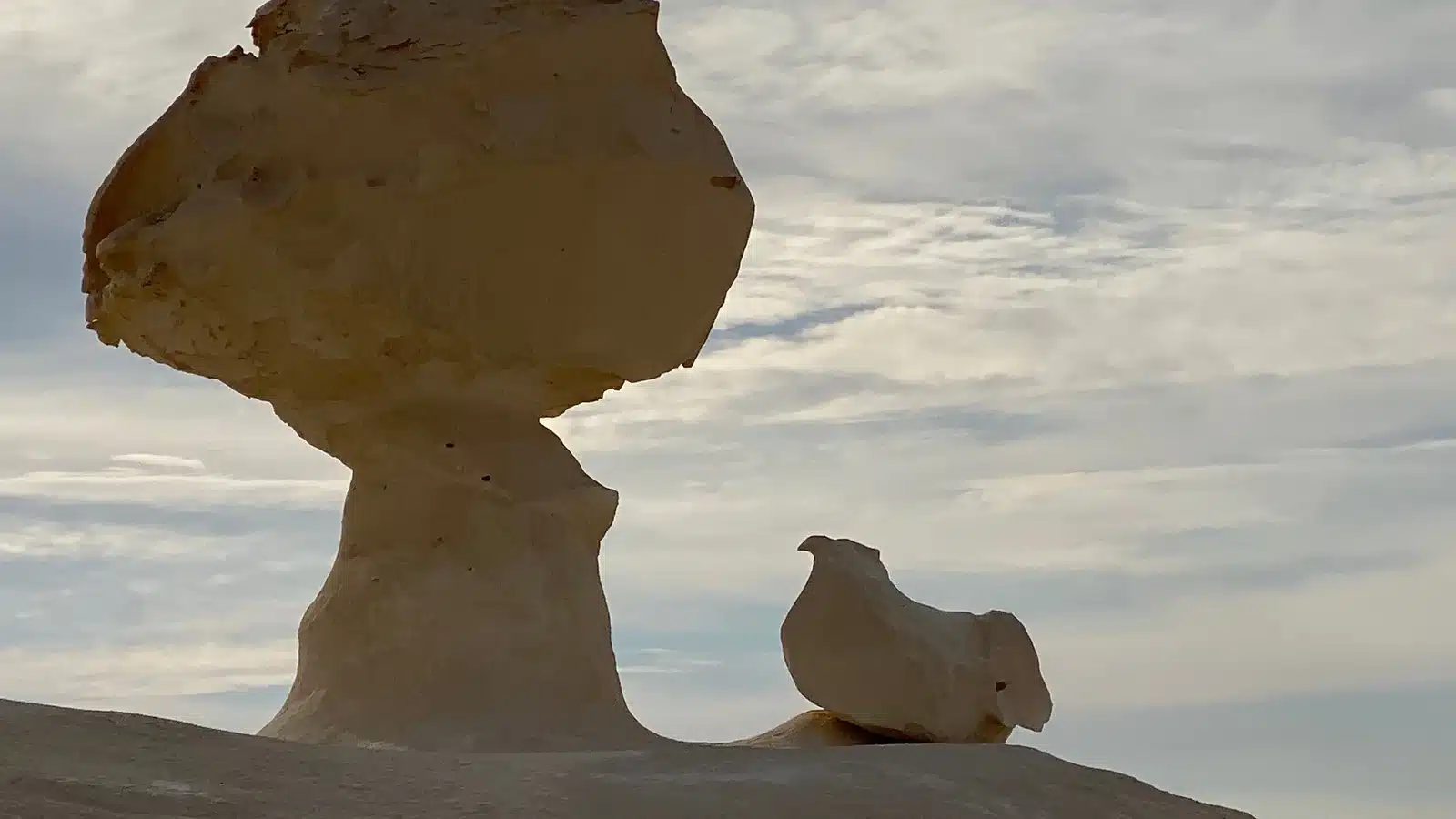
Crystal Mountain Egypt is a compact ridge and natural formation visited on many Bahariya to White Desert safari routes. The name suggests a towering mountain of quartz, but the real stop is smaller, easier to understand in context and geologically more nuanced than copied tour descriptions imply. Visitors notice sparkling veins or surfaces, weathered openings, a low ridge and the surrounding desert. Most stays are short and vehicle-based; this is not a formal full-day hiking destination or a place to collect souvenirs. This guide separates observable features from uncertain mineral claims, explains how the stop fits one-, two- and three-day routes, and gives responsible photography and walking advice. Exact access and the duration of the stop must be reconfirmed with the local team before publication.
Quick answer
Crystal Mountain is a small, highly photogenic ridge/formation visited between Bahariya Oasis and the White Desert. It is usually a short safari stop rather than a hiking destination. Travelers come to see mineral-rich sparkling surfaces, arches and desert views, but the exact geology is often oversimplified online. A careful guide should explain what is visible without encouraging visitors to break or remove material.
Table of contents
- Where is Crystal Mountain?
- Is it really made of crystal?
- What visitors see
- How long a stop takes
- Photography angles and light
- Can you climb?
- Do not take rocks
- How it fits a tour
- Crystal Mountain versus White Desert formations
- What to bring
- Common myths
- FAQ
Where Is Crystal Mountain in Egypt?
Crystal Mountain is in Egypt’s Western Desert on the wider route between Bahariya Oasis and the White Desert area. It is usually reached after the local 4×4 handover, not as a roadside attraction from central Cairo. A normal trip first completes the long paved journey to Bahariya and then follows a locally selected desert route.
Descriptions often place the formation near other named stops such as the Black Desert, springs and Agabat/Aqabat. The order varies with the starting hotel, access, daylight and camp plan. Do not use this article as navigation. Off-road surfaces change and public exact coordinates can encourage unsupported visits.
The name is sometimes confused with ski destinations or mountains in other countries. Search content should repeatedly and naturally establish Egypt, Bahariya and the Western Desert. The Bahariya Oasis guide explains the regional base, while the tour comparison shows how the stop fits different packages.
Crystal Mountain is not the commercial center of the trip. It is one informative, photogenic pause inside a sequence of landscapes. A route that spends a sensible short period here and preserves time for Agabat and the White Desert can be more rewarding than one that advertises the name but rushes every stop.
Is Crystal Mountain Really Made of Crystal?
“Crystal Mountain” is a tourism name, not a complete mineral analysis. Sparkling or crystalline-looking material can be visible in the ridge, but the phrase does not prove that the entire landform is a single quartz mass. Academic work on the geological heritage between Bahariya and Farafra recognizes mineralogical and geomorphological diversity in the region, while the White Desert management literature emphasizes a complex protected landscape.
Reliable mineral identification requires more than color and shine. Calcite, barite, quartz and other minerals can be confused by non-specialists, and weathered surfaces may differ from fresh material. This draft therefore avoids declaring a precise composition for every vein. A sourced geologist or official interpretive panel would be needed for a definitive site-specific statement.
What can be said safely is observational: visitors see a small ridge with bright or sparkling mineral-rich surfaces and natural openings. Sun angle changes the reflections. Some fragments appear loose, but their presence does not make them souvenirs. The site’s educational value depends on leaving those relationships intact.
Why copied geology spreads so easily
Tour pages often repeat one another, and a vivid phrase such as “a mountain made completely of quartz” is more likely to be copied than a cautious geological explanation. Repetition does not turn it into evidence. A photograph also cannot settle composition: glare, dust and editing may make calcite, quartz or another bright mineral look similar on a screen.
For publication, the best practice is to cite regional academic work, state that the exact site mineralogy is frequently oversimplified, and describe only what can be observed. If Bedouin Castle later obtains an interpretation from a qualified Egyptian geologist or a current official source, the article can be updated with that attribution. Until then, “mineral-rich sparkling surfaces” is more accurate than a confident chemical label.
What Visitors Actually See
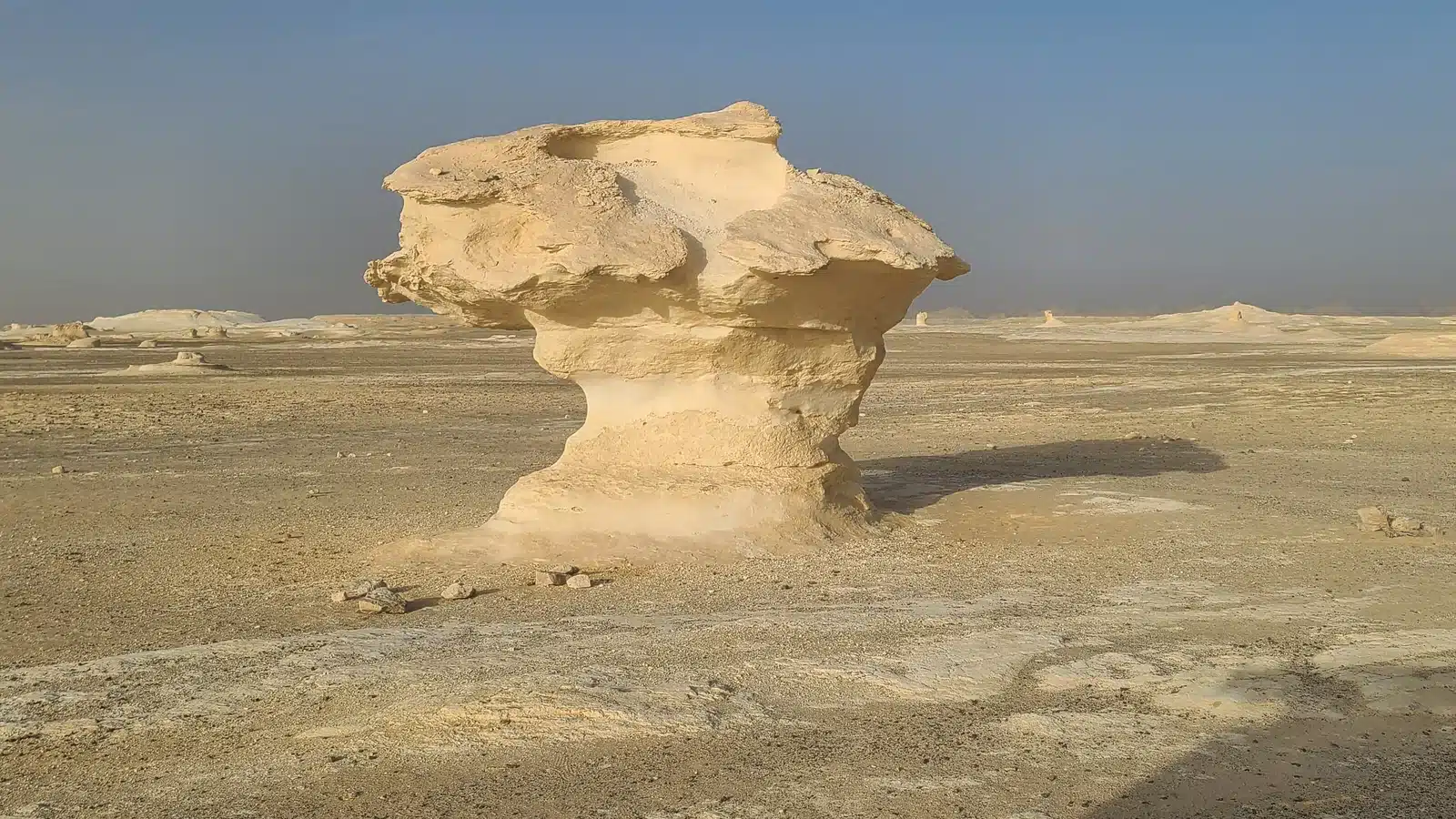
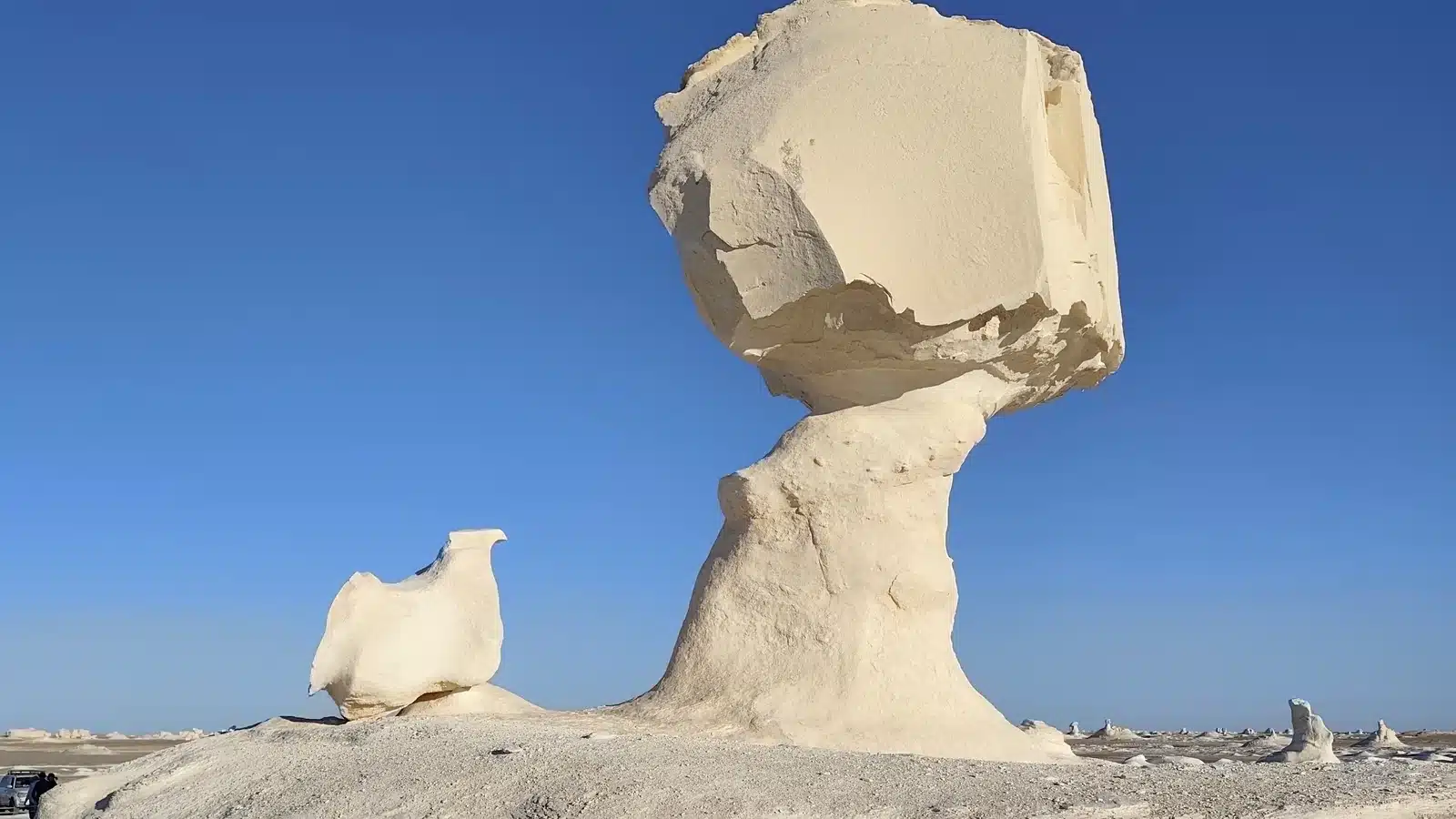
Approaching by 4×4, the formation appears as a low ridge rather than a high alpine mountain. Weathered openings or arches create recognizable shapes. Bright details may catch the sun, while surrounding sand and darker stone provide contrast. The scale becomes clearer when a parked vehicle or consenting person is included at a safe distance.
Visitors often focus immediately on close detail. Begin instead with the whole setting: ridge, sky, foreground and route. Then look for reflected points, veins, textures and the edge of an opening. Do not scrape a dusty surface or wet a rock to increase shine. A clean camera angle is enough.
The stop can feel crowded when multiple 4x4s arrive. Wait for other groups rather than entering a fragile or unstable position. A short pause often produces a clear photograph. Keep bags together so the team can leave efficiently and no lens cap remains in the sand.
Interpretation should be honest. Natural openings can be called openings or arches without claiming how every one formed. Sparkle can be described without naming a mineral. This careful language makes the guide more trustworthy, not less interesting.
Looking closely without touching
A phone’s optical zoom or a moderate camera lens can reveal small veins from a respectful distance. Use side light and move your own position on durable ground instead of moving the subject. A compact magnifier can be useful only if the guide allows it and the surface can be viewed without contact. Children can sketch shapes or compare colors. The aim is observation, not testing hardness, scratching or splitting material.
Look beyond sparkle. Weathering edges, the relationship between an opening and the ridge, loose surface fragments and the contrast with surrounding sand all help explain the landform. These wider relationships would be lost if an article reduced the stop to “free crystals.”
How Long Does a Typical Stop Take?
Crystal Mountain is commonly a short route stop. Online claims of exact minutes vary, and the local team must confirm a realistic range. Around twenty to forty-five minutes may be enough for a small group when access is straightforward, but this should be treated as a possible planning range rather than a promise.
Photography, mobility and group size change the duration. A vehicle-side overview can be brief. A guided look at the ridge and several careful compositions take longer. A large shared group needs time to enter and leave without blocking another vehicle. Strong wind or harsh heat may justify a shorter stay.
Ask what the extra time would replace. On a one-day route, a long stop can reduce time in Agabat or the White Desert. On a three-day route, the schedule may allow slower observation without sacrificing sunset. Good operators manage the whole itinerary rather than selling each name as an unlimited attraction.
Parents should keep children close and explain before arrival that collecting is not allowed. Travelers with limited mobility can ask for a stable viewpoint from the vehicle.
Planning the stop inside a real day
Ask the operator for a sequence rather than a list. If Crystal Mountain comes before Agabat and camp, the team must preserve enough daylight and driving margin for the later landscape. If another stop is closed or skipped, extra time may become available, but that should not be promised in advance. A family may need a toilet or shade break, while a photographer may trade a longer close-up session for late light elsewhere.
A strong itinerary names priorities and fallbacks. For example: stop for an overview and responsible detail photographs if current access is suitable; otherwise continue to an alternative geological viewpoint without making unsafe detours. That wording is more useful than “guaranteed forty-five minutes.”
Best Photography Angles and Light
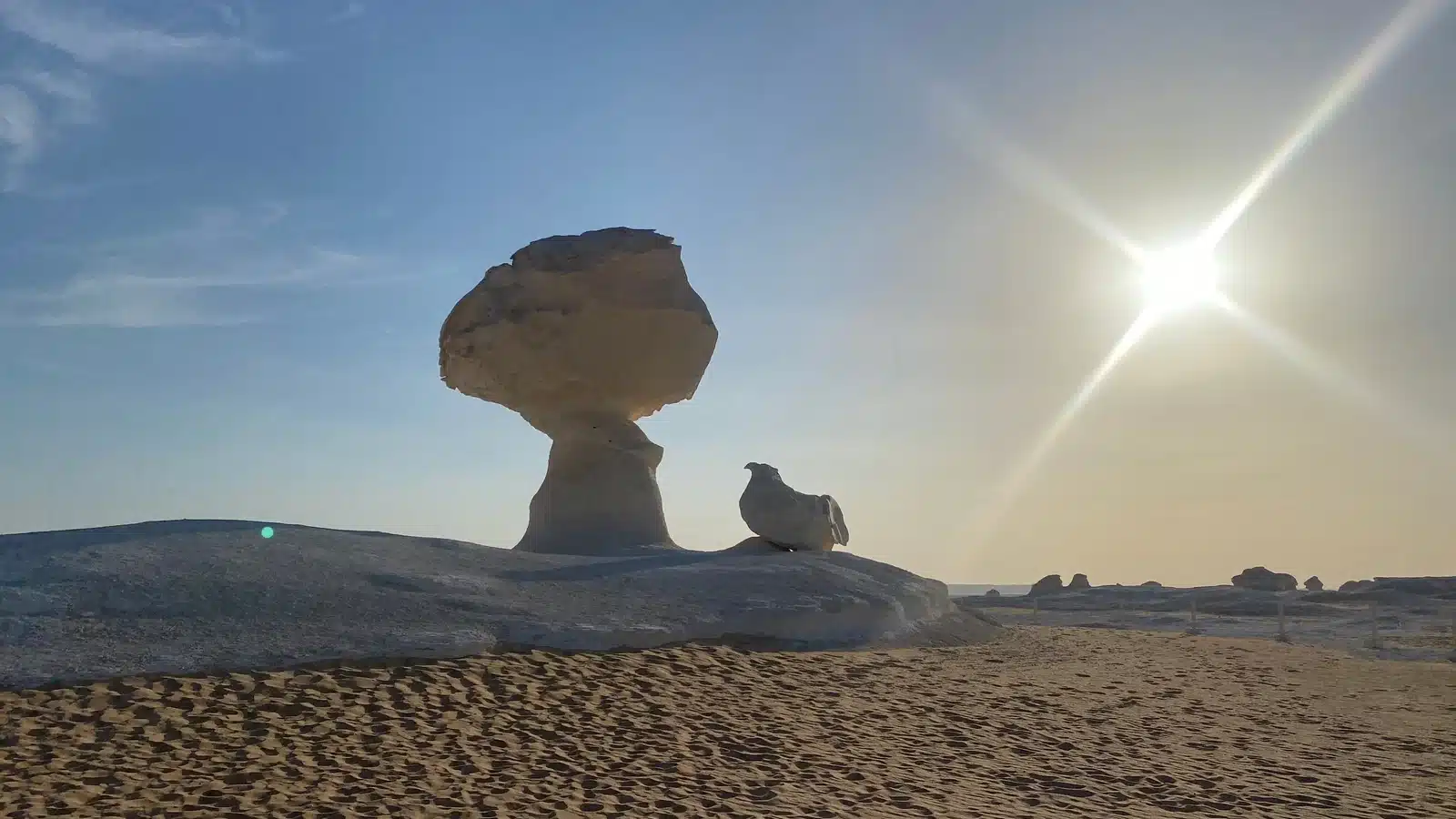
A wide frame should establish the ridge in the Western Desert so the image cannot be mistaken for a close mineral display. Use the opening or arch as a frame only from a stable, permitted position. A medium focal length can isolate reflected detail without stepping onto loose material.
Side light makes texture and sparkle easier to record. At midday, protect highlights and watch the histogram; tiny bright surfaces can clip while the ridge remains dark. A polarizing filter changes reflection and may remove the very sparkle you want, so rotate it while checking the effect. Natural color is more credible than extreme clarity or saturation.
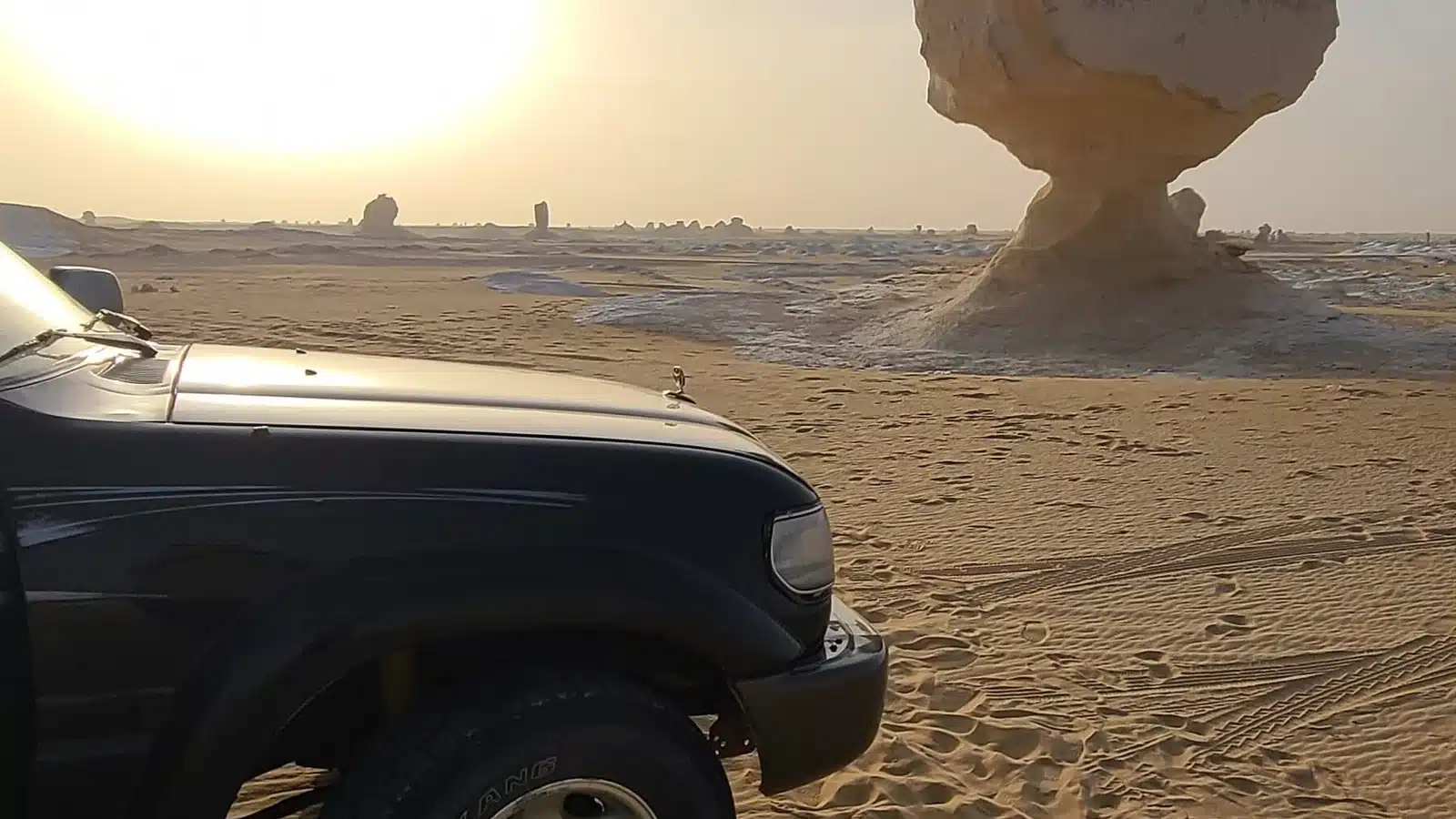
Include a person only with consent and keep them beside, not on, a fragile feature. A safely parked 4×4 can show scale. Avoid photographing visible vehicle plates or private details when an image will be used commercially.
For close detail, do not place hands or objects in the frame in a way that suggests removing a fragment. Photograph undisturbed material. Clean the lens before leaving because wind can carry fine dust.
A five-frame photography sequence
- Make a wide establishing frame with ridge, sky and open desert.
- Use a person or parked vehicle for scale only with permission.
- Frame the natural opening from stable ground.
- Use a longer focal length for bright veins or surface detail.
- Finish with a responsible-travel image that shows the site untouched.
This short sequence prevents the common mistake of spending the whole stop on one close-up. It also creates images useful for a complete article without staging behavior that visitors should not copy.
Can You Climb Crystal Mountain?
Do not treat the name “mountain” as permission to scramble over it. The formation can have loose, sharp or fragile surfaces, and current protected-landscape instructions apply. Follow the guide’s boundary. A short walk around or near the base may be the appropriate experience; climbing through an opening or onto a ridge may not be.
Even when another traveler is standing on a feature, that does not prove the behavior is permitted or harmless. Repeated footsteps widen routes and break material. Choose camera perspective instead of height. If the guide identifies a durable viewpoint, use it one person at a time and return by the same path.
Children stay with an adult. Closed shoes and free hands are useful. Guests with balance or mobility concerns should enjoy the formation from stable ground. The stop is visually clear without climbing.
Weather changes the decision. Wind can make exposed ridges uncomfortable; heat can turn a short ascent into unnecessary strain. A responsible local team may shorten or move the stop without reducing the integrity of the tour.
Do Not Take Crystals or Rocks
Leave every fragment where it lies. Removing one small piece may feel insignificant, but repeated collection strips the surface, destroys context and teaches the next visitor that taking is normal. The White Desert route is a protected landscape, and collecting may conflict with current rules. Ask the guide about formal restrictions; ethical restraint does not depend on seeing a sign.
Do not break a piece to expose a fresh surface, use a hammer, dig, scratch names, stack stones or rearrange fragments for a photograph. Do not buy a “souvenir” claimed to come from the stop, because the origin may be impossible to verify and demand encourages removal.
Children can be given a better task: photograph three textures, sketch the ridge or count colors without touching. Geology is more meaningful when the relationship between material and landform remains visible.
If someone in the group picks up a fragment, ask them to place it back exactly where found without confrontation and tell the guide. Never handle an unknown sharp mineral with bare hands merely for a close-up.
Why the “small piece” argument fails
A popular site receives many visitors. If each person removed one attractive fragment, the most visible surface material would disappear and guides would face pressure to find new spots. Collection also separates material from its context, reducing its educational value. Leaving it in place is a simple action that costs the traveler nothing and protects the experience for others.
Souvenir shopping should support local makers without claiming that products were extracted from the protected route. Ask what an item is made from and where it came from. Avoid anything marketed as a piece broken from Crystal Mountain.
How Crystal Mountain Fits a White Desert Tour
A White Desert day trip may include the stop when the route and timing allow, but a same-day schedule contains many competing highlights. The stop is normally concise.
A 2 Days / 1 Night tour provides more breathing room because the first day can link the Black Desert, a suitable spring, Crystal Mountain, Agabat and White Desert camp. Exact sequence and inclusion remain subject to current access.
A 3 Days / 2 Nights tour is useful for photographers and travelers who want slower landscape time. The additional day should not be marketed as “more Crystal Mountain”; it allows the entire route to absorb weather, light and walking.
Ask where the price starts, Cairo or Bahariya, what road transfer is included, and whether the stop is confirmed or conditional. A tour name alone does not settle those details.
Day trip, one camp night or two?
The day trip is suitable when time is limited and the traveler accepts a tighter sequence. One camp night balances the famous stops with sunset, night and sunrise. Two camp nights suit photographers and slower travelers who want more resilience when wind, access or cloud changes the plan. Crystal Mountain itself does not require the longer tour; the value of three days is the additional time across the entire landscape.
Compare start point as well as duration. A “two-day” package beginning in Cairo includes much more paved-road time than one beginning at a Bahariya hotel. Ask for an itemized schedule and do not compare headline prices until transfer, hotel, fees, meals and equipment are aligned.
Crystal Mountain vs the White Desert Formations
| Factor | Crystal Mountain | White Desert formations |
|---|---|---|
| Visual character | Low ridge, openings and sparkling detail | Pale chalk landforms across a wider landscape |
| Material wording | Mineral-rich; exact identification needs evidence | Chalk/limestone erosional forms documented by official sources |
| Typical stop | Short observation and photography | Multiple stops and often camp context |
| Photography | Reflections, arch, detail and scale | Silhouettes, repetition, sunset and night sky |
| Route position | One stop between Bahariya and White Desert | Central destination of overnight itineraries |
The comparison is not a competition. Crystal Mountain adds geological variety and a recognizable pause; the White Desert provides the broader protected landscape. A good route connects them without claiming they are made of the same material.
What to Bring
- Closed shoes with grip for loose surfaces.
- Hat, sunglasses and drinking water.
- Camera cloth and blower for dust.
- Wide and medium focal lengths, or a standard phone camera.
- Small bag that stays closed in wind.
- A warm or wind layer according to the day.
- No hammer, chisel, collection bag or mineral tools.
Heavy hiking gear is unnecessary for a normal short stop. Keep valuables secured in the vehicle as the team instructs. Do not balance a phone or lens on the formation. Before leaving, count caps, cloths and bottles so nothing remains.
Common Myths and Better Answers
| Myth | Better answer |
|---|---|
| It is a giant mountain. | It is a compact ridge/formation and short safari stop. |
| The entire mountain is quartz. | The tourism name does not replace mineral analysis; use cautious, sourced geology. |
| Loose crystals are free souvenirs. | Leave every fragment in place and follow protected-area rules. |
| It needs a full day. | Most routes combine it with several Western Desert landscapes. |
| Every tour follows the same road. | Access, surfaces, weather and itinerary can change the sequence. |
Good interpretation replaces exaggeration with detail. The stop is interesting because a small ridge exposes texture, mineral brightness and desert weathering within a wider route, not because marketing turns it into an impossible mountain of gems.
Frequently Asked Questions
Where is Crystal Mountain in Egypt?
It is in Egypt’s Western Desert on many 4×4 routes between Bahariya Oasis and the White Desert. It is not a ski destination or a central Cairo attraction. Reach it with a local route plan rather than public off-road coordinates.
Is Crystal Mountain made of quartz?
The tourism name does not prove that the entire formation is quartz. Sparkling mineral-rich surfaces are visible, but exact identification needs credible site-specific geology. Avoid repeating a single-mineral claim unless an authoritative source supports it.
Can visitors take crystals home?
No responsible visit should remove material. Leave rocks and fragments in place, do not break surfaces, and follow current protected-area instructions. Cumulative collecting damages the site even when each piece seems small.
How long do you spend at Crystal Mountain?
It is normally a short stop, often enough for an explanation, a careful walk and photographs. A possible range varies with group size, mobility, weather and route. Ask the local team rather than relying on a fixed online minute count.
Is it included in White Desert tours?
It is common on Bahariya to White Desert routes, but no inclusion is automatic. Check the written itinerary for your date. Access, road conditions and the wider camp plan may change the sequence.
Can children visit Crystal Mountain?
Children can view the formation with close adult supervision. Keep them on durable ground, away from loose edges and from moving vehicles. Explain before arrival that climbing and collecting are not allowed. A vehicle-side view may suit very young children.
What is the best time for photos?
Side light reveals texture and sparkle, while midday requires careful highlight control. The actual visit time is shaped by the whole route and camp plan. Do not pressure the driver to risk a late arrival for one photograph.
Do I need a 4×4 to visit?
Crystal Mountain is normally part of a local desert 4×4 route. Off-road surfaces and access change, so use an experienced local team rather than attempting unsupported navigation. Confirm which vehicle handles the paved transfer and which handles the desert.